Hiking Barranco de Antequera to Remote Playa de Antequera in Tenerife
Barranco de Antequera is one of the most rugged and unspoiled corners of Tenerife, a wild ravine that drops steeply from the Anaga mountains to the isolated Playa de Antequera. This hike combines volcanic landscapes, Atlantic ocean views and characteristic Canarian vegetation such as cardones and prickly pear cactus. Below you will find a detailed visual guide to the route, perfect for planning your own trek to this hidden beach.
Arrival at the cove of Playa de Antequera
At the mouth of the barranco, hikers are rewarded with a dramatic view of Playa de Antequera, a remote cove dominated by a steep volcanic cliff and a tiny pier used by local boats and watertaxis. The contrast between the dark rocks, the turquoise water and the dry coastal vegetation underlines how isolated this beach really is.
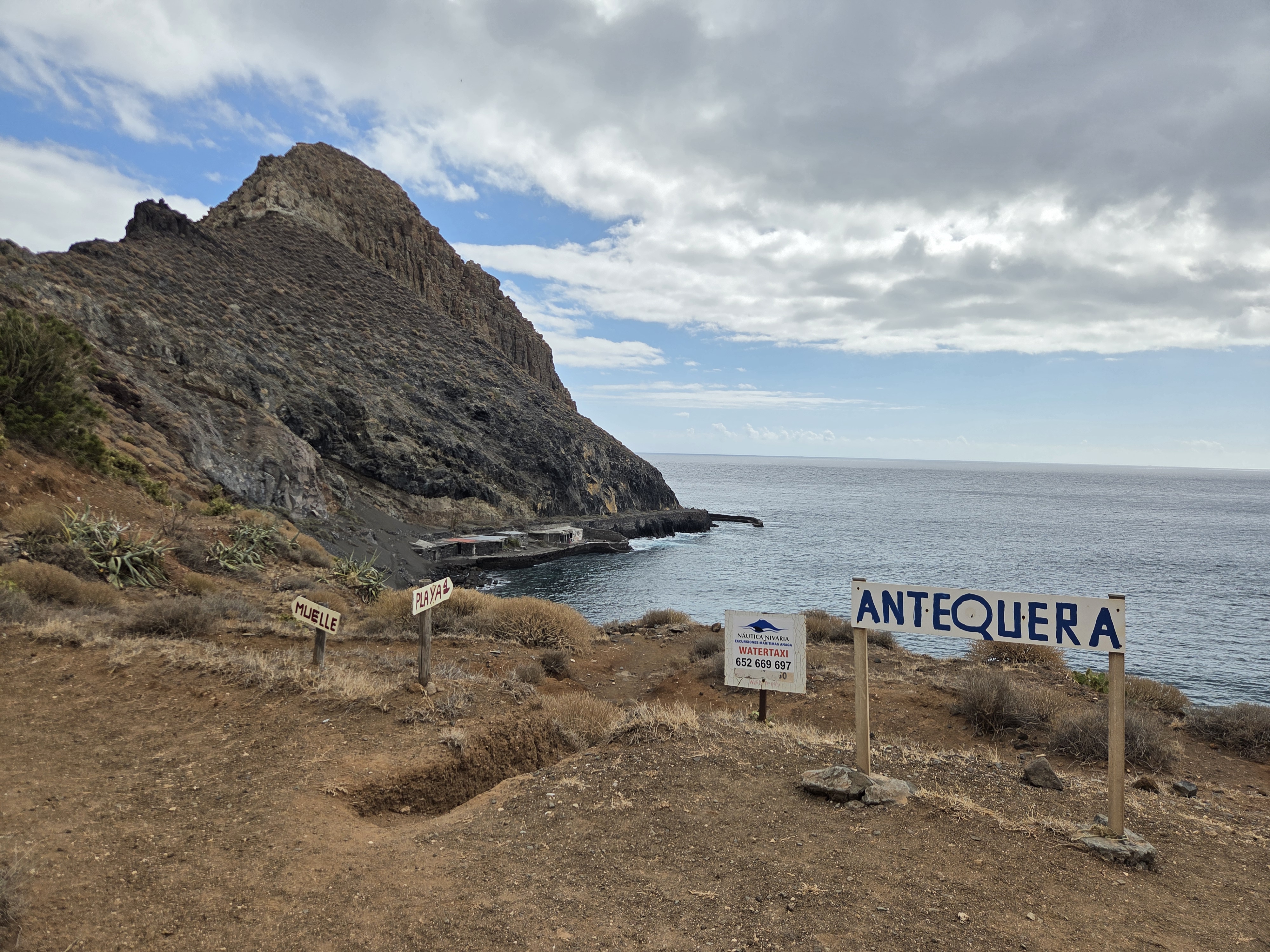
Simple wooden signs indicate the direction of the muelle (pier) and the beach, while another board advertises watertaxi services back to Santa Cruz. Many hikers choose to descend on foot through the ravine and then return by boat, a popular option that avoids climbing the steep path in the afternoon heat.
Cactus-covered slopes of Barranco de Antequera
Leaving the beach behind, the path quickly rises along arid slopes covered in dense stands of cardones (Euphorbia canariensis) and scattered shrubs. These iconic cactus-like plants are typical of the coastal and low mountain zones of Anaga Rural Park and give the ravine its unmistakable character.
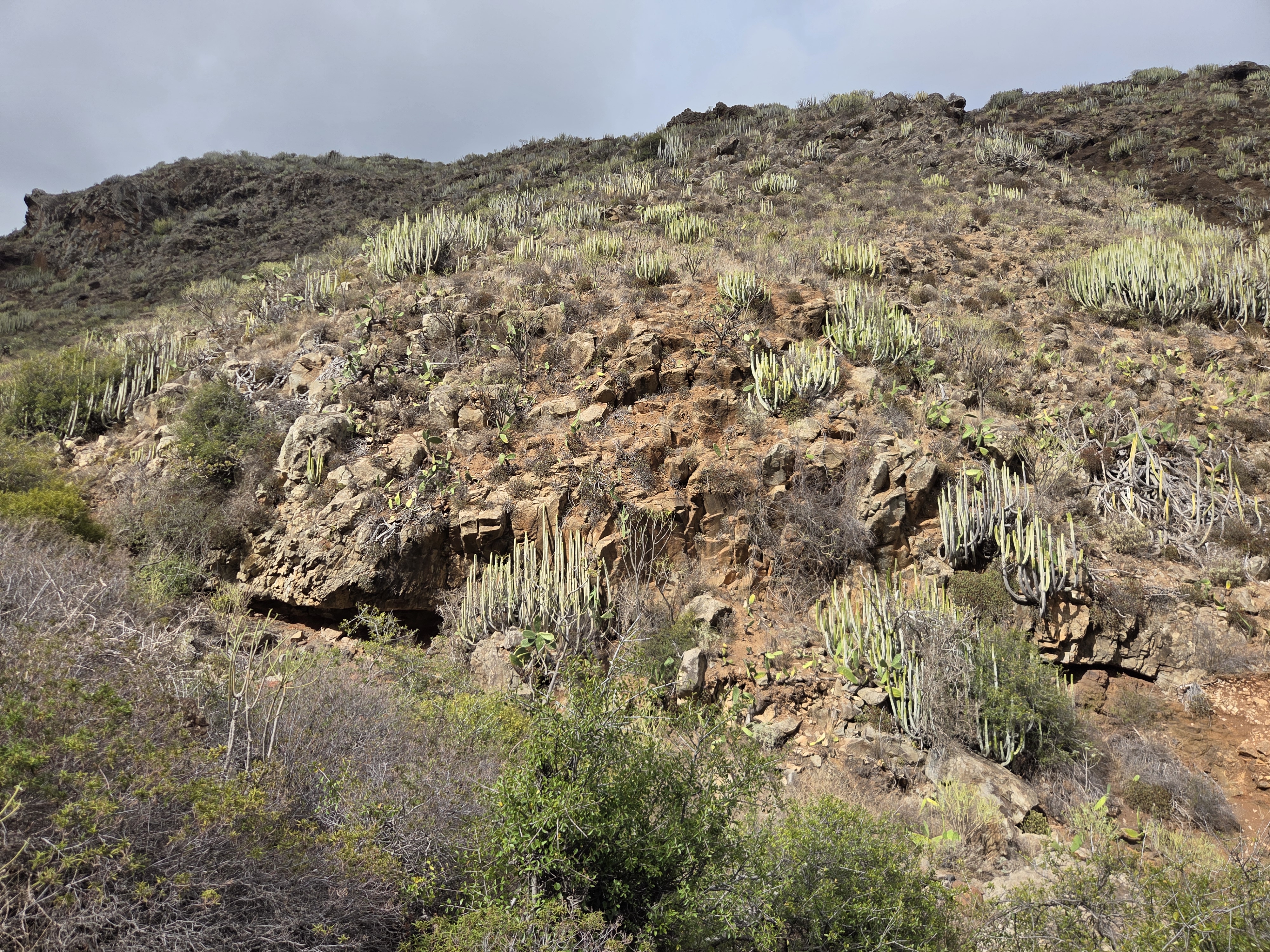
As the route climbs higher, the views open towards the interior of the ravine, revealing a labyrinth of ridges, gullies and basalt outcrops. The landscape is harsh but surprisingly rich in life, with many lizards, birds and seasonal wildflowers hiding among the rocks and spiny plants.
Walking the narrow mountain trail
The hiking trail itself is narrow but well-defined, etched into the side of the valley. It follows the natural contours of the mountain, sometimes traversing open slopes, other times passing between rocks and low bushes. Good footwear and a steady pace are essential here, especially on days when the ground is loose or slightly wet.
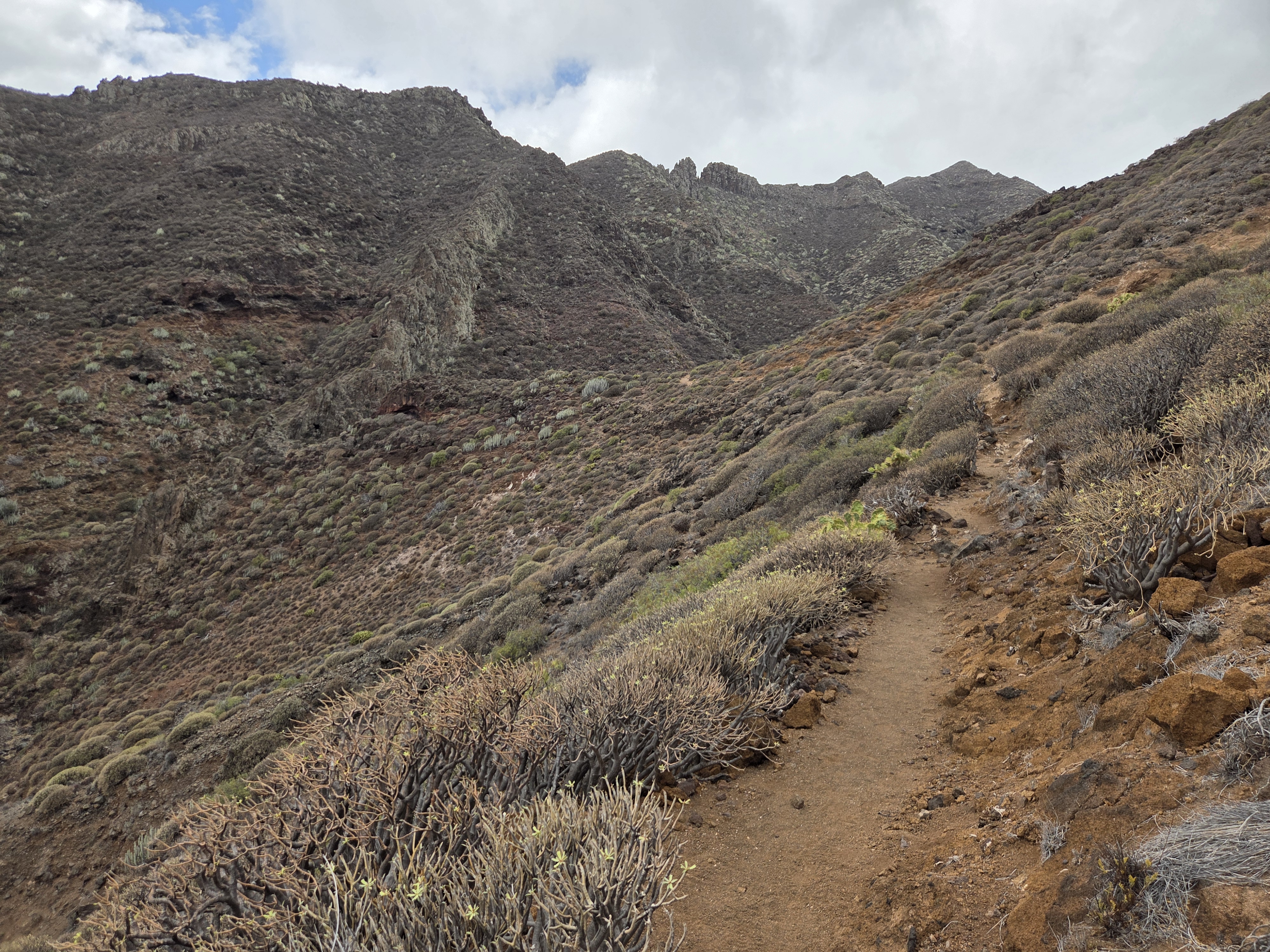
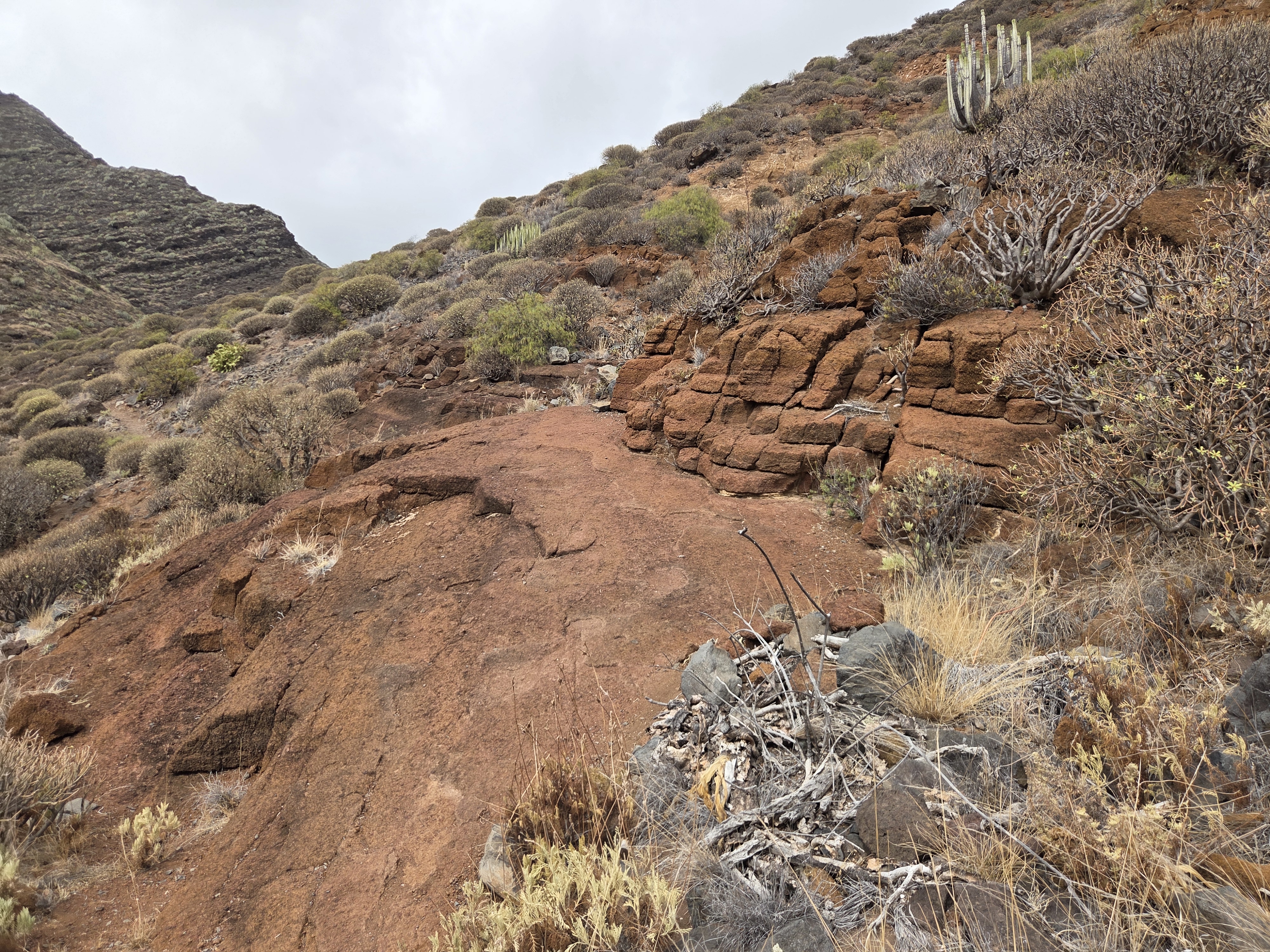
In several sections the trail passes over reddish volcanic slabs, polished by time and footsteps. These natural rock platforms offer good grip but can become slippery if covered in fine dust, so taking care with each step is important.
Rock formations and volcanic cliffs
Higher up, Barranco de Antequera showcases impressive volcanic formations. Vertical walls, weathered ledges and fractured stone towers line the path, telling the geological story of Tenerife’s creation. These rocks provide shelter for hardy shrubs and small trees that cling to every available crack.
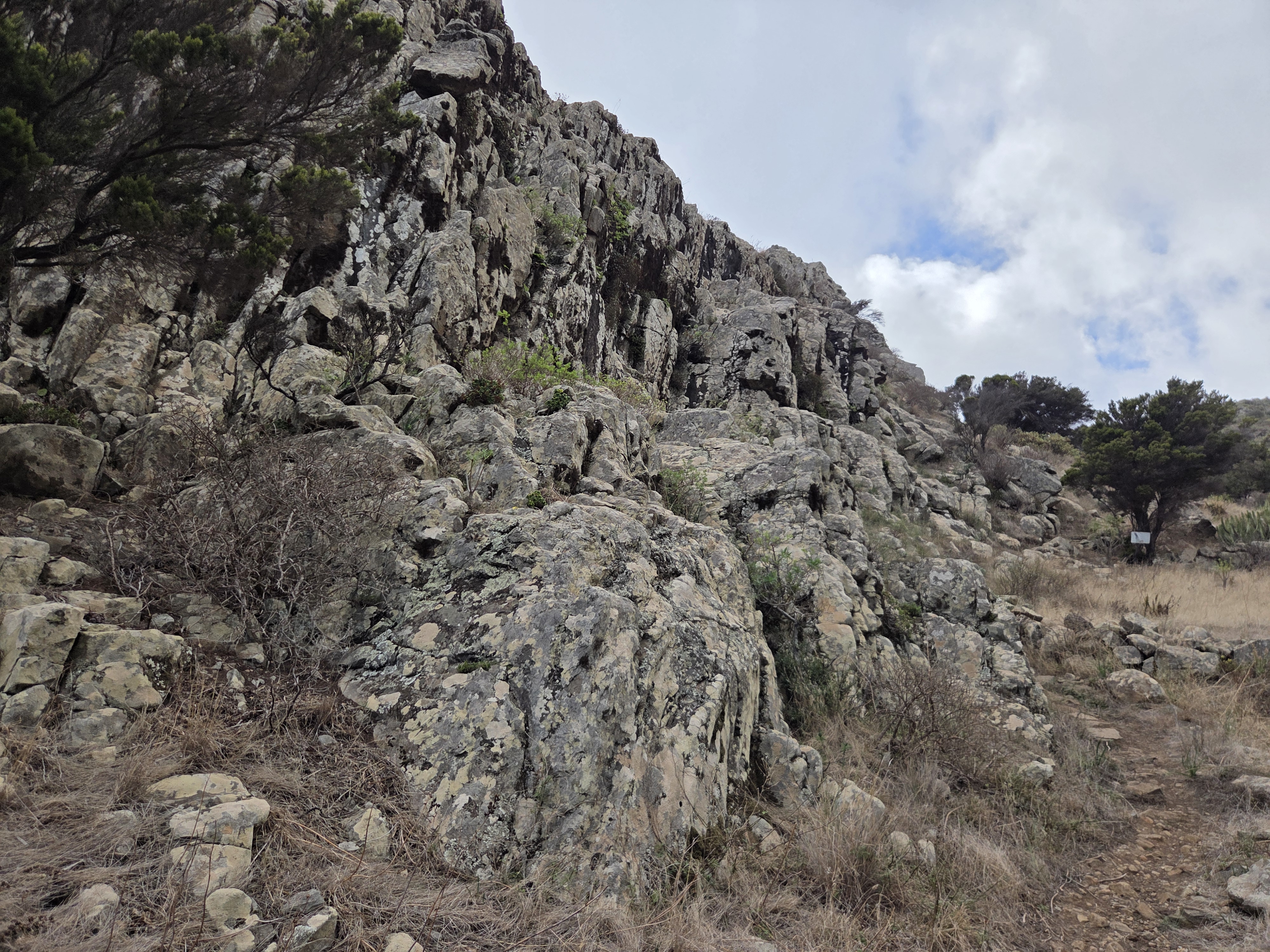
Some cliffs are covered with colourful lichen and dotted with cardones and prickly pear cactus, creating a striking contrast between the black basalt and the bright greens and yellows of the vegetation.
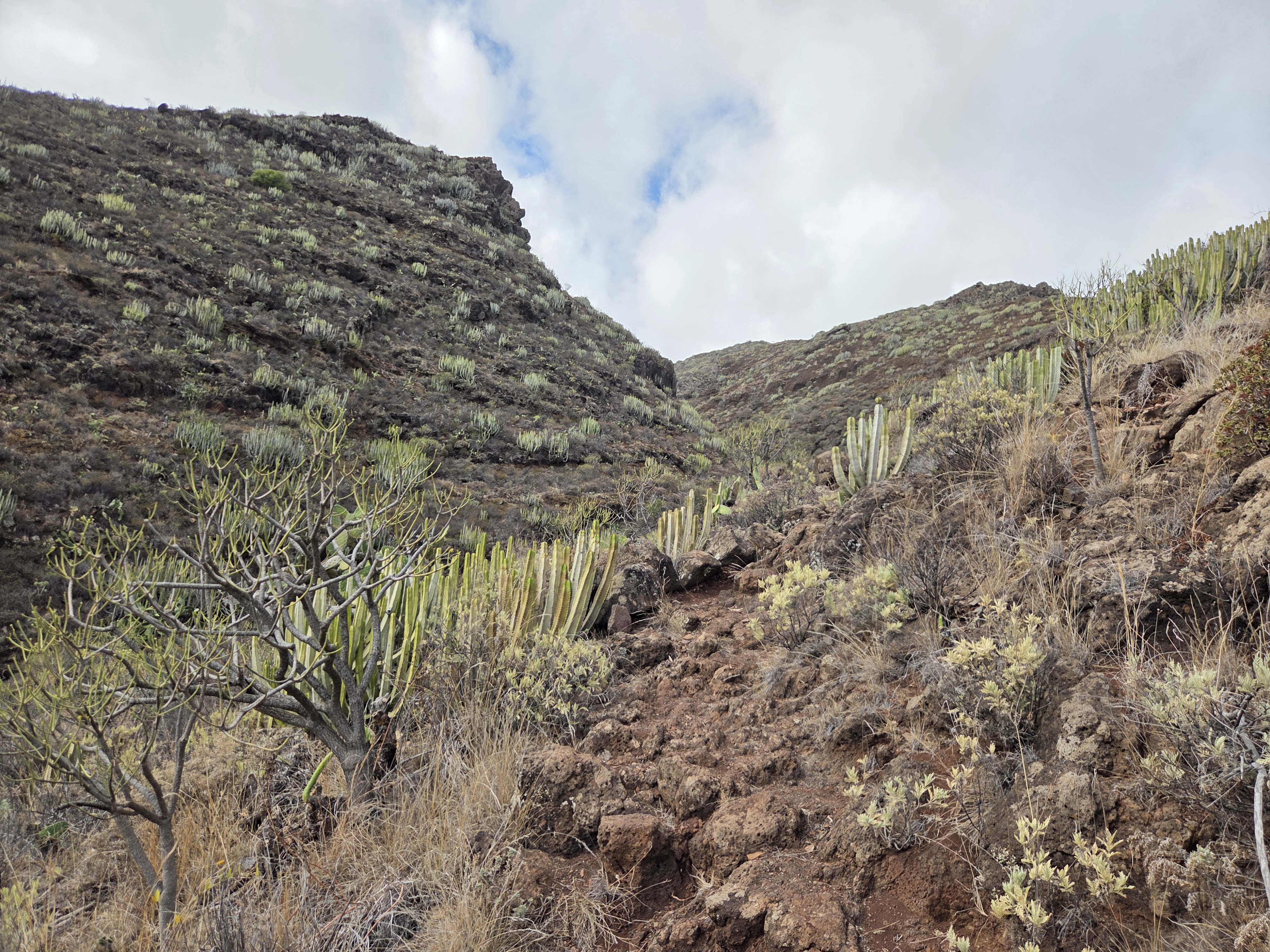
Trail signage and route information
Although Barranco de Antequera feels remote, hikers are not completely on their own. Wooden posts and official trail signs mark the route, confirming the direction towards Antequera and the approximate distance remaining. These markers are helpful, especially in cloudy conditions when visibility can change quickly.
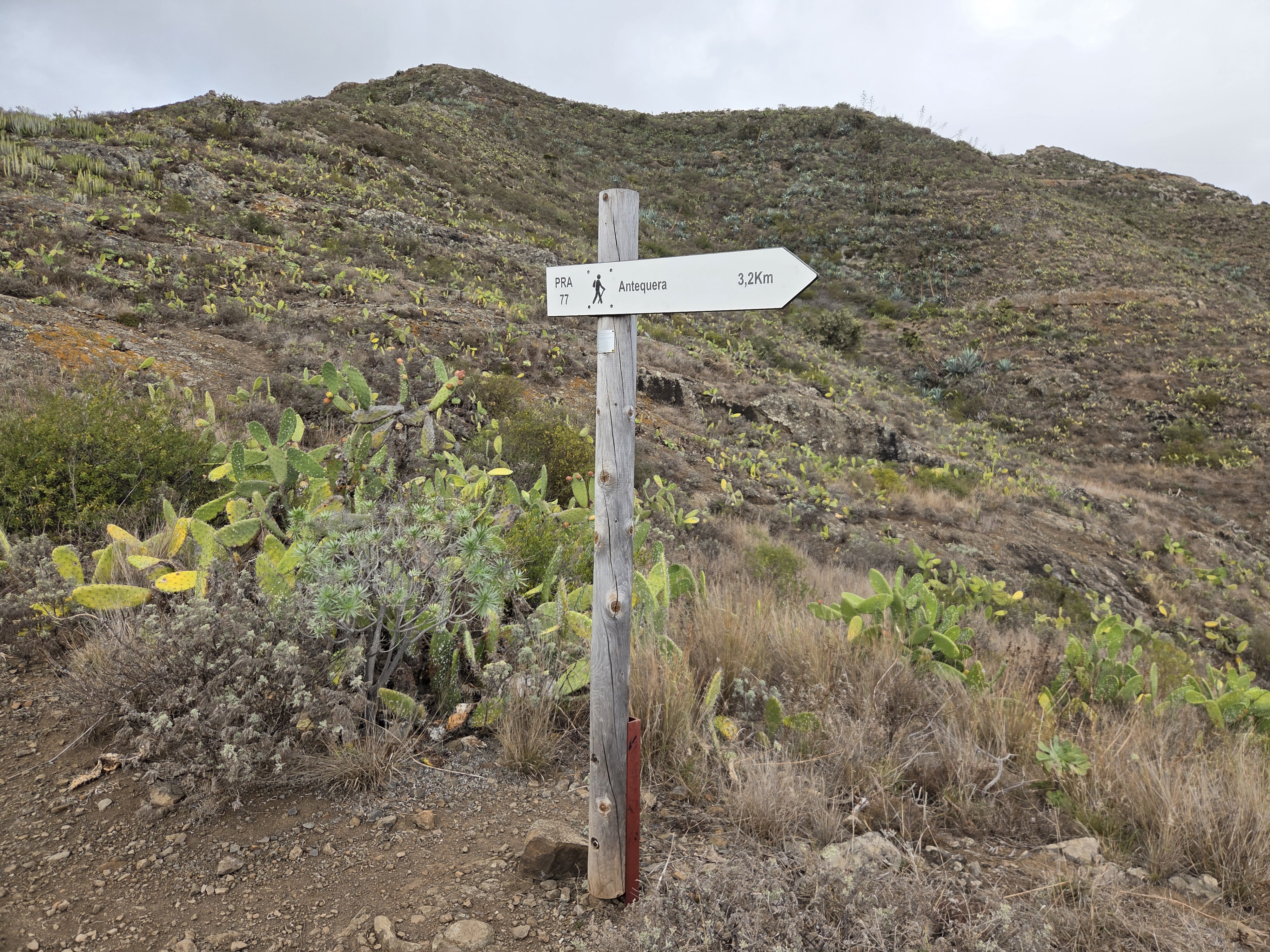
Around the signpost, the landscape is dominated by prickly pear cactus and other drought-tolerant species, reminding visitors that water is scarce and that carrying sufficient supplies is essential for a safe excursion.
Shaped by wind and weather
Near the upper parts of the route, the strong trade winds of Anaga have sculpted both plants and landscape. Some trees grow in twisted, leaning shapes, evidence of years of constant wind from the same direction.
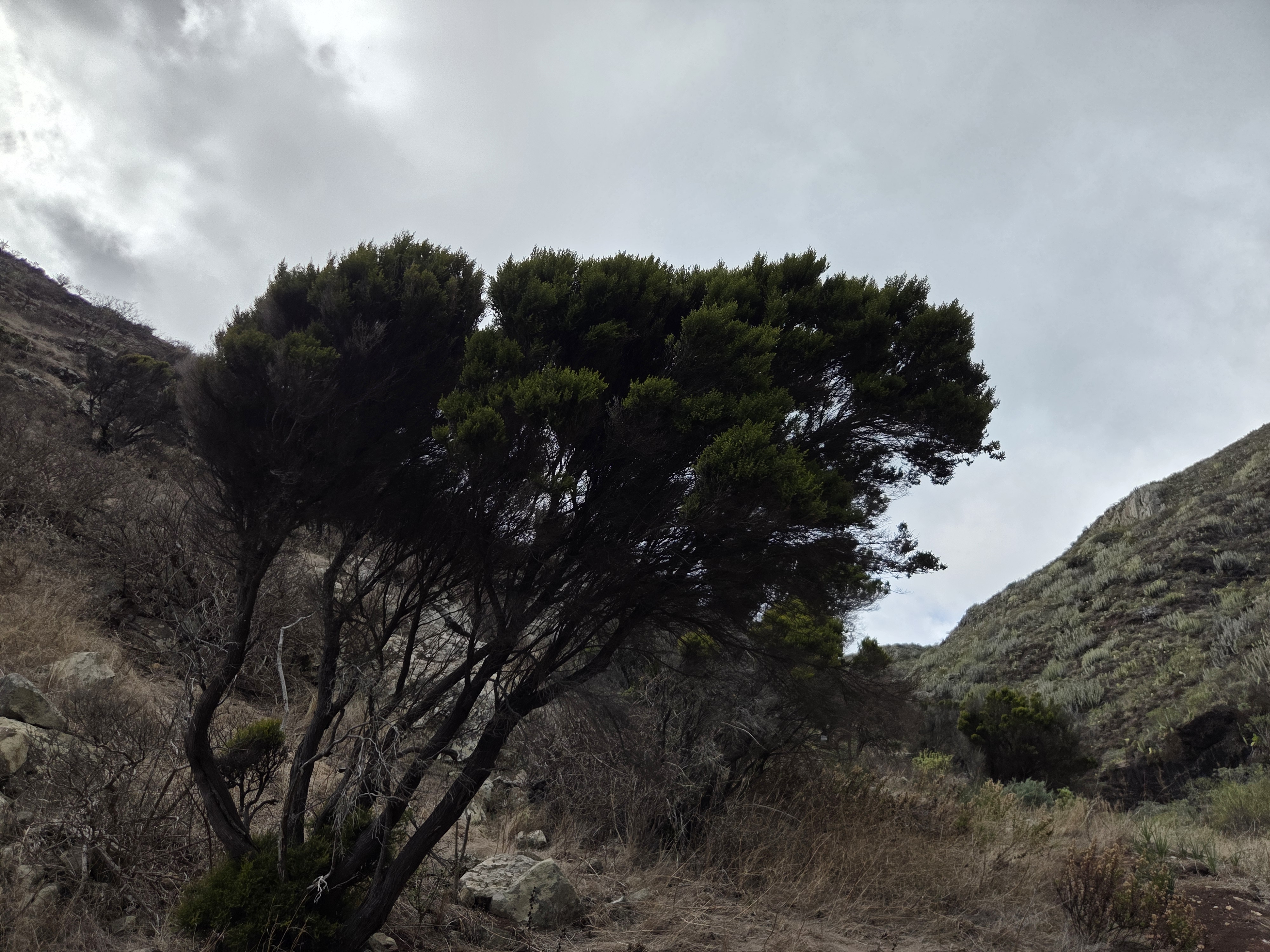
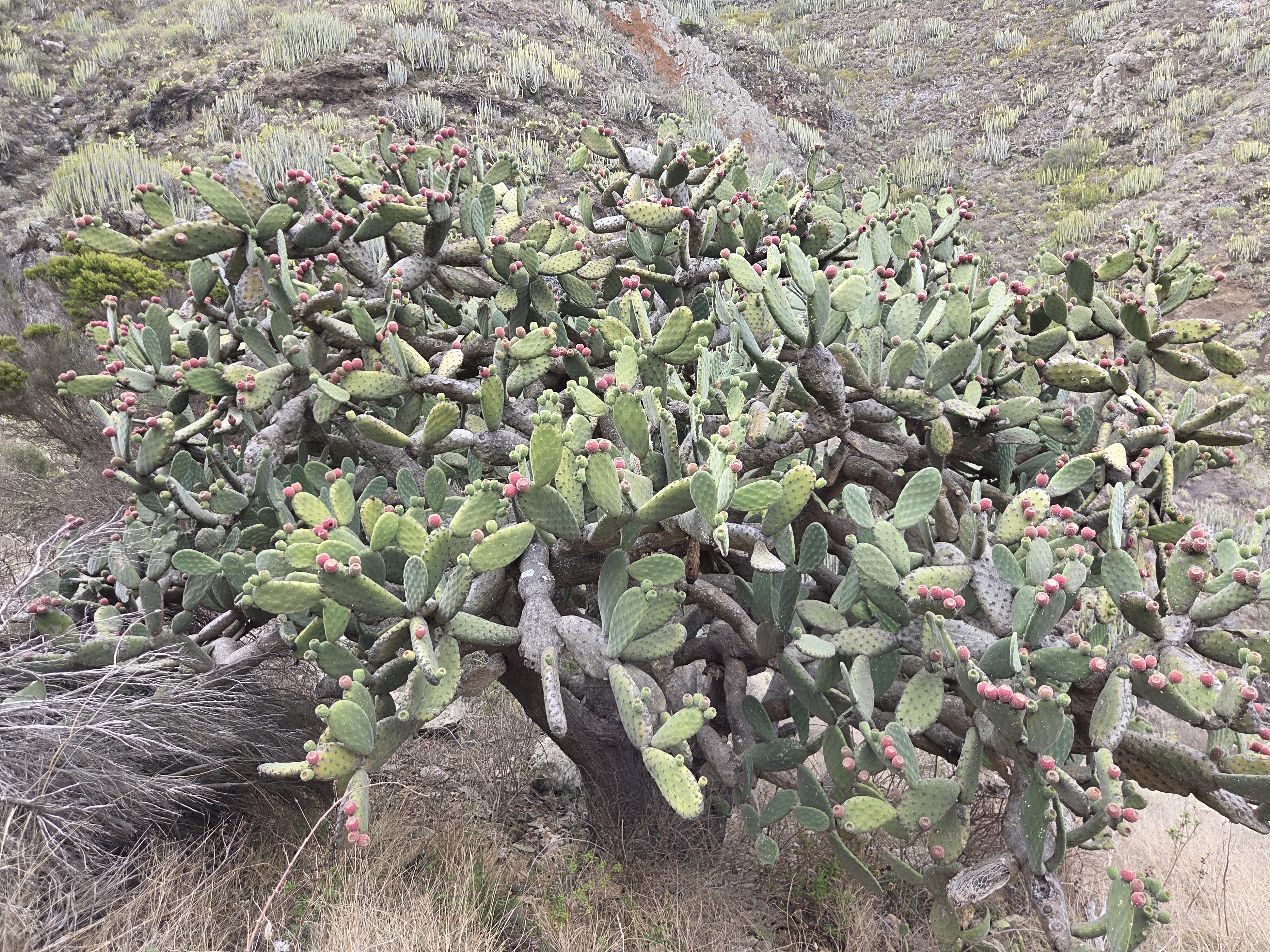
In contrast, large prickly pear cactus form dense, rounded shrubs covered in bright fruits. These pads and tunas provide food for wildlife and, in some cases, have been used traditionally by local communities.
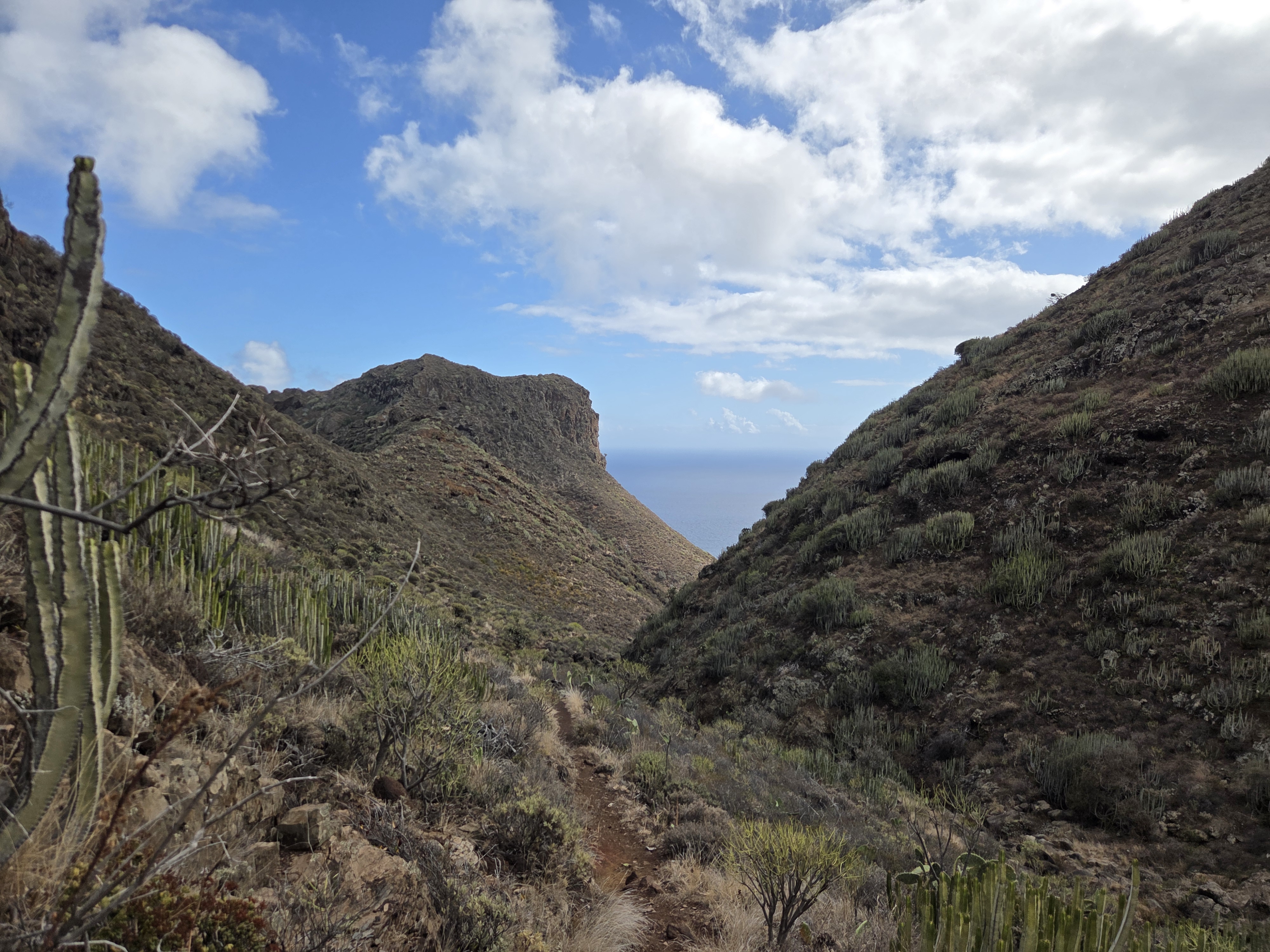
Views back towards the Atlantic Ocean
One of the rewards of hiking Barranco de Antequera is looking back towards the sea from higher points of the ravine. The path threads between the slopes and creates natural viewpoints where the blue Atlantic appears framed by two ridges, underlining how far you have climbed from the beach.
Upper entrance to the Barranco de Antequera trail
At the top of the route, rocky outcrops and scattered trees mark the transition between the ravine and the higher Anaga foothills. Here the trail passes beneath impressive cliffs and leads towards the main access points from the nearby villages.
From here hikers can continue towards other circular routes in Anaga Rural Park or return along the barranco to enjoy a second visit to Playa de Antequera and, perhaps, a refreshing swim before heading back to Santa Cruz.
Planning your hike to Barranco de Antequera
Barranco de Antequera and Playa de Antequera offer one of the most memorable coastal hikes in Tenerife: steep but rewarding, wild yet accessible, and far from the busiest tourist spots. When planning your trip, always check the weather forecast, bring plenty of water and sun protection, and consider arranging a watertaxi if you prefer to walk only one way. With its volcanic cliffs, cactus-covered slopes and secluded beach, this corner of Anaga is an unforgettable destination for any nature lover visiting Tenerife.