Discovering Güímar in Tenerife: church of San Pedro, parks and everyday town life
Güímar is a small Canarian town on the east coast of Tenerife that mixes historic monuments, shady plazas, family-friendly parks and practical services used every day by locals. This photo walk follows a route through the centre of Güímar, showing how easy it is to combine cultural sightseeing with a relaxed stroll between palm trees, cafés, shops and the main bus station.
First impressions of Güímar’s central square
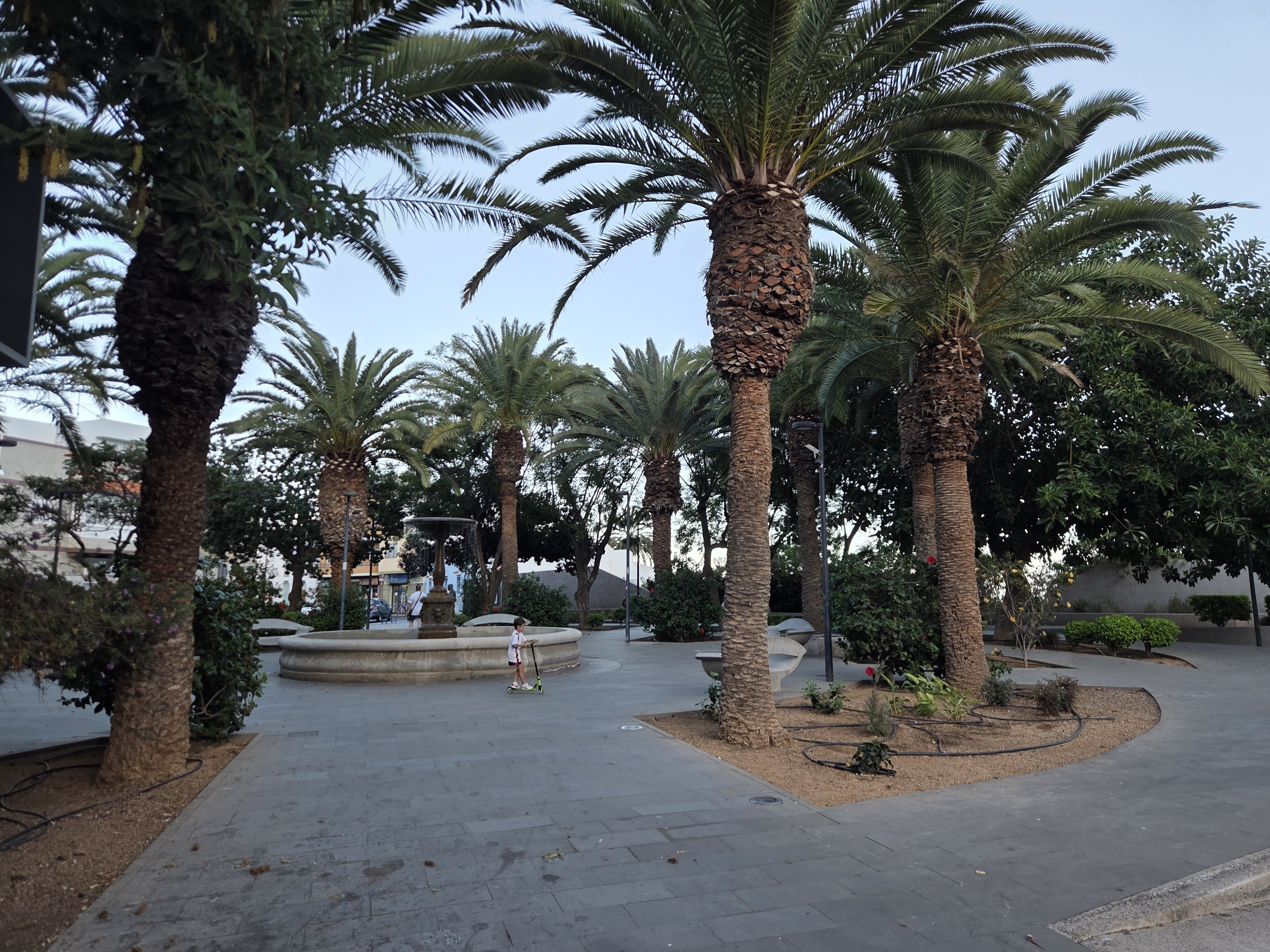
One of the best ways to start exploring Güímar is by stepping into its central park, where tall palms and flowering shrubs surround a circular fountain and open paved paths. It is a peaceful meeting point that immediately sets the slow, sunny rhythm of the town.
The historic church of San Pedro Apóstol
Just a few steps from the square stands the striking church of San Pedro Apóstol, one of Güímar’s most recognisable landmarks. The façade combines whitewashed walls with dark volcanic stone, a typical contrast in traditional Canarian religious architecture.
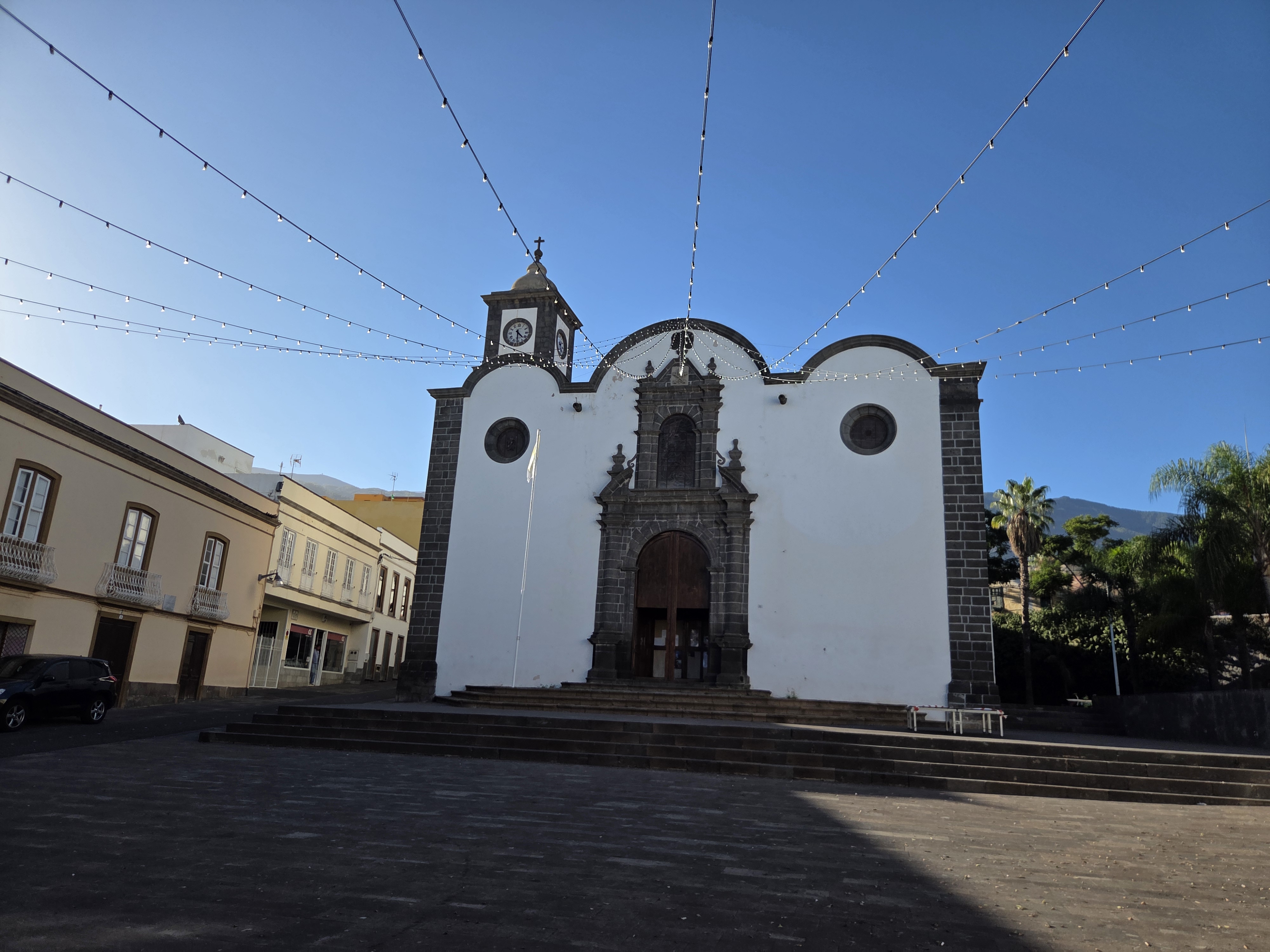
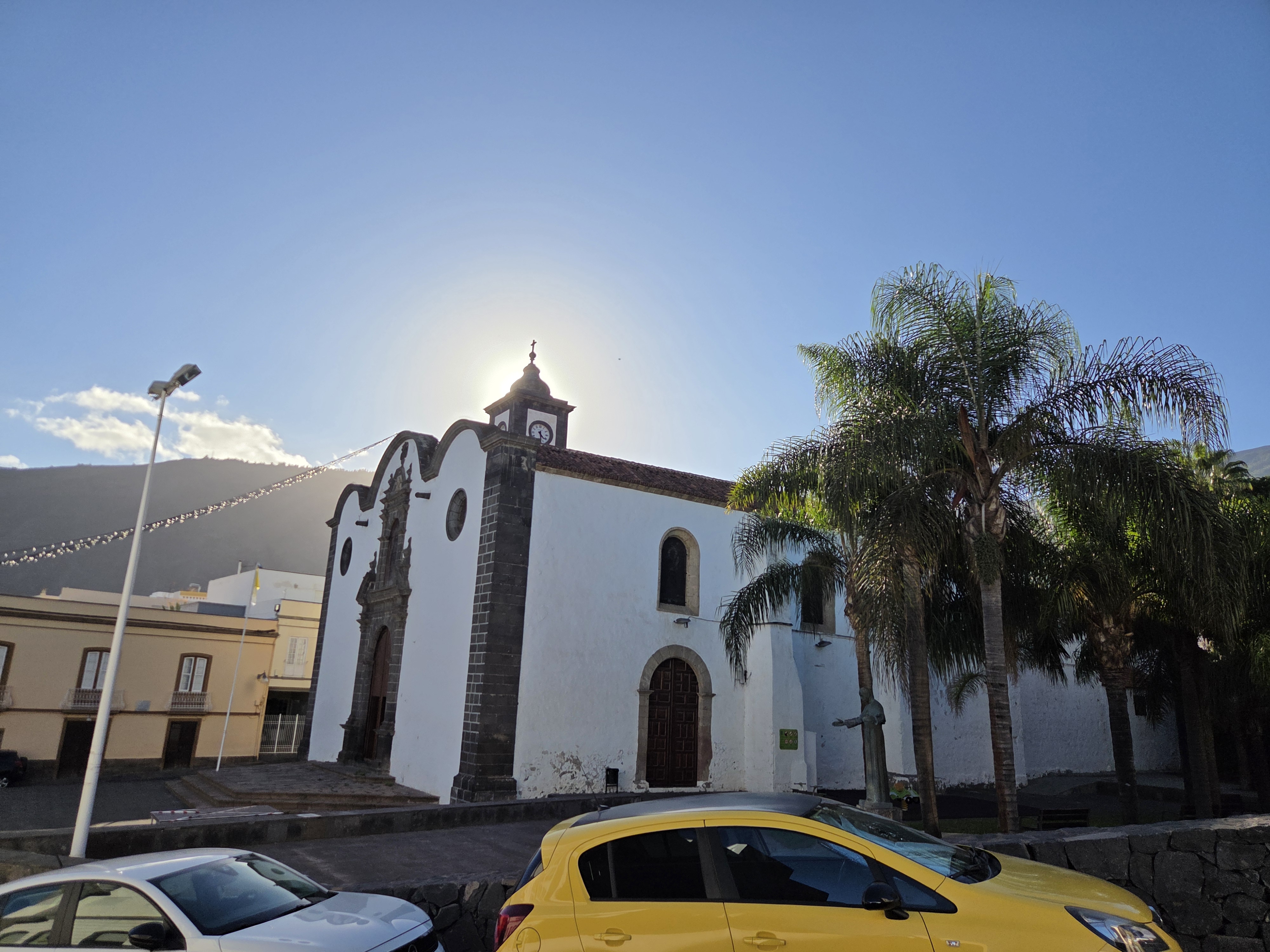
Walking around the building reveals how the church is slightly elevated above the surrounding plaza, with mountains in the background and rows of palm trees lining the side walls. The wide open space in front of the main door hosts religious celebrations, local fiestas and night-time concerts during town festivals.
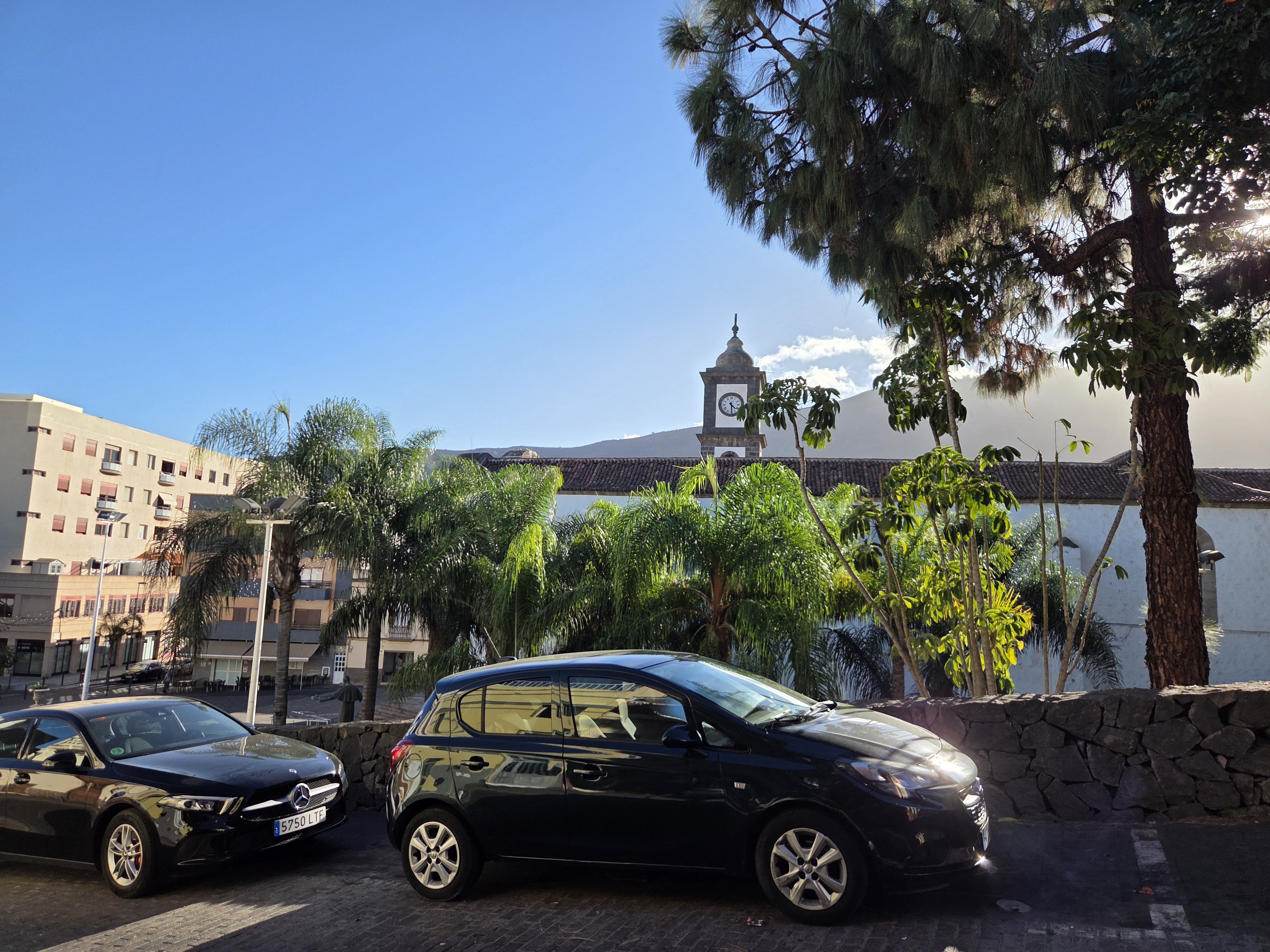
From nearby streets you can also catch glimpses of the clock tower above the rooftops and palms. This perspective shows how the church forms part of a wider urban landscape, framed by residential buildings and the forested slopes that rise behind the town.
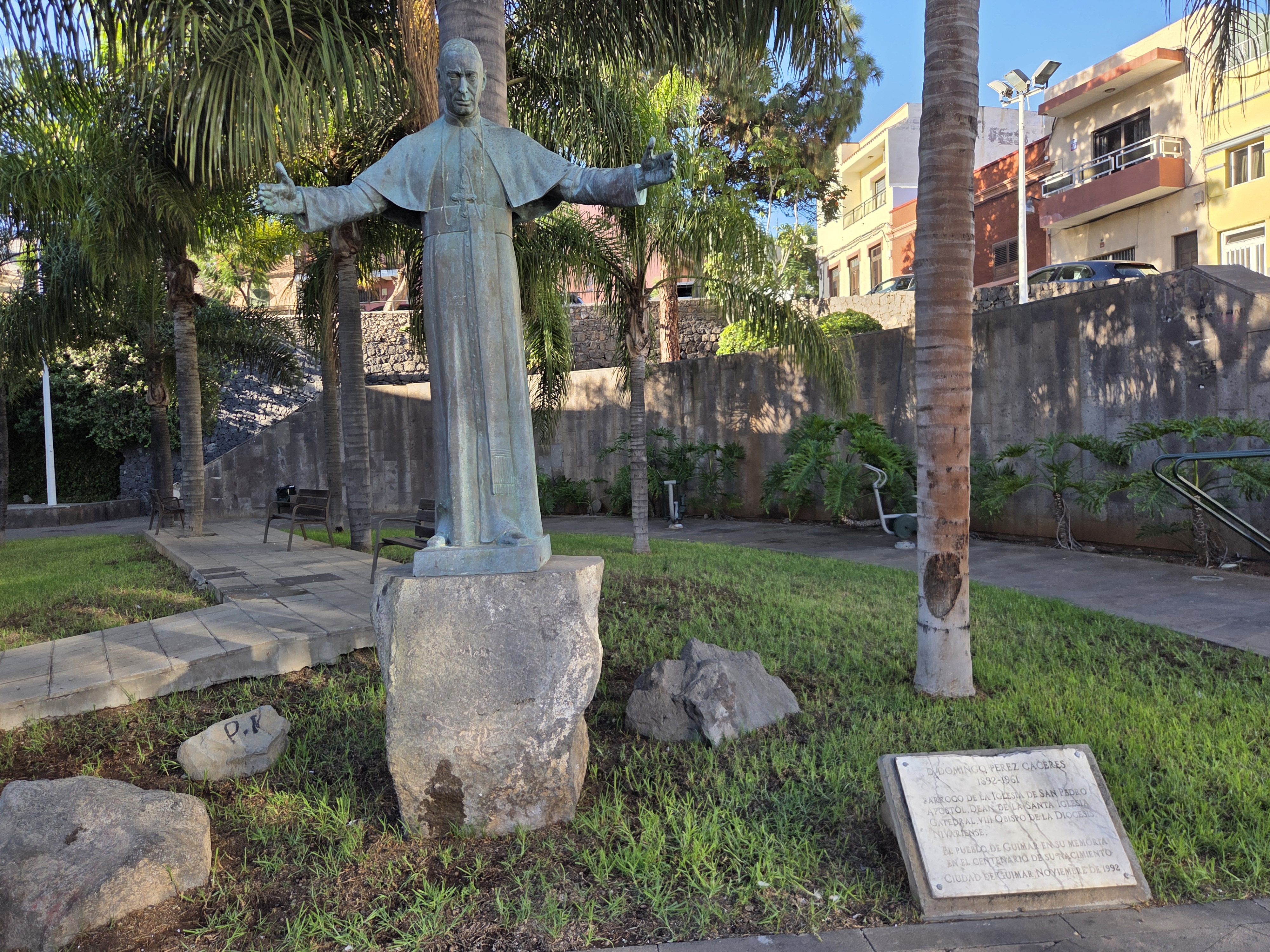
Güímar also pays tribute to important religious figures with statues in the landscaped gardens surrounding the church area. One bronze monument shows a clergyman with outstretched arms, standing on a stone pedestal among palms and benches used by neighbours for quiet rest.
Green plazas and shady corners
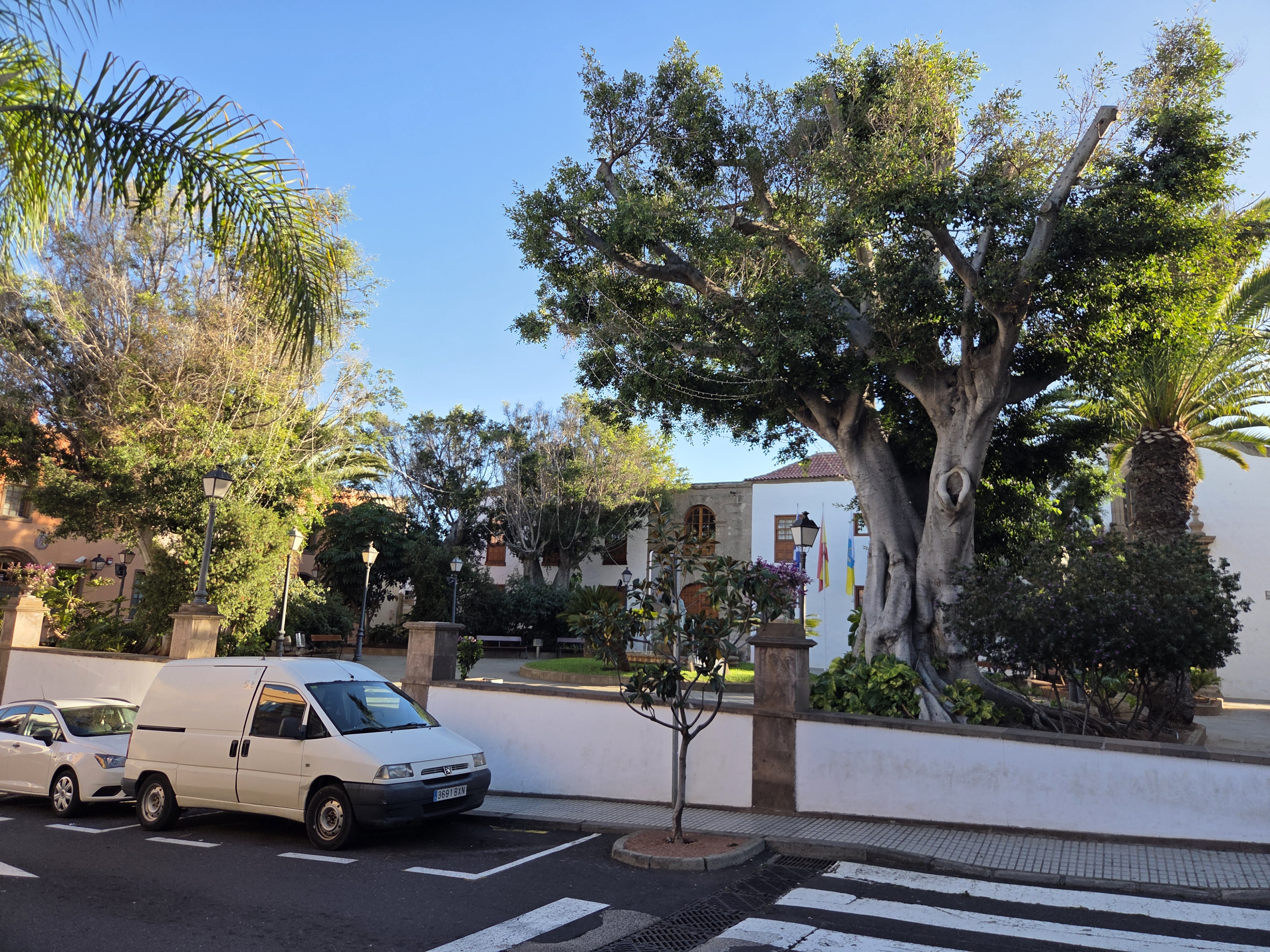
Besides the main church square, Güímar offers several leafy plazas where residents relax, read or chat in the shade. One of them is a raised garden behind a low white wall, dominated by a thick, sculptural tree that gives plenty of cover from the midday sun.
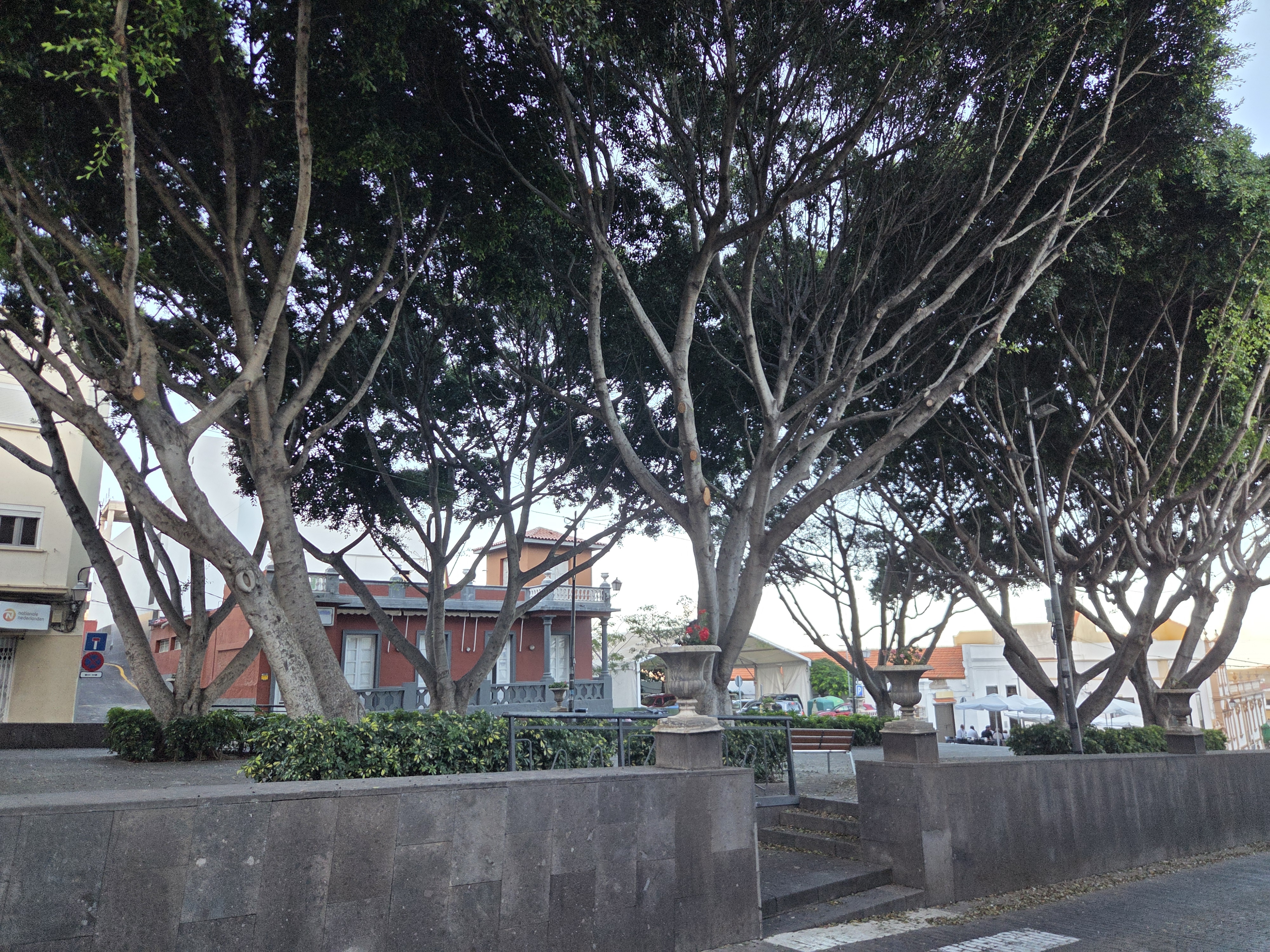
Another attractive corner is a small elevated terrace park lined with closely planted trees and planters filled with green shrubs. This is a quieter space, slightly above street level, where you can sit on a bench and watch daily life on the nearby avenues.
Playgrounds and family-friendly spaces
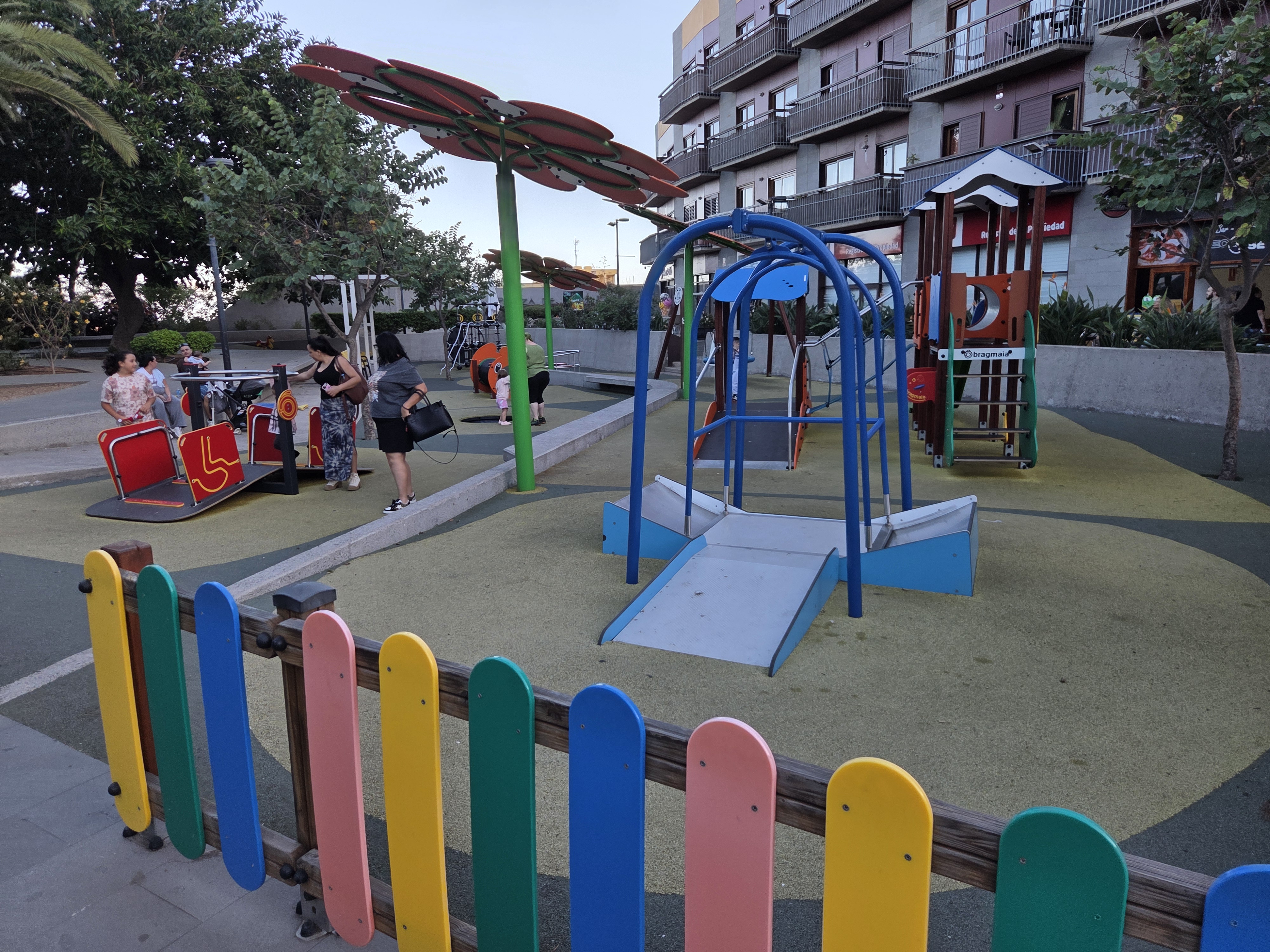
Families visiting Güímar will find colourful playgrounds ideal for a break with children. A modern play area close to local cafés includes accessible equipment, soft safety flooring and bright fences that encourage younger visitors to run, climb and explore.
Orientation signs and tourist information
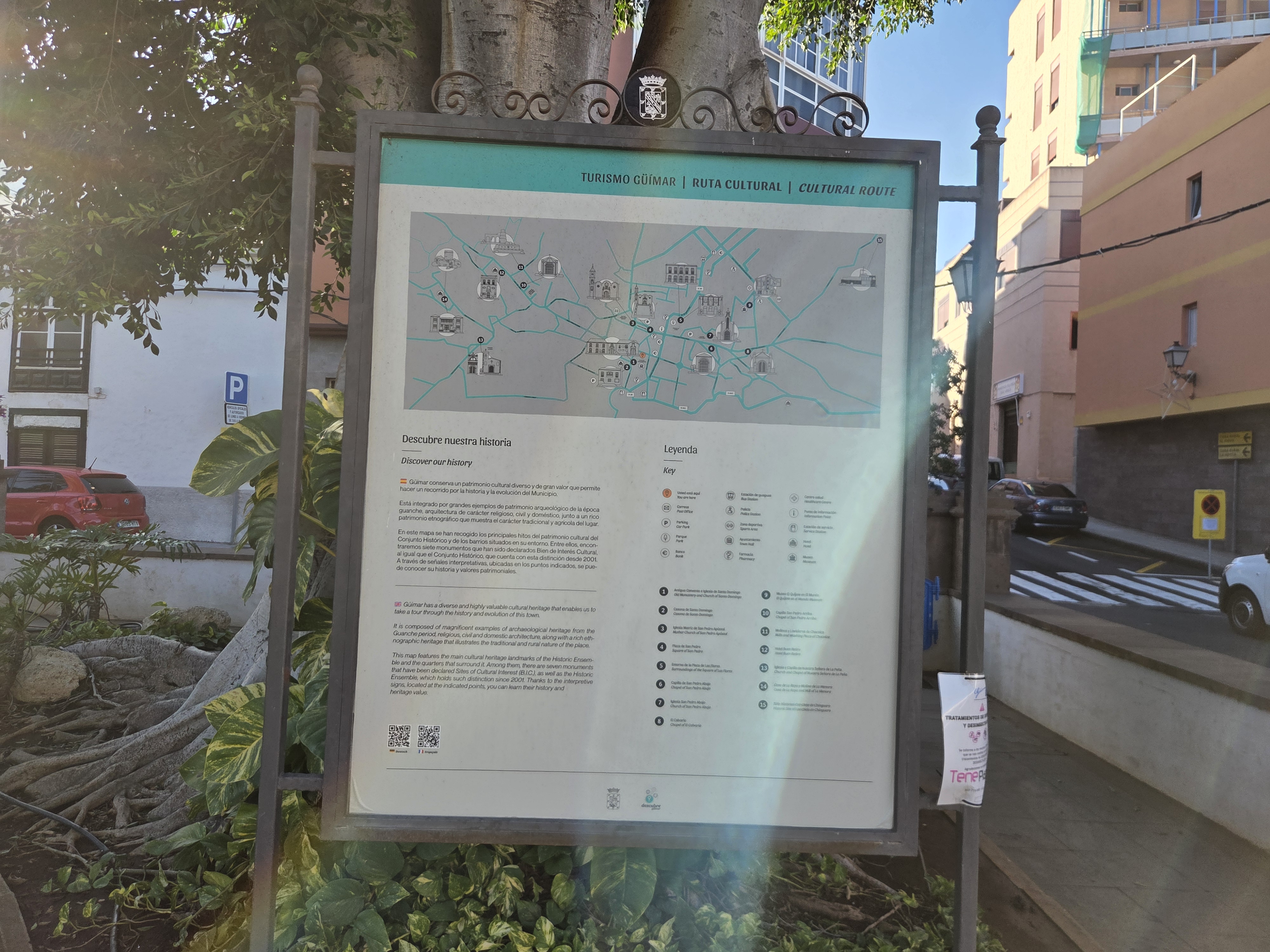
Finding your way around Güímar is easy thanks to tourist information boards placed near the historic centre. One large panel explains the cultural route, highlighting churches, plazas and heritage buildings, and offers a simple map that visitors can follow on foot.
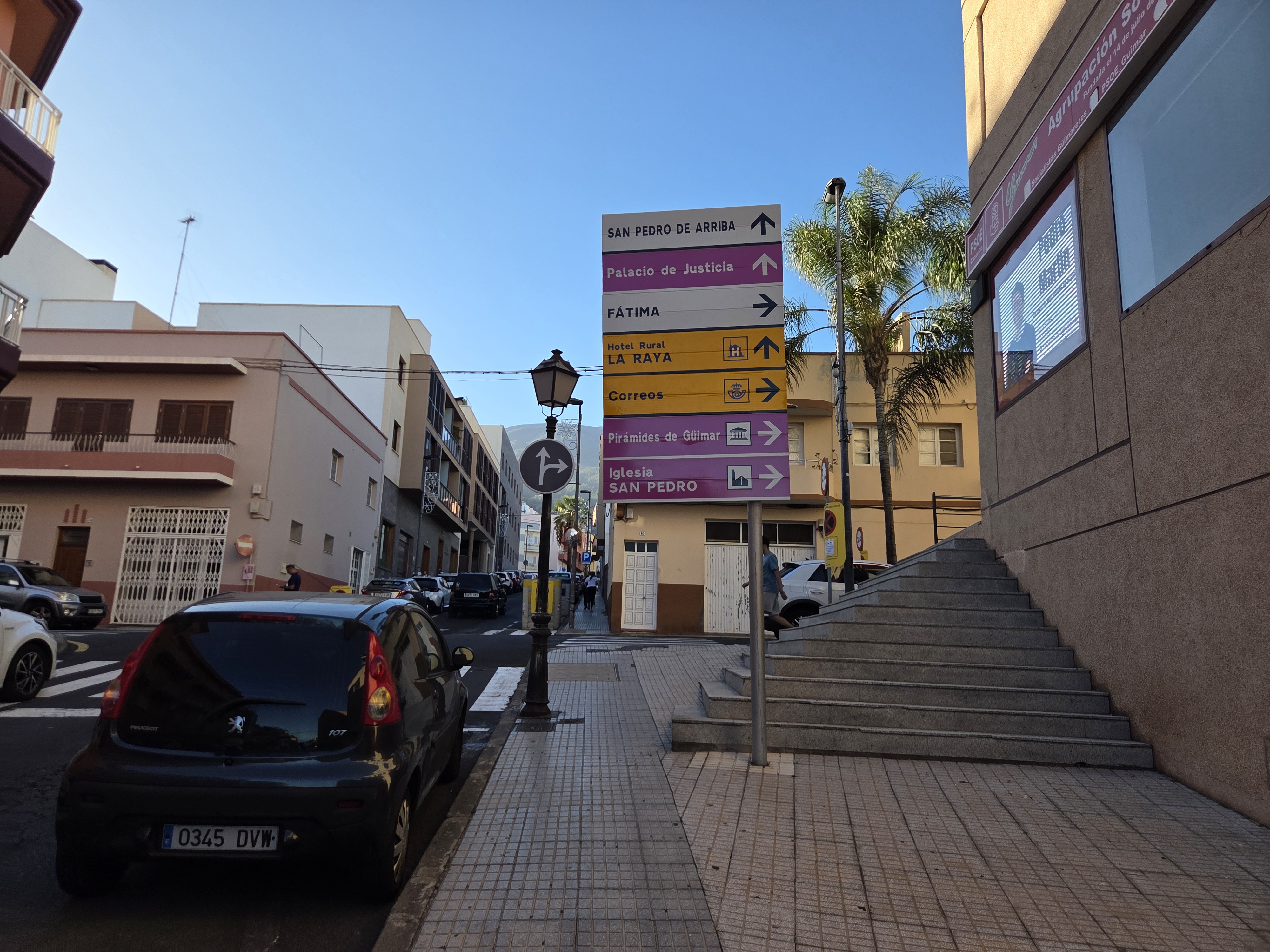
Street-level direction signs also point towards key places such as the Palacio de Justicia, the post office, parks, neighbourhoods like Fátima and, of course, the church of San Pedro. These panels are helpful if you arrive by car or bus and want to walk straight to the main attractions.
Traditional architecture and rural accommodation
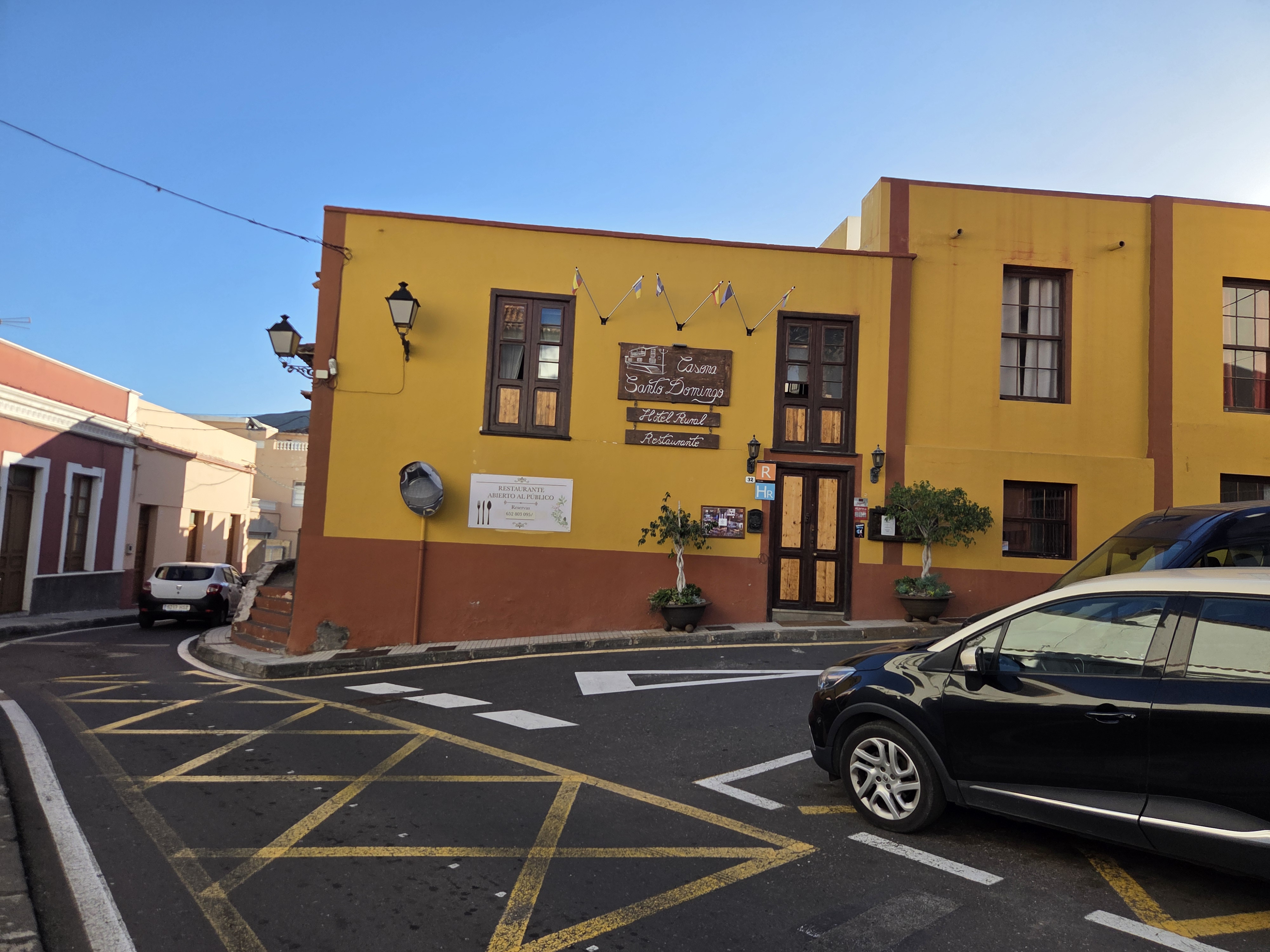
Güímar’s old streets still preserve traditional town houses with colourful façades and wooden balconies. A good example is the building that hosts a rural hotel and restaurant, painted in warm yellows and terracotta tones and standing at a small bend in the road.
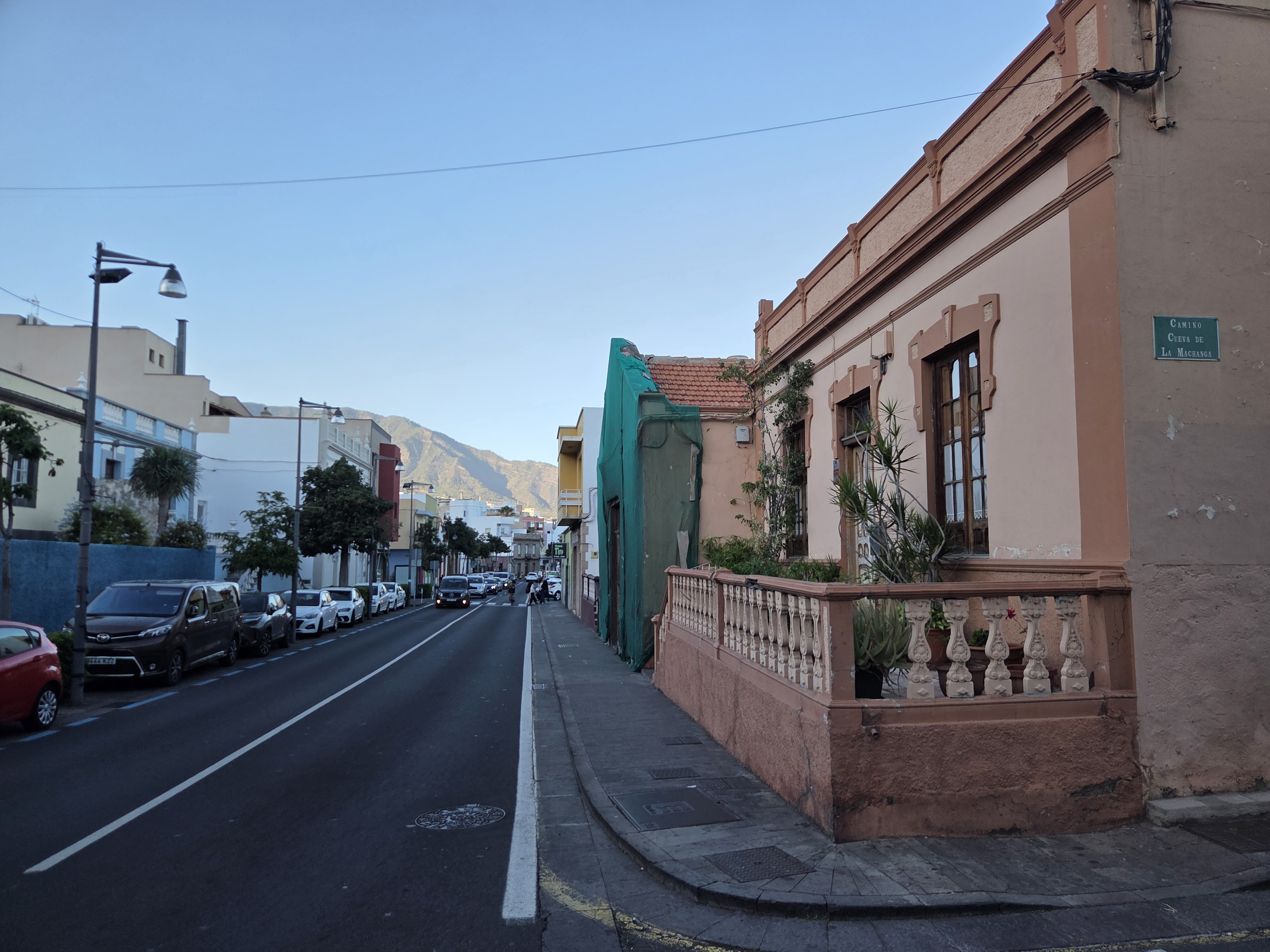
Nearby, other residential streets combine older houses with small gardens and modern buildings painted in strong colours. From some of these streets you can see the mountain slopes that frame Güímar valley, making it clear how close nature lies to the town centre.
Shops, services and everyday life
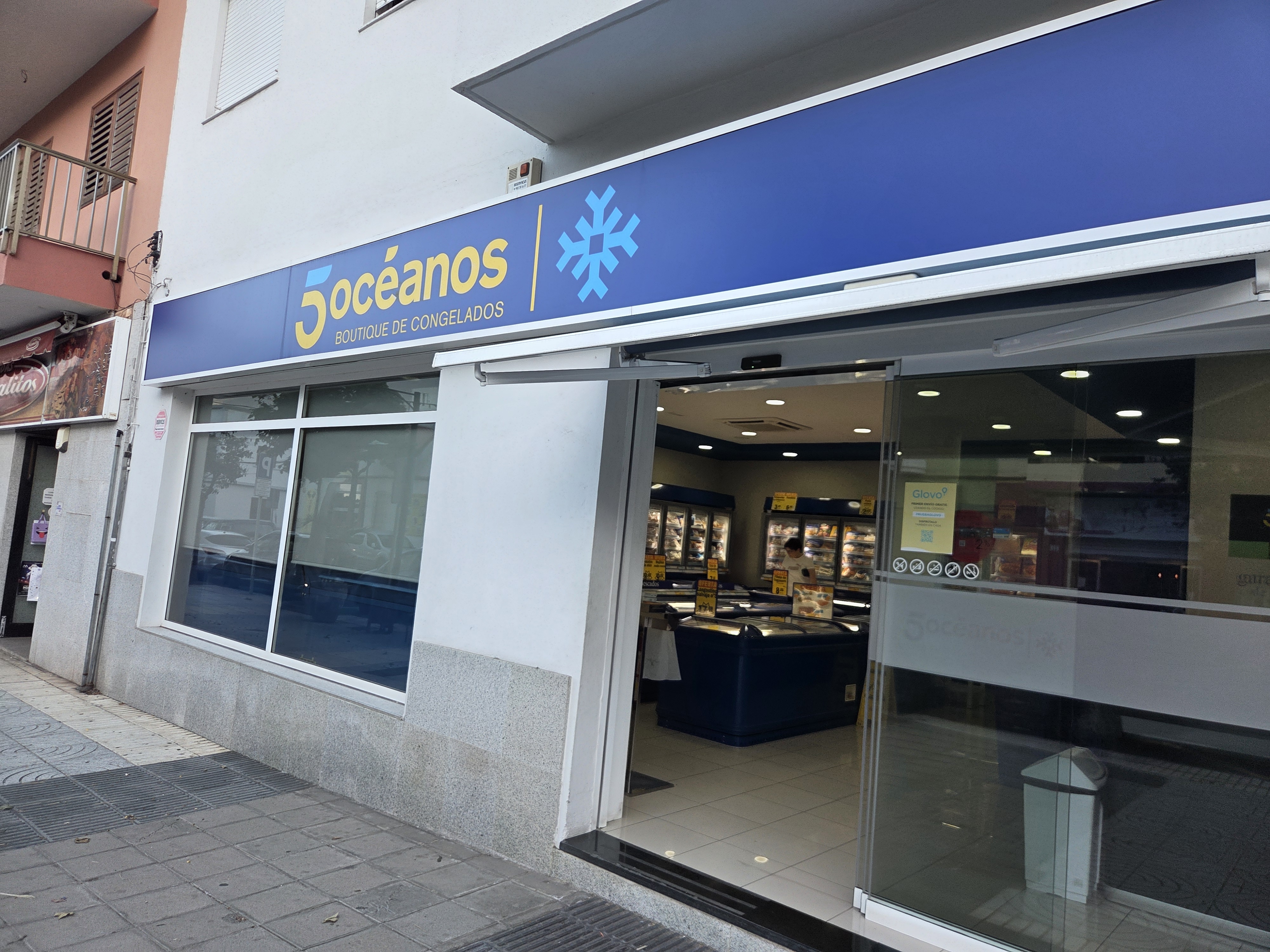
Güímar is not just about monuments; it is also a working town where locals do their daily shopping. On one of the main avenues you will find the 5 Océanos frozen food boutique, easily recognised by its blue sign and large sliding doors that open directly onto the pavement.
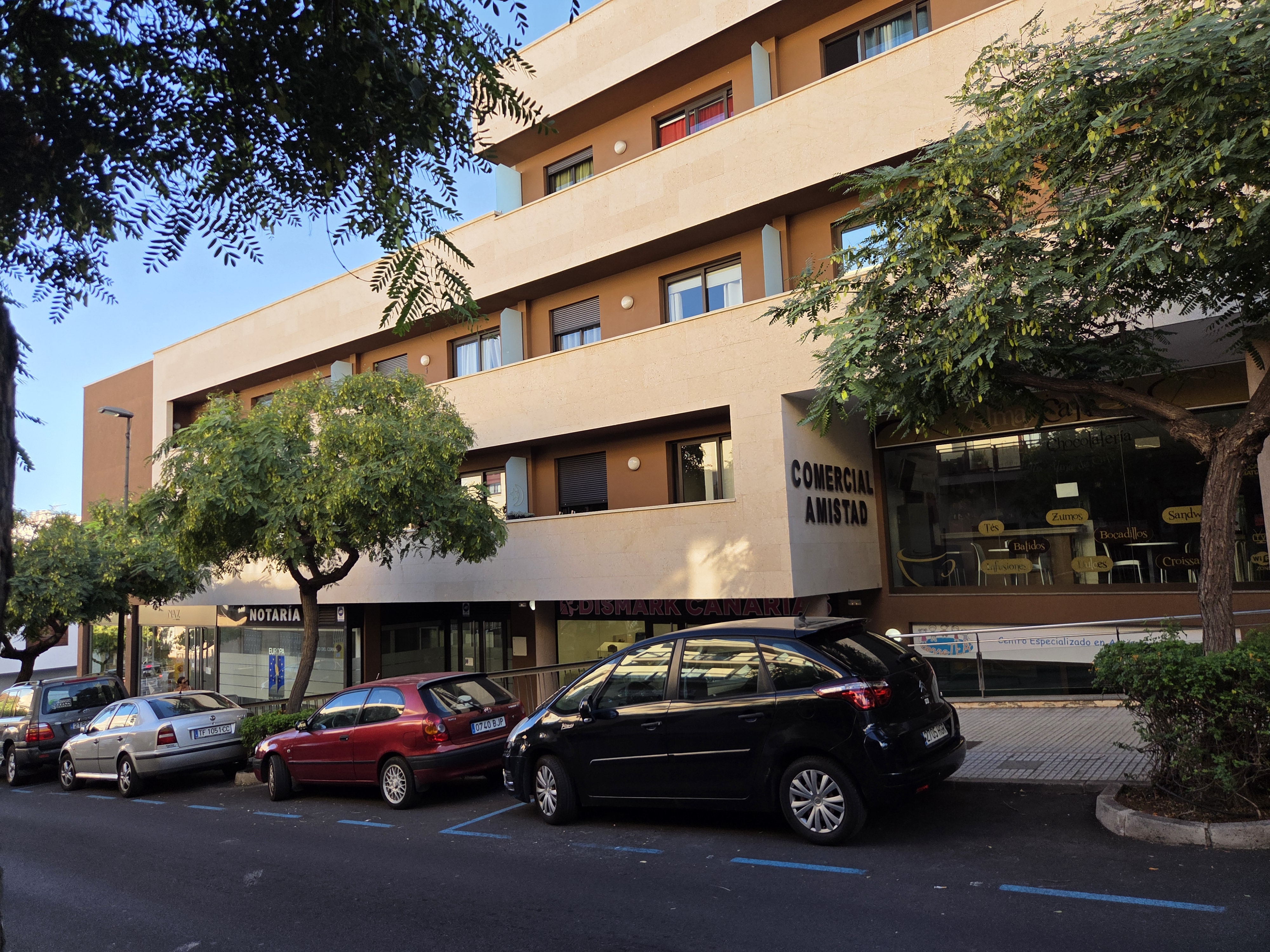
Just around the corner stands the Comercial Amistad building, a mixed-use block that hosts offices, shops and services on the ground floor. This part of town shows the more modern side of Güímar, with apartment balconies, banks and notary offices.
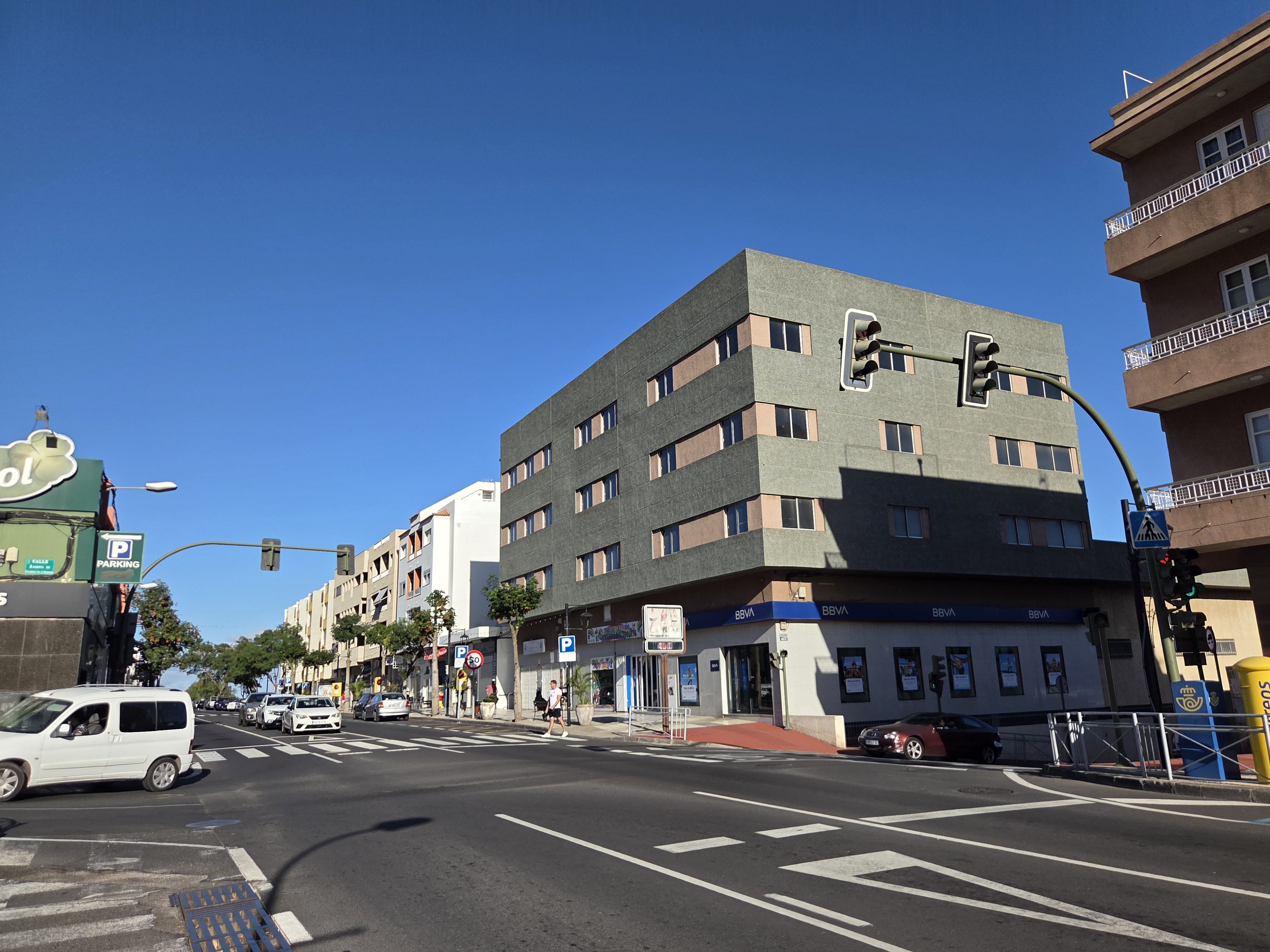
At one of the main crossroads another block houses a BBVA branch and several local businesses, while zebra crossings and traffic lights manage the steady flow of cars. This junction is a good reference point when you arrive in Güímar by road.
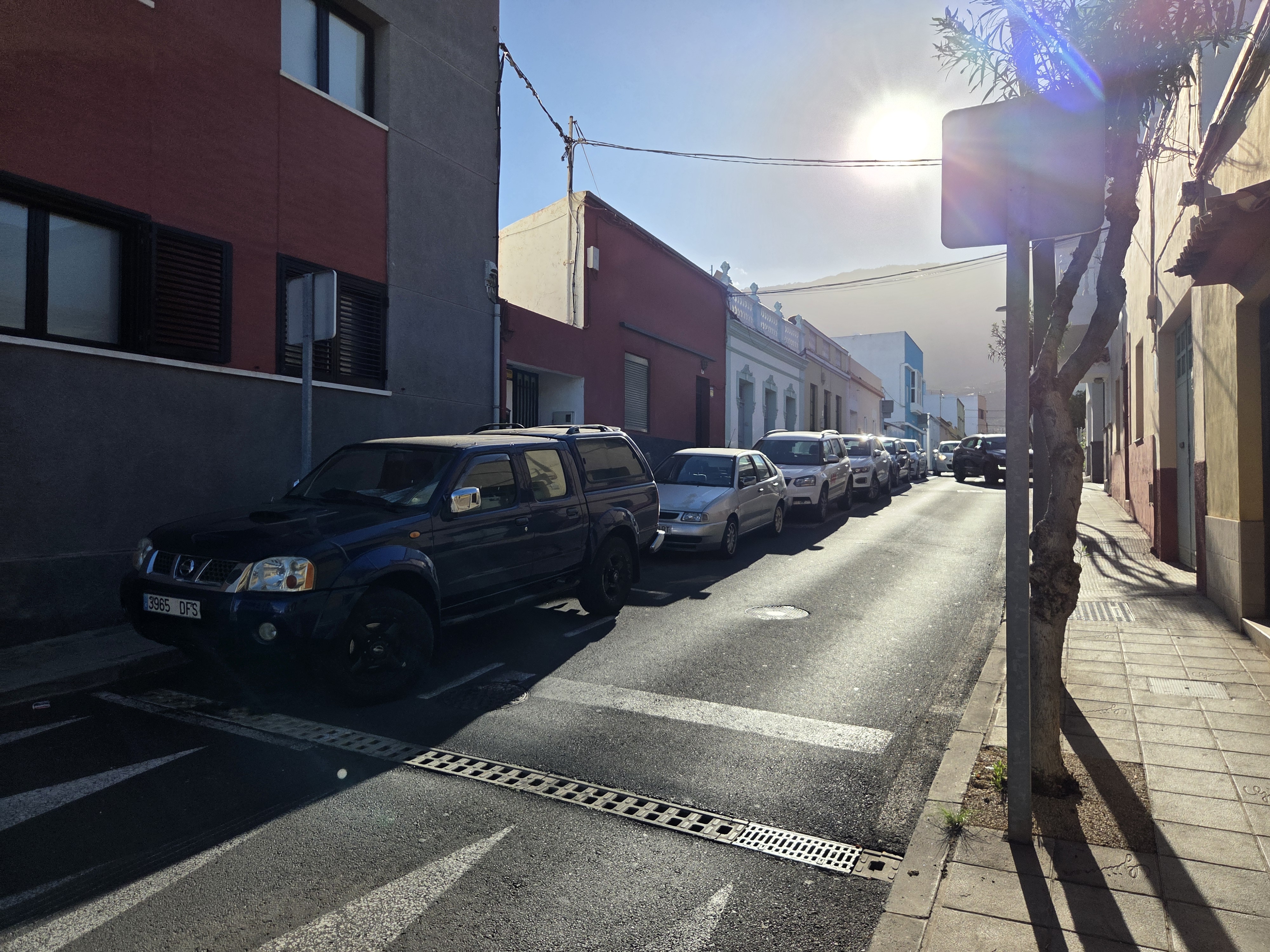
Some streets are more residential and quiet, lined with parked cars on both sides and low buildings painted in red, grey or pastel shades. These are the roads you are likely to walk along if you are staying in a local apartment or visiting friends.
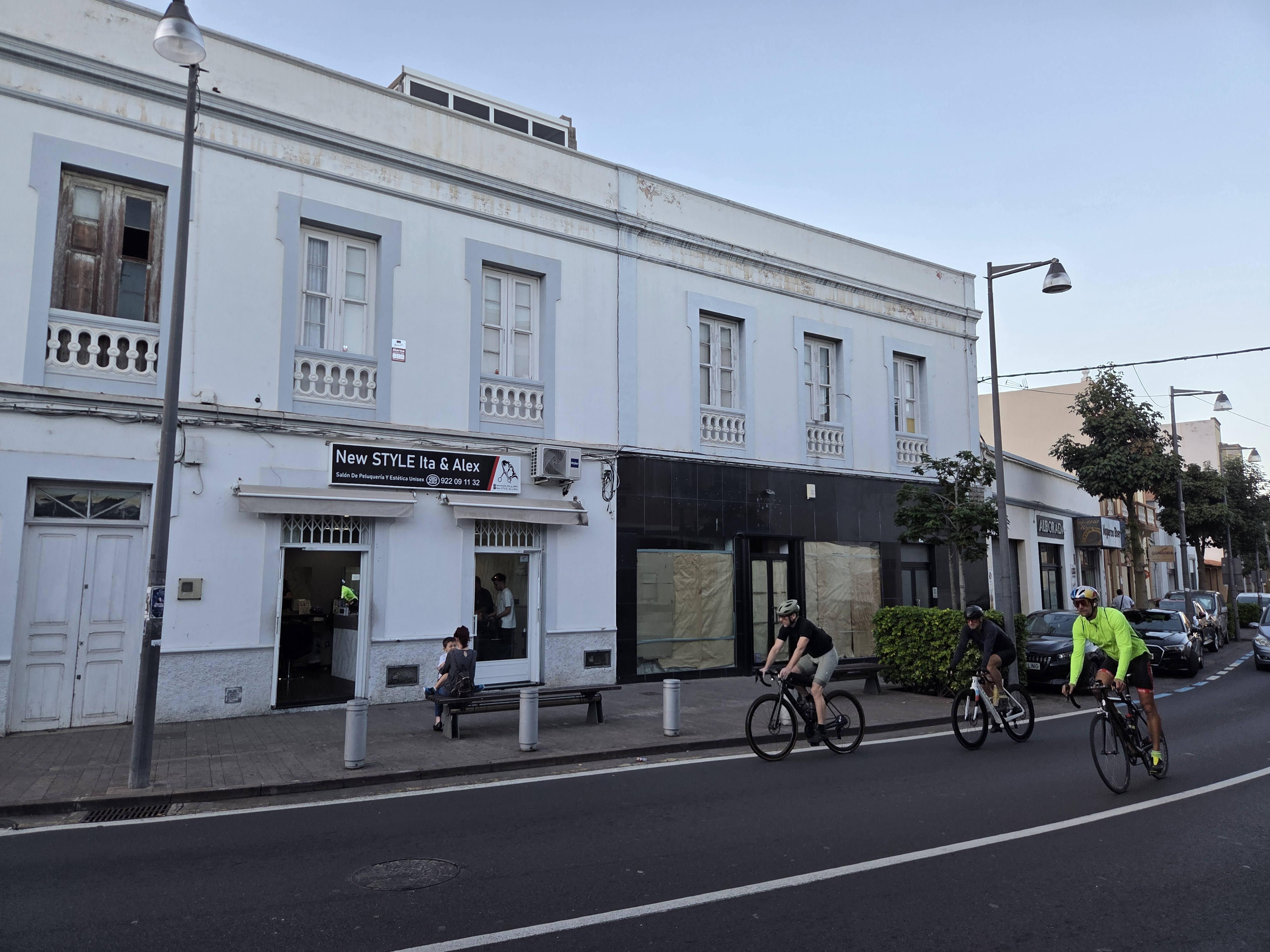
The town also has a lively, social side. In one image you can see cyclists riding past a hair salon while neighbours sit on benches and chat. It captures the relaxed, small-town atmosphere that many visitors enjoy when they choose Güímar as a base.
Bus station and connections with the rest of Tenerife
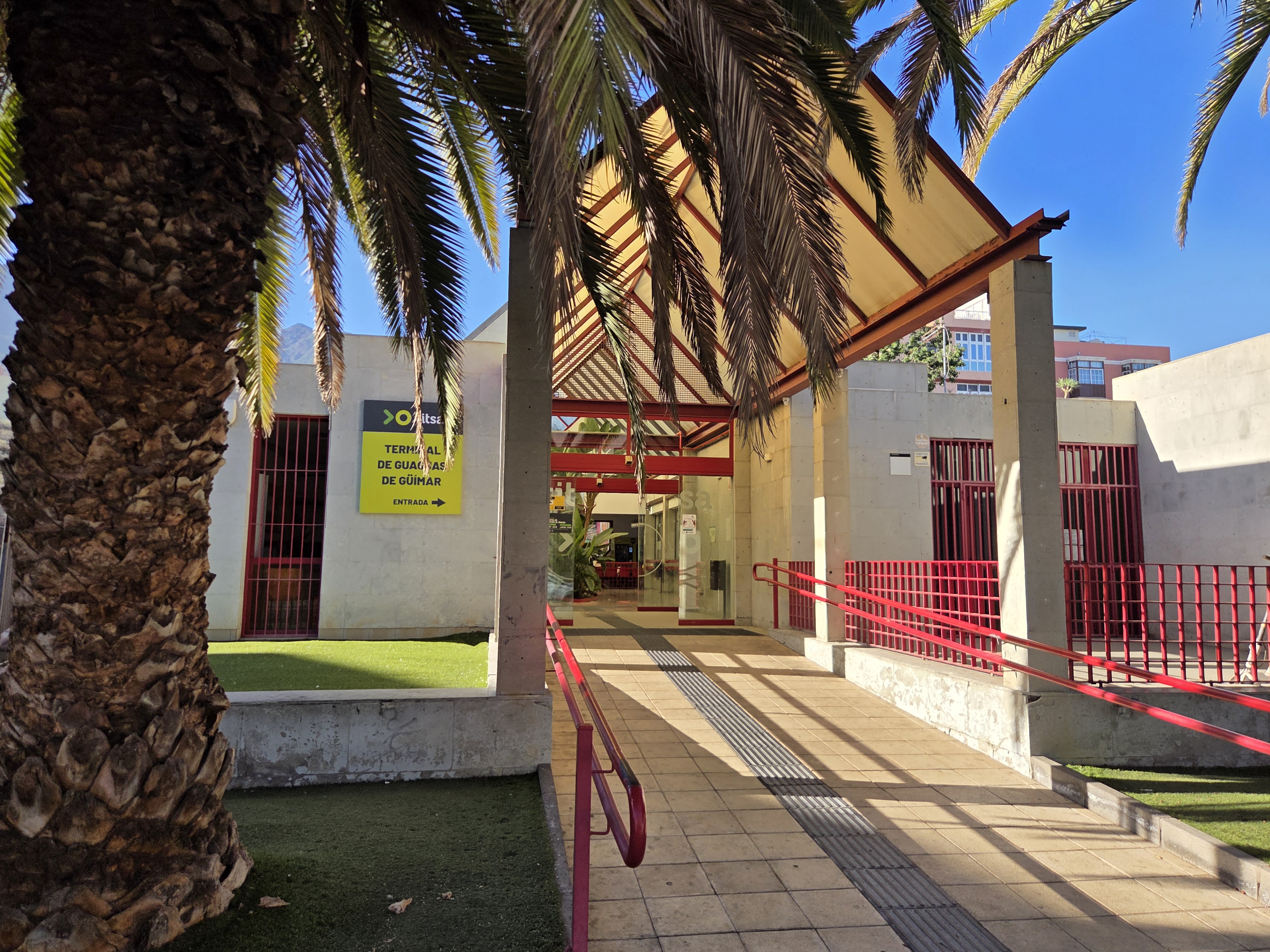
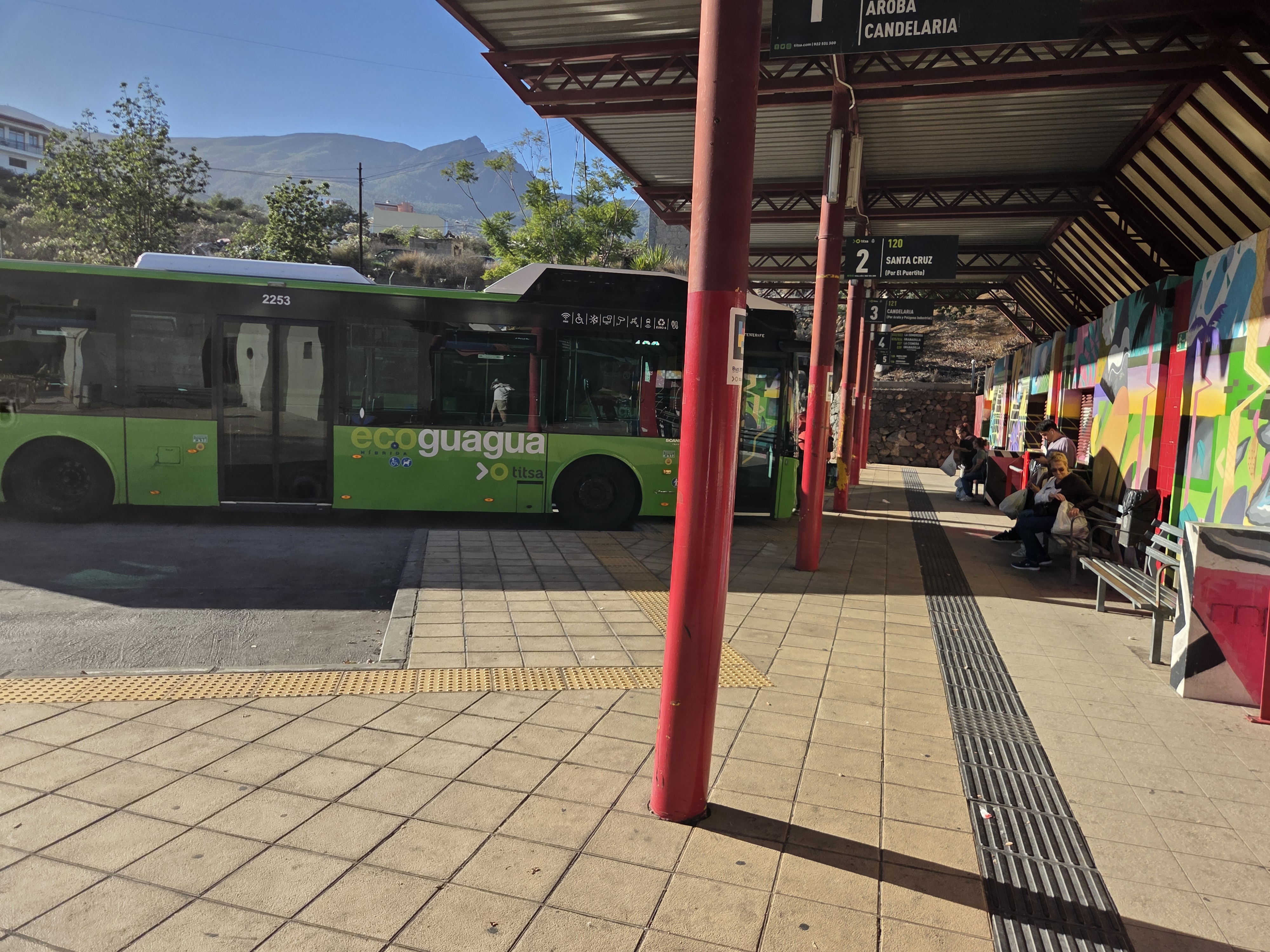
Güímar is well connected by public transport, making it easy to visit from Santa Cruz or the south of Tenerife. The Terminal de Guaguas de Güímar is a compact but functional bus station with covered platforms and colourful murals along the waiting areas.
TITSA’s green eco-guagua buses leave from here towards Santa Cruz, Candelaria and other destinations along the TF-1 motorway. Travellers who prefer not to drive will appreciate how straightforward it is to reach the town centre from the station on foot.
A final detail: Güímar’s street cat
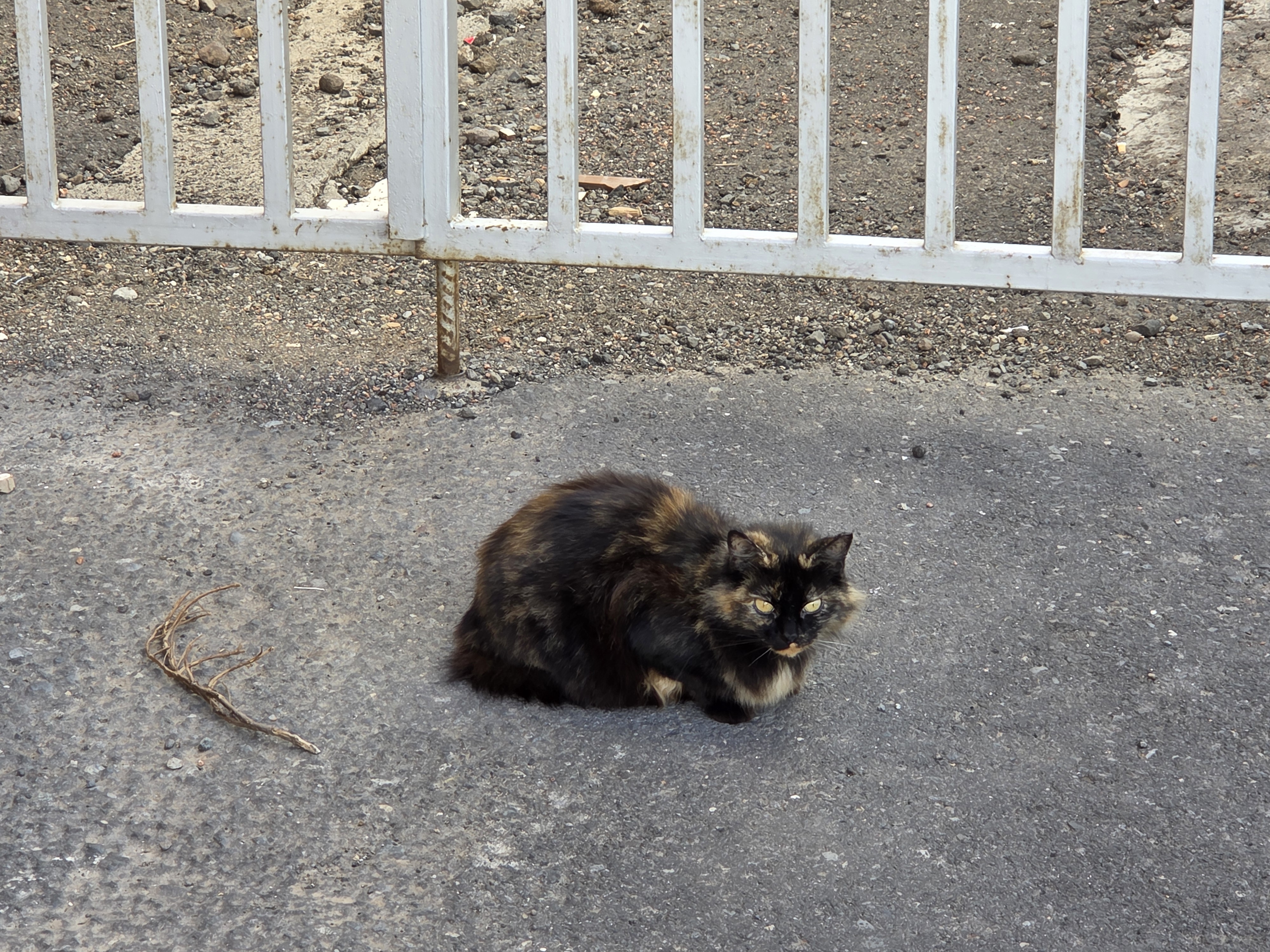
No walk through a Canarian town would be complete without meeting at least one local cat. In Güímar, this tortoiseshell feline calmly guards the entrance to a fenced area, perfectly blending into the volcanic colours of the ground and surrounding stones.
Why Güímar deserves a place in your Tenerife itinerary
Güímar may not be as famous as Tenerife’s big resorts, but its combination of historic church, leafy parks, rural accommodation, practical services and easy bus connections makes it an attractive stop for travellers who want to experience everyday island life. Whether you visit for a morning coffee in the central square, a stroll around San Pedro church or as a base for exploring the valley and nearby coast, this town offers a genuine taste of the Canary Islands away from the crowds.