Playa de Antequera – wild black sand beach and coastal hike on the Anaga coast of Tenerife
Hidden below the rugged cliffs of the Anaga mountains on Tenerife’s northeastern coast, Playa de Antequera is one of the most remote black sand beaches on the island. It can only be reached by boat or along a demanding coastal hiking trail, which keeps the bay quiet, unspoiled and full of Atlantic character. The following photo guide shows the route, the views from the cliffs and the details you can expect when planning your own trip to this secluded beach.
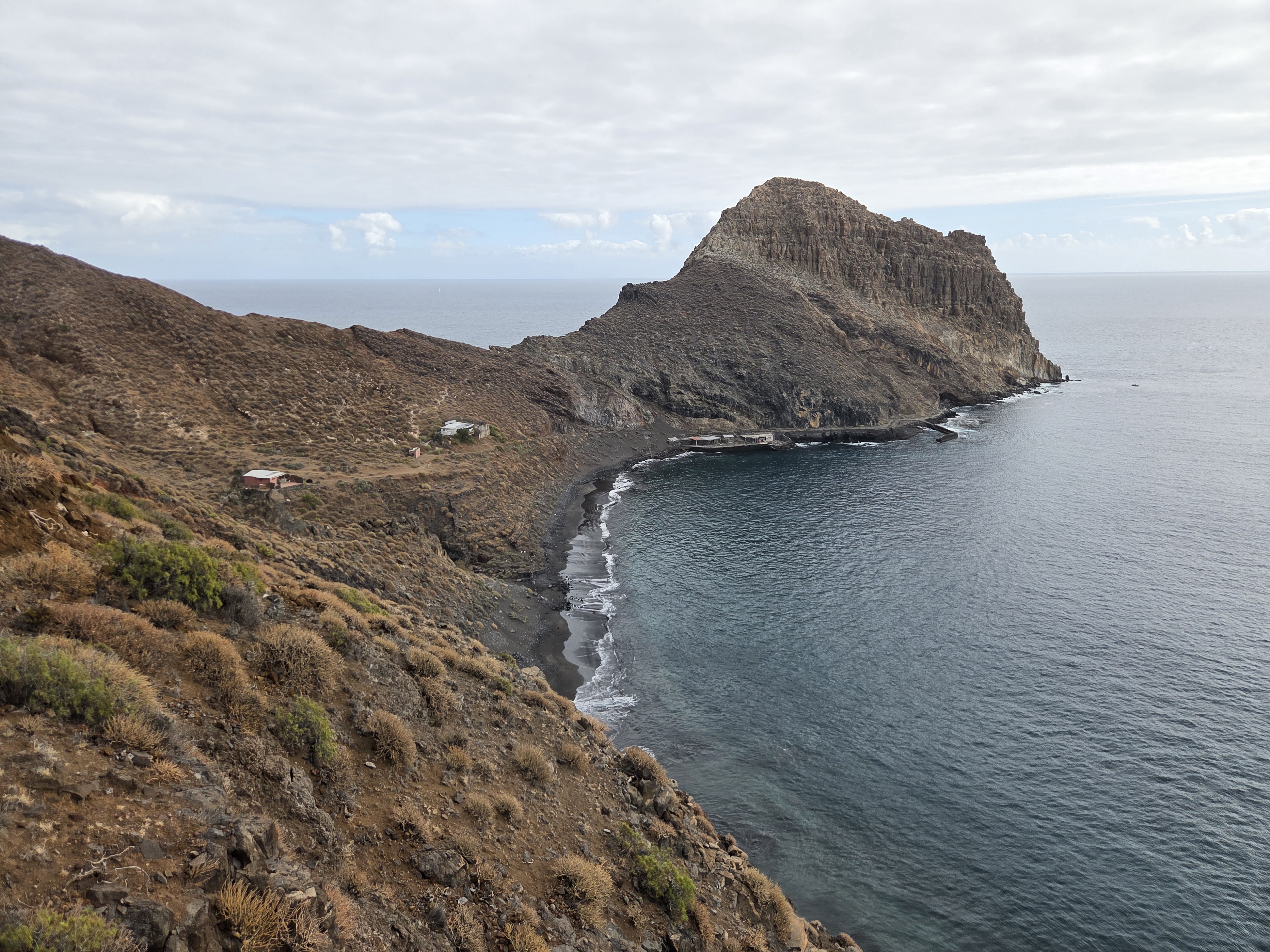
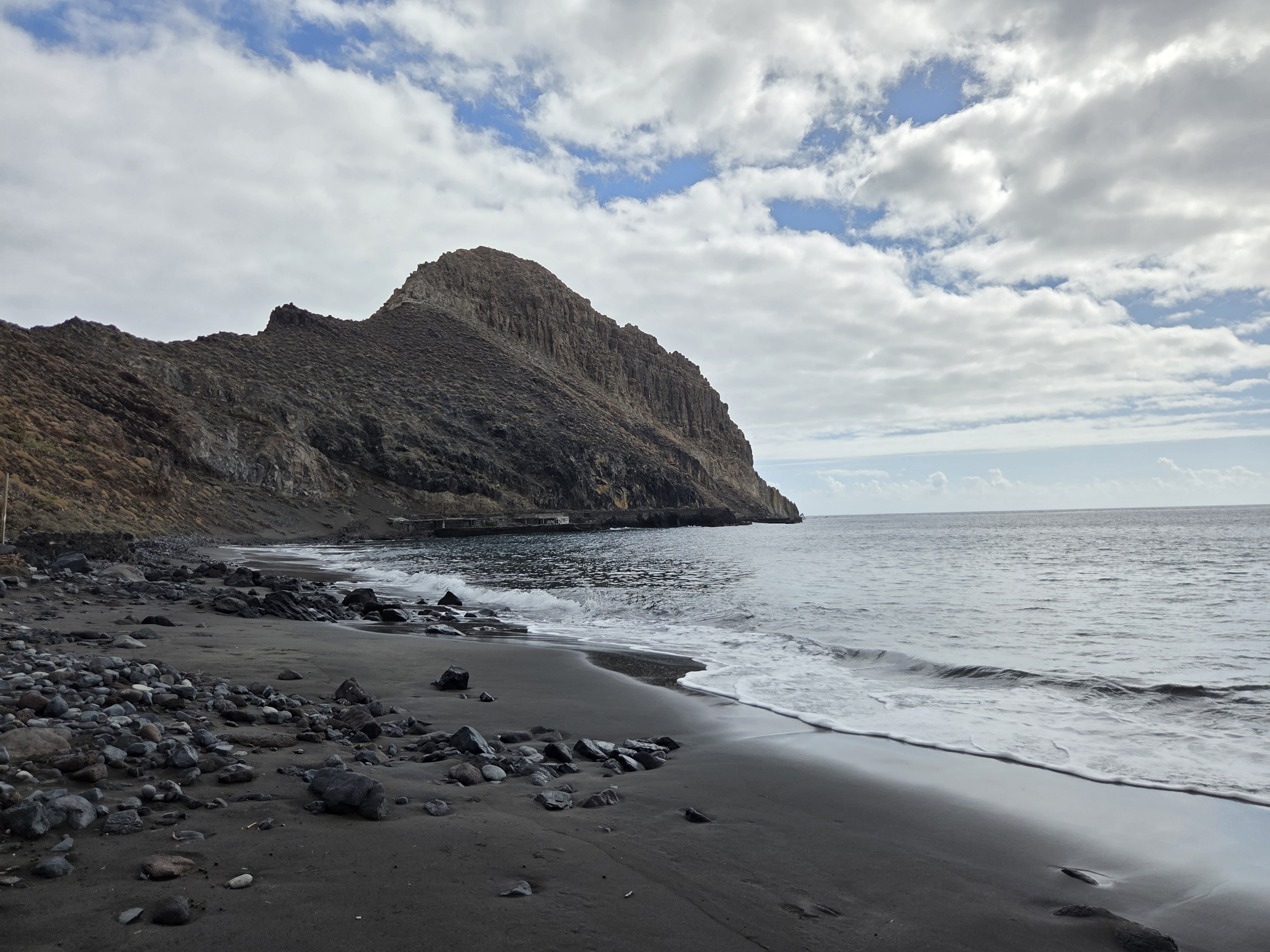
From a distance, Playa de Antequera looks like a crescent of dark volcanic sand pressed between sheer cliffs and the open Atlantic. The small platform and buildings by the water reveal how isolated the cove is: there are no roads, and visitors arrive either on hiking paths from the Anaga villages or by watertaxi from Santa Cruz and San Andrés. This isolation is exactly what makes the beach so appealing for hikers and nature lovers searching for an off-the-beaten-path Tenerife experience.
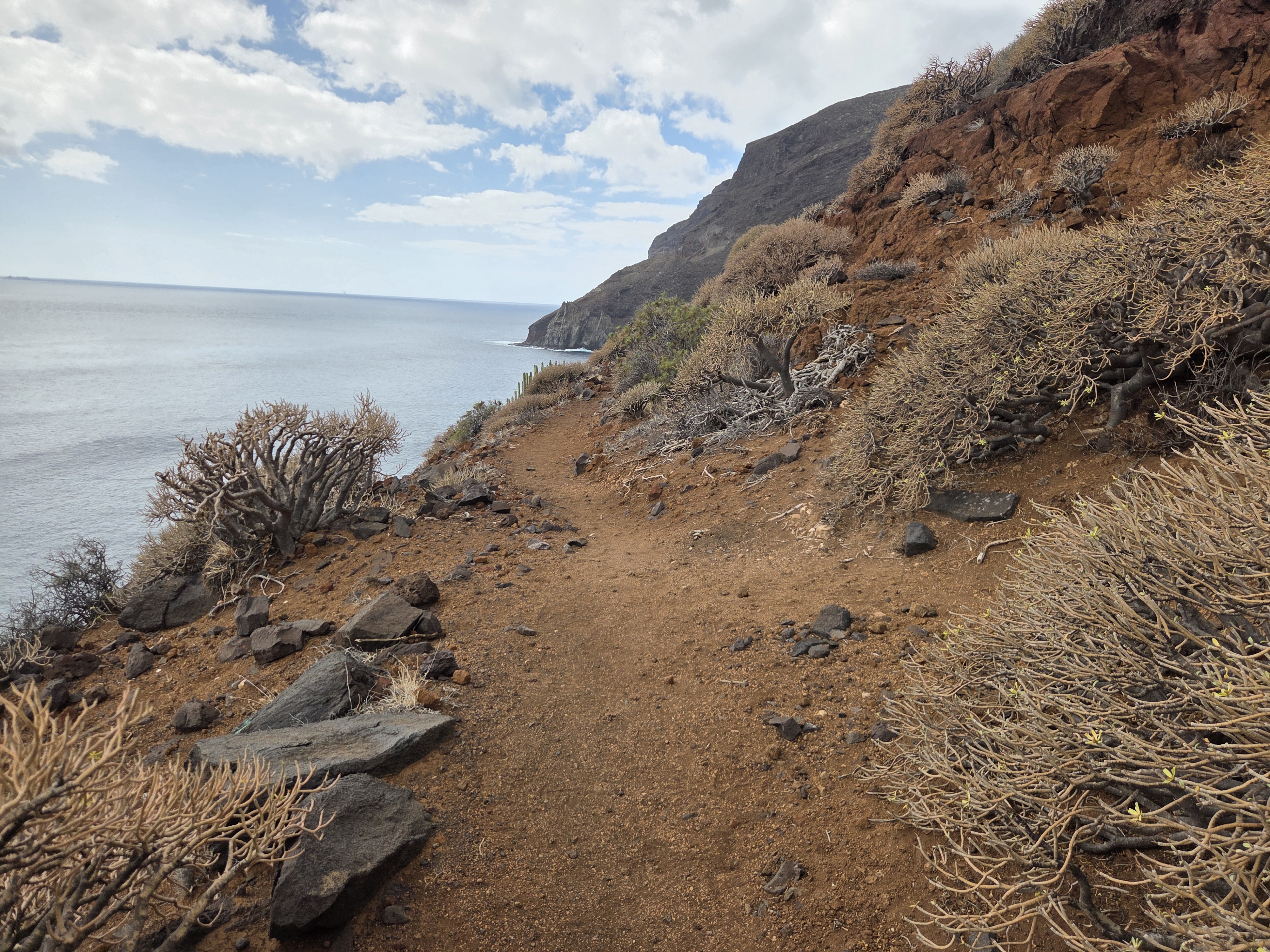
The descent to the beach follows a narrow dirt trail along the cliffs, surrounded by hardy shrubs and weather-beaten volcanic rock. The path is beautiful but exposed, with loose stones in places, so good footwear and a reasonable level of fitness are essential. On clear days you can watch small boats cross the bay far below while you zigzag slowly towards the shoreline.
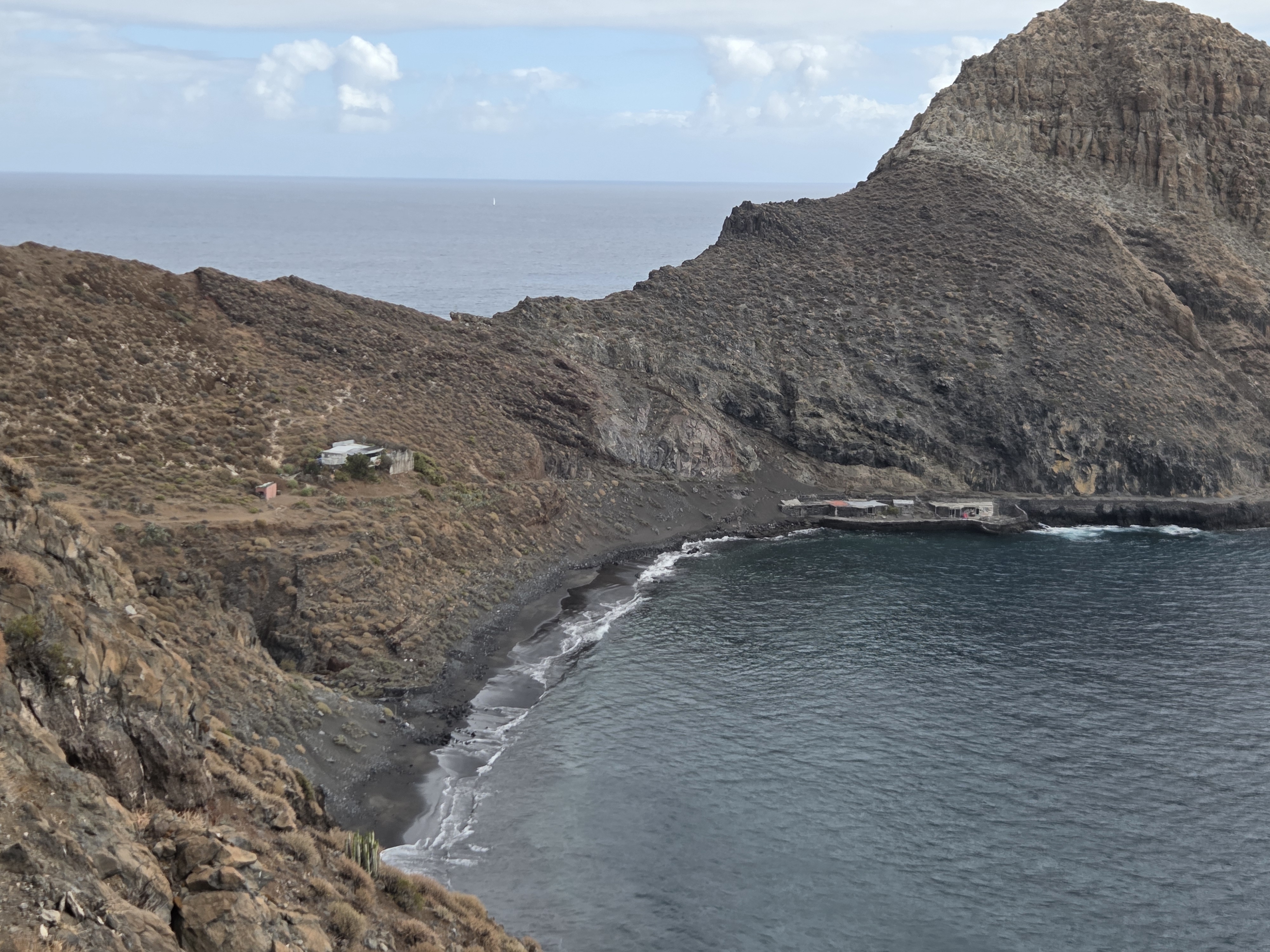
Higher up on the route, viewpoints open towards the entire cove. From here you can clearly see the dark sand, the old houses scattered on the terrace above the sea and the dramatic rock formation that protects the bay from the strongest Atlantic swells. These balcony-like stops are perfect spots for taking a break, drinking water and photographing the unique combination of ocean, cliffs and volcanic landscape.
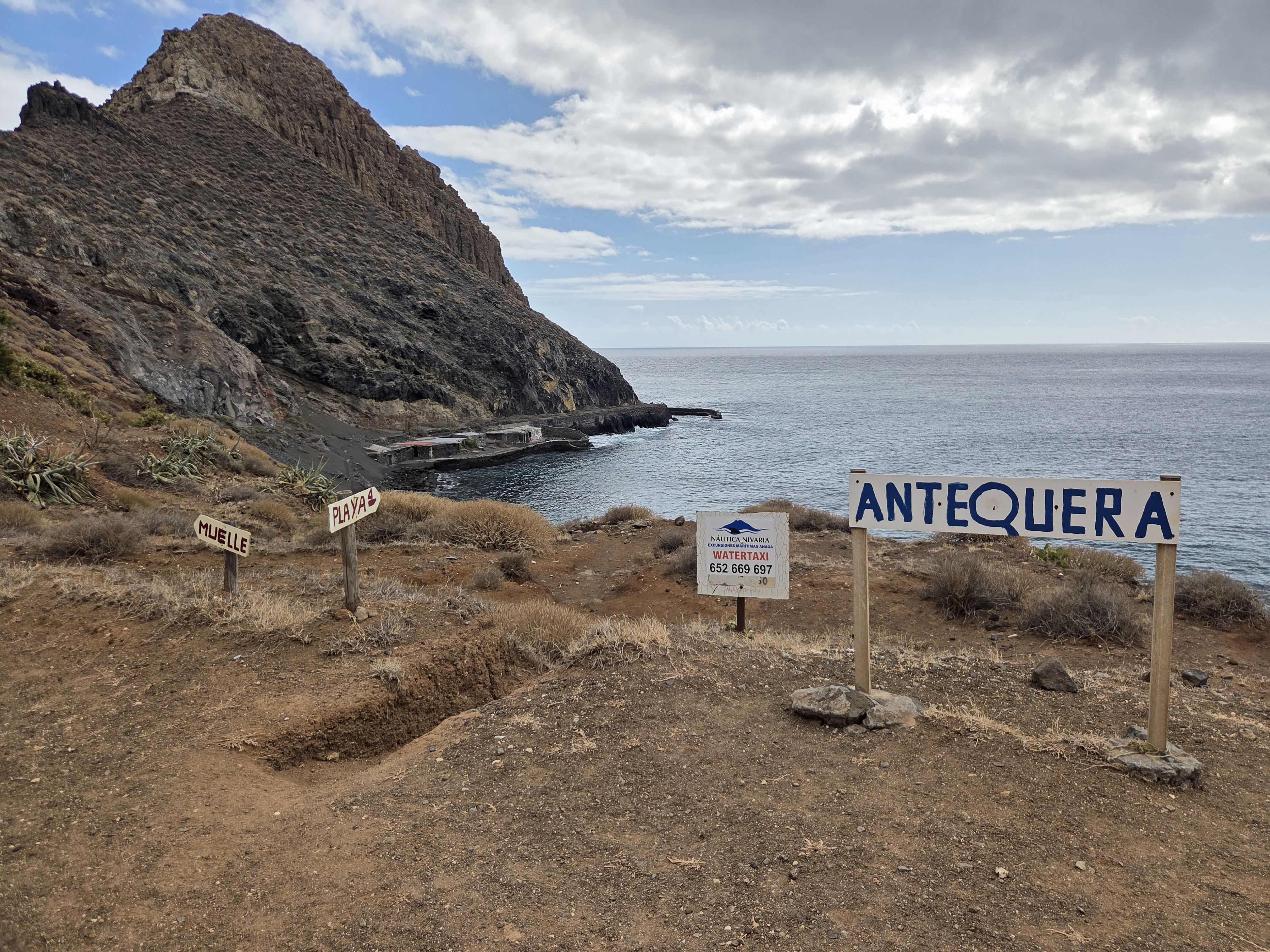
Close to the end of the descent you reach a small plateau where handmade signs indicate the last options: one path down to the beach itself and another towards the tiny pier. This is the decision point for hikers who plan to leave Antequera by watertaxi rather than walking all the way back. The simple, weathered boards match the wild atmosphere and remind visitors that services here are minimal.
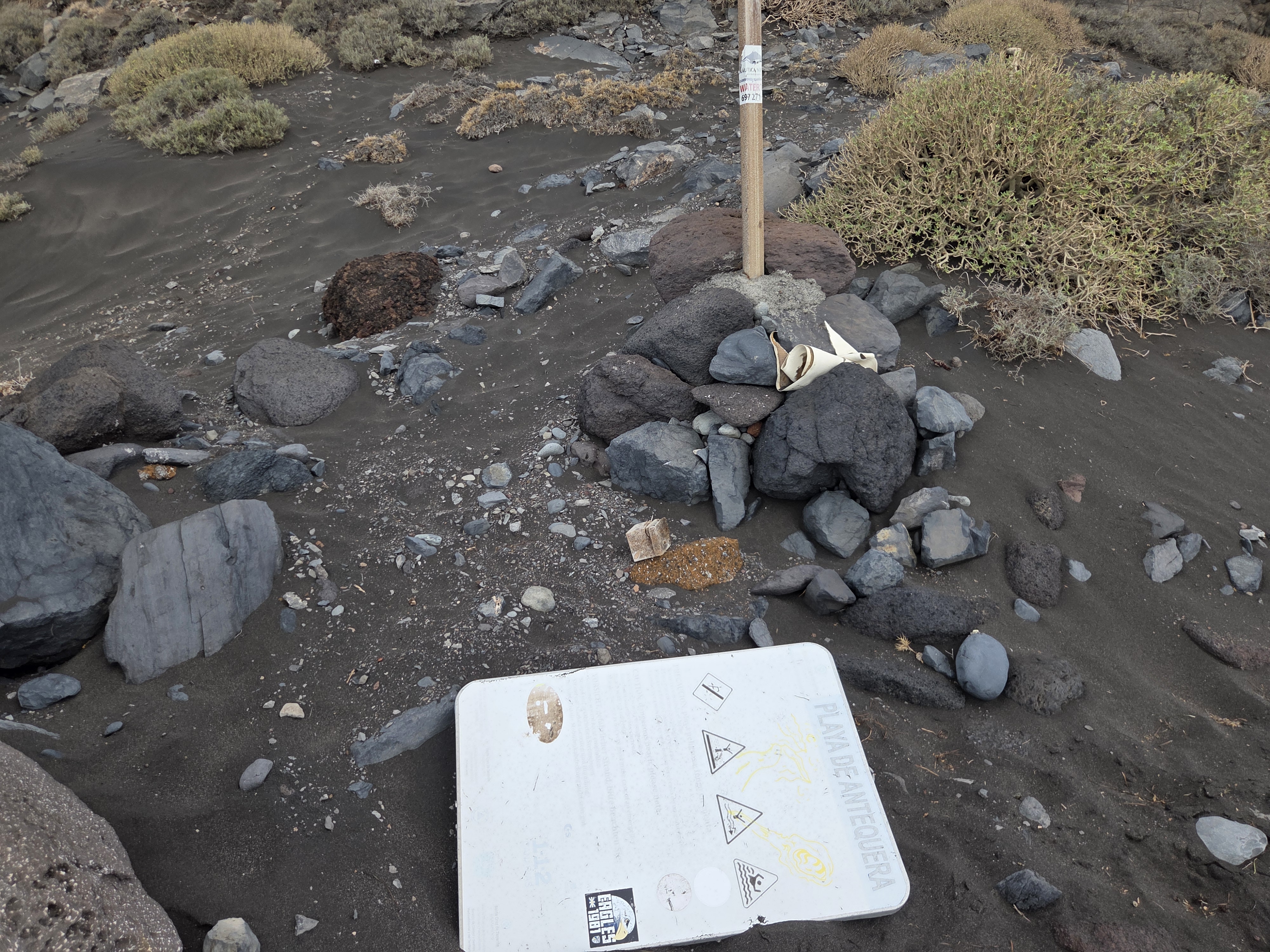
Down on the sand, a fallen information board shows how harsh the coastal conditions can be. Strong winds, salt spray and winter storms quickly wear down any structure that is not regularly maintained. This reminder reinforces why visitors should treat Playa de Antequera as a natural, wild environment: there are no lifeguards, few signposts and you must be self-sufficient with water, food and sun protection.
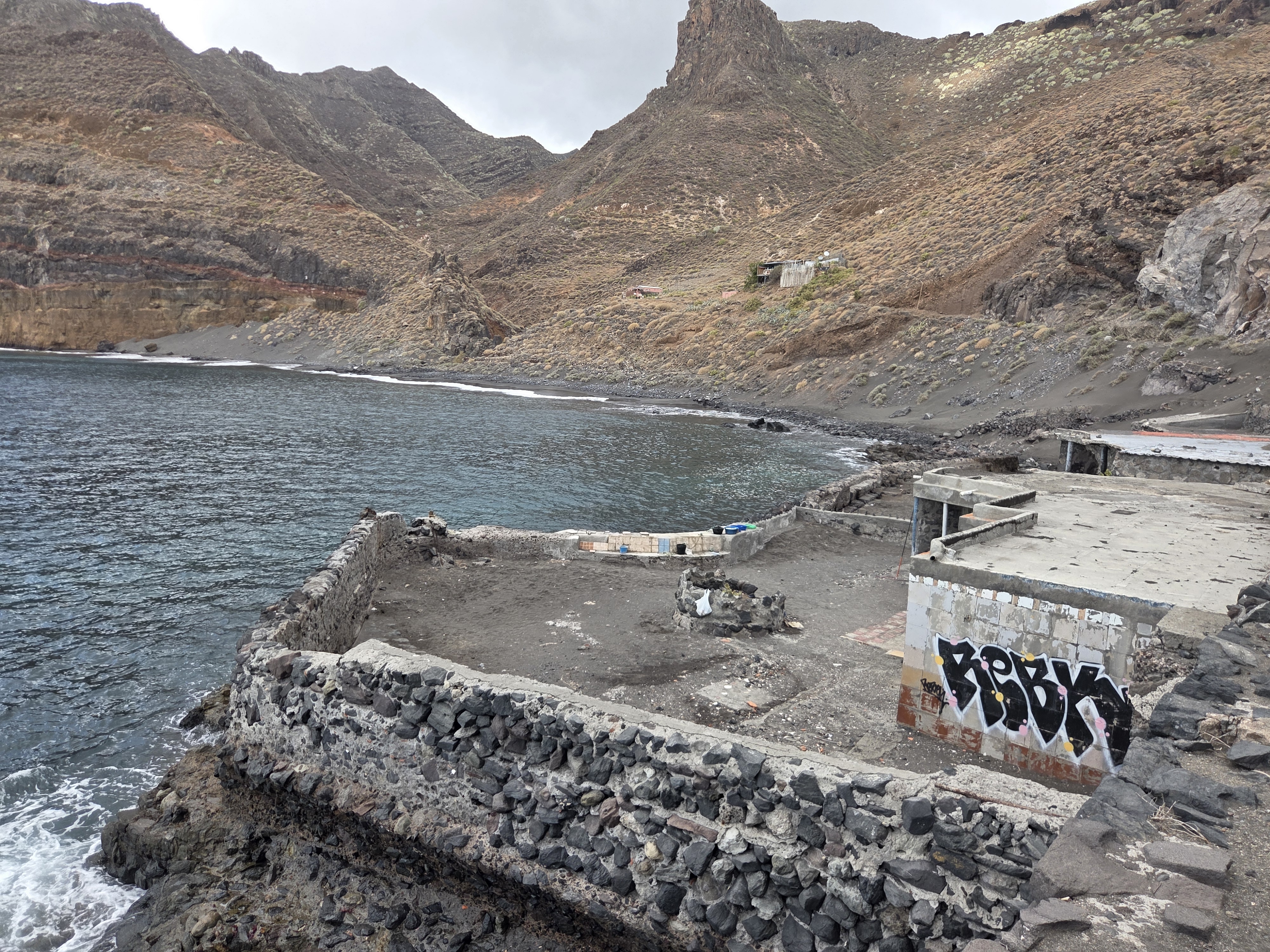
A few small houses and weekend shacks stand on terraces above the cove. These modest buildings belong to locals who traditionally used the area for fishing and quiet retreats. With no road access, every material had to be brought in by boat or along the same steep trails used by hikers today, which explains the basic, improvised look of the settlement.
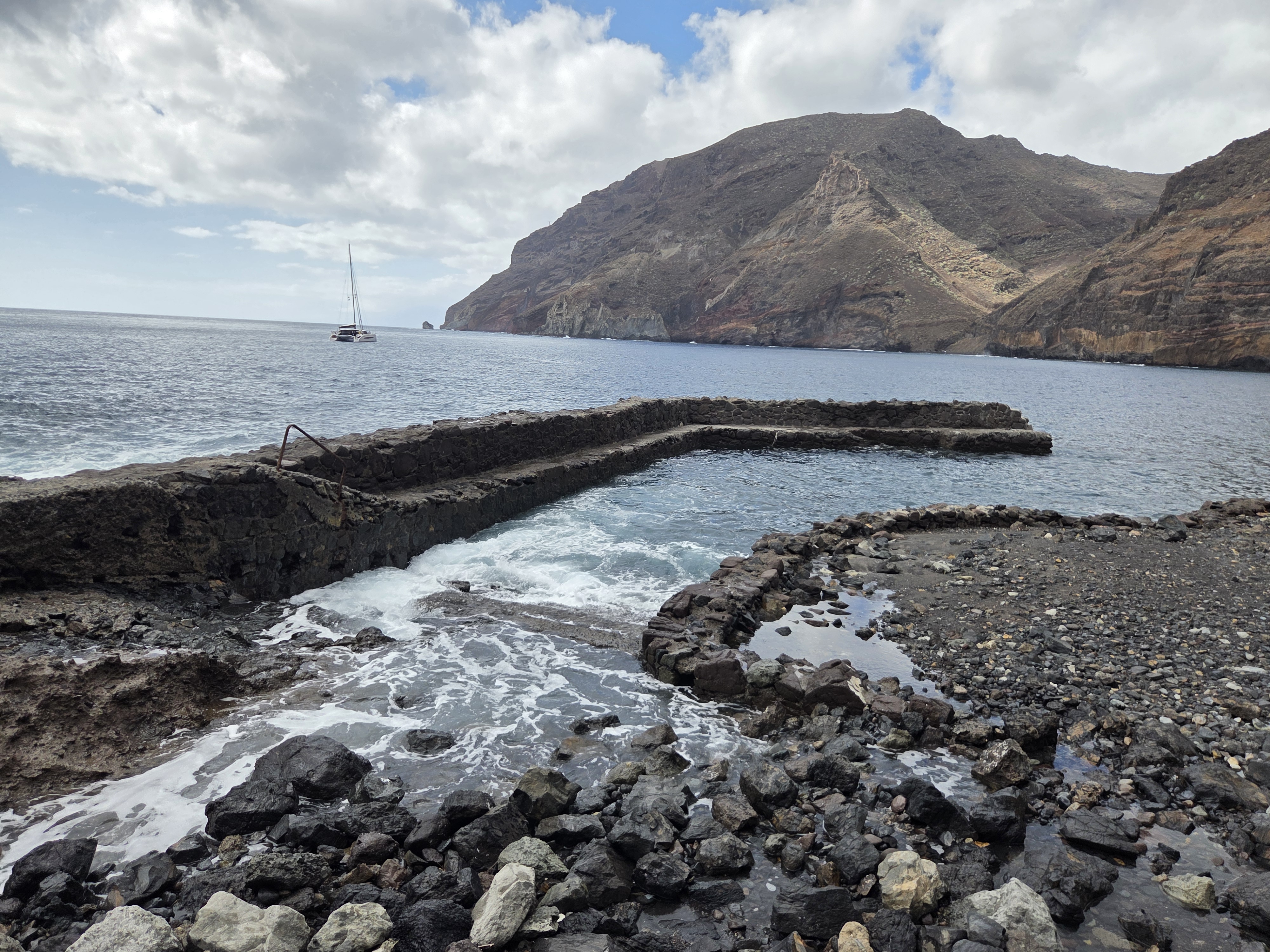
The stone pier at one end of the bay serves as the main landing point for watertaxis and small boats. Around it, low walls create a sort of natural pool where the waves break gently, offering a more sheltered entry into the sea when the Atlantic swell is strong. Boats often anchor just offshore, bringing day visitors who come to swim, relax on the sand and enjoy the isolation without completing the full hike.
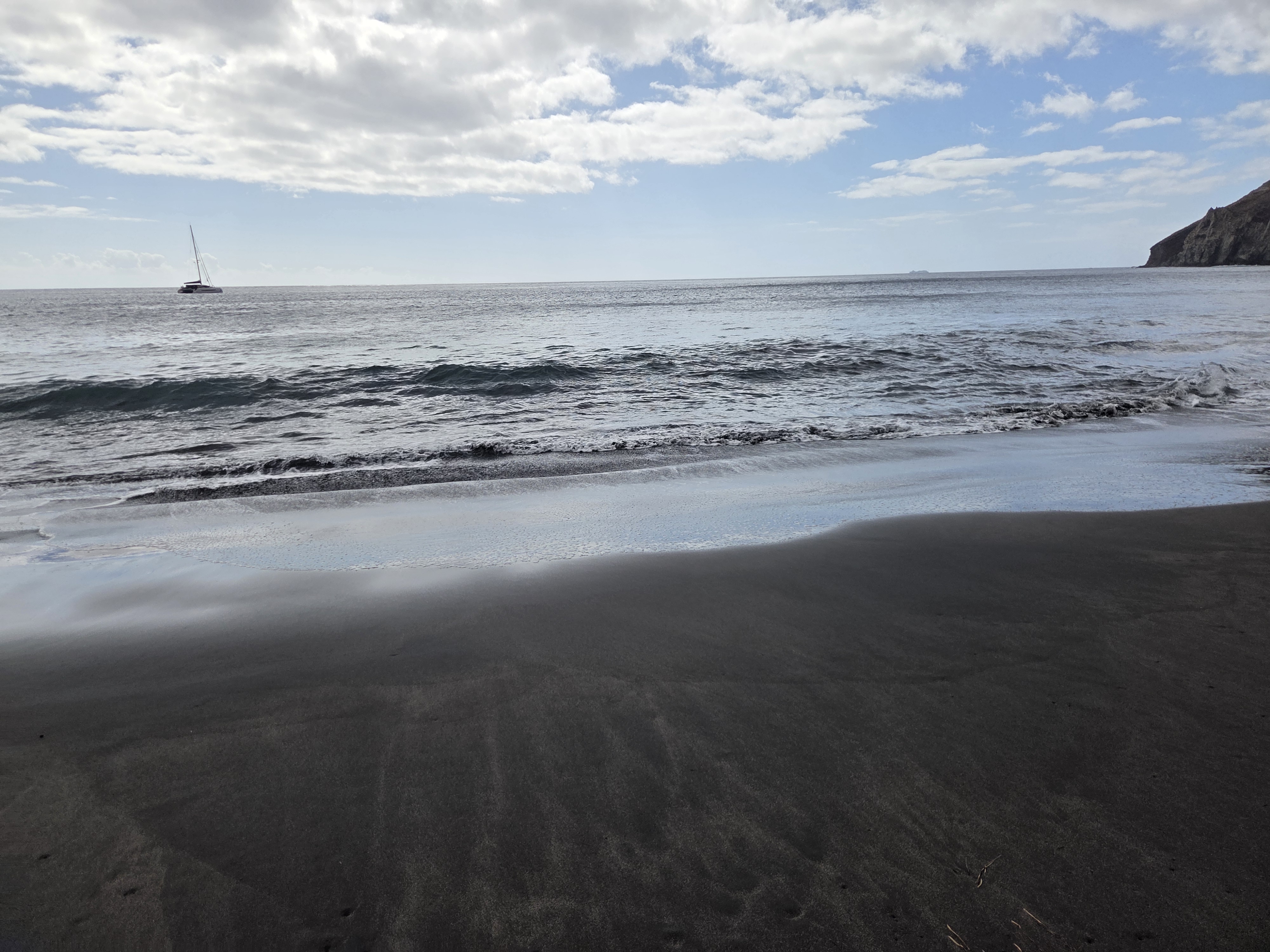
The main beach is a long strip of fine, dark volcanic sand. On calm days, the waves lap quietly at the shore, leaving a reflective sheen on the wet sand that mirrors the sky. Because there are no large buildings or road noise, only the sound of the ocean and seabirds accompanies your time here, making it one of the most peaceful spots on Tenerife’s coastline.
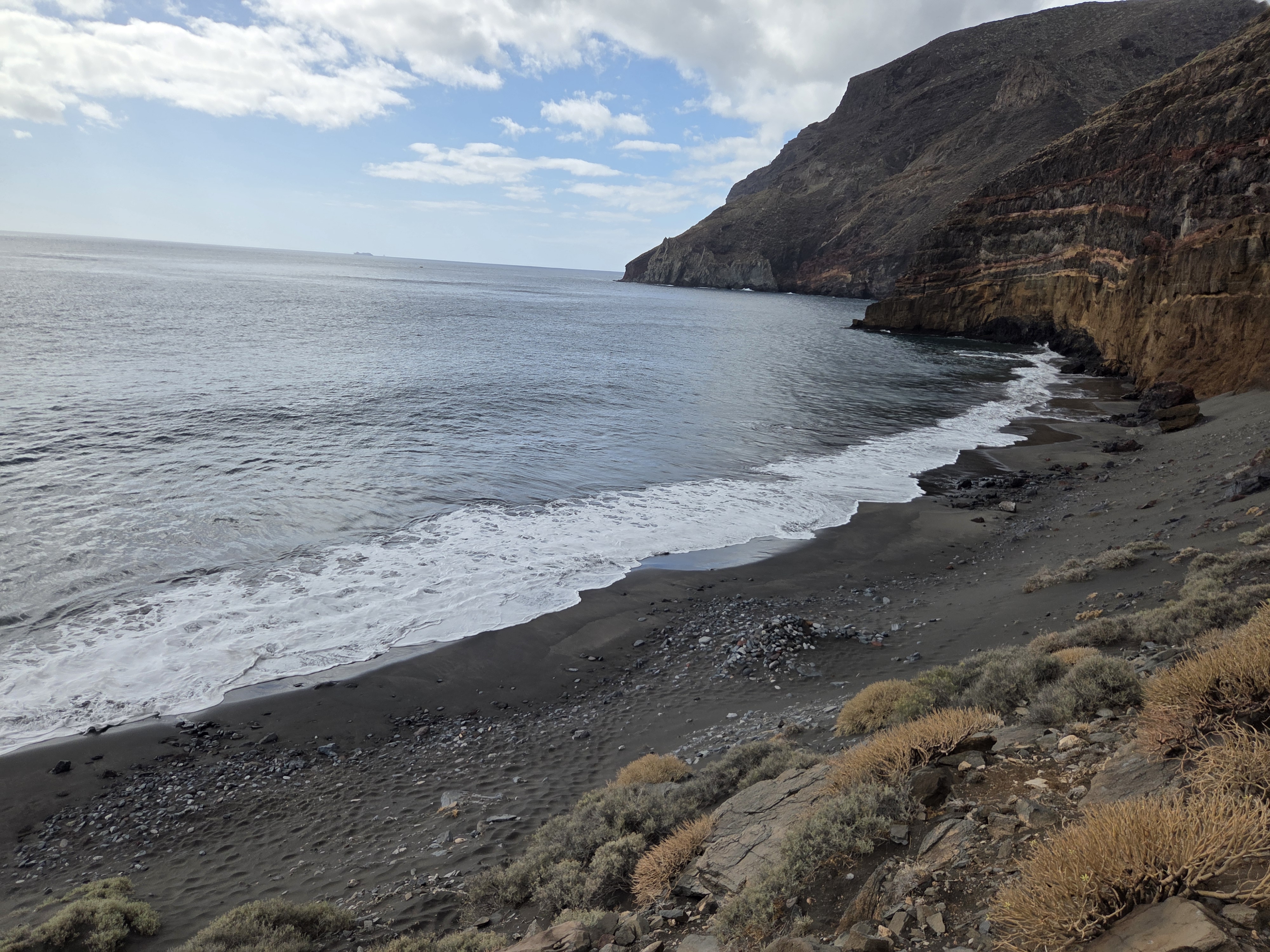
Even when the sea looks gentle, currents can be strong and the depth increases quickly, which is typical for many natural beaches in the Canary Islands. Swimmers should always assess conditions carefully and stay within their limits. Outside the summer months, the beach can become narrower as the tide and swell reshape the shoreline.
One of the most striking features of Playa de Antequera is the vertical wall of layered rock that borders the sand. Different shades of ochre, red and dark grey reveal the island’s volcanic history and the slow erosion that continues to shape the Anaga coast. Walking along the waterline, you can see how the cliffs crumble into boulders and smaller stones that eventually become the fine black sand under your feet.
Planning your visit to Playa de Antequera
Visiting Playa de Antequera is a real adventure and should be treated as such. Whether you arrive by hiking route or by watertaxi, always check the weather forecast, swell conditions and tide times in advance. Bring enough drinking water, sun protection and snacks, as there are no shops, bars or services on the beach. Good shoes are necessary for the trail, and a dry bag is useful if your return trip will be by boat.
For those willing to make the effort, the reward is a remote black sand beach, untouched volcanic scenery and some of the most impressive coastal views on Tenerife. Playa de Antequera offers a taste of how the island looked before mass tourism, and it remains a must-see destination for hikers, photographers and nature enthusiasts exploring the Anaga Rural Park.