Playa Itamar Diez Tenerife – Remote Black Sand Beach Near Santa Cruz
On the wild northeast coast of Tenerife, far from the busy resort beaches, Playa Itamar Diez offers a dramatic mix of black volcanic sand, steep cliffs and powerful Atlantic swell. This remote cove in the municipality of Santa Cruz de Tenerife is best suited to hikers and nature lovers who enjoy untouched landscapes rather than sunbeds and beach bars. The photos below take you from the cliff path down to the shore, showing why this spot feels like one of the island’s last hidden beaches.
You may notice some confusion with the name: on Google Maps the cove appears as Playa Itamar Diez, but a fallen sign on the stones calls it Playa Zapata. In this article we use the map name Playa Itamar Diez for clarity, while mentioning the alternative name so visitors can recognise the place when they see the sign on the beach.
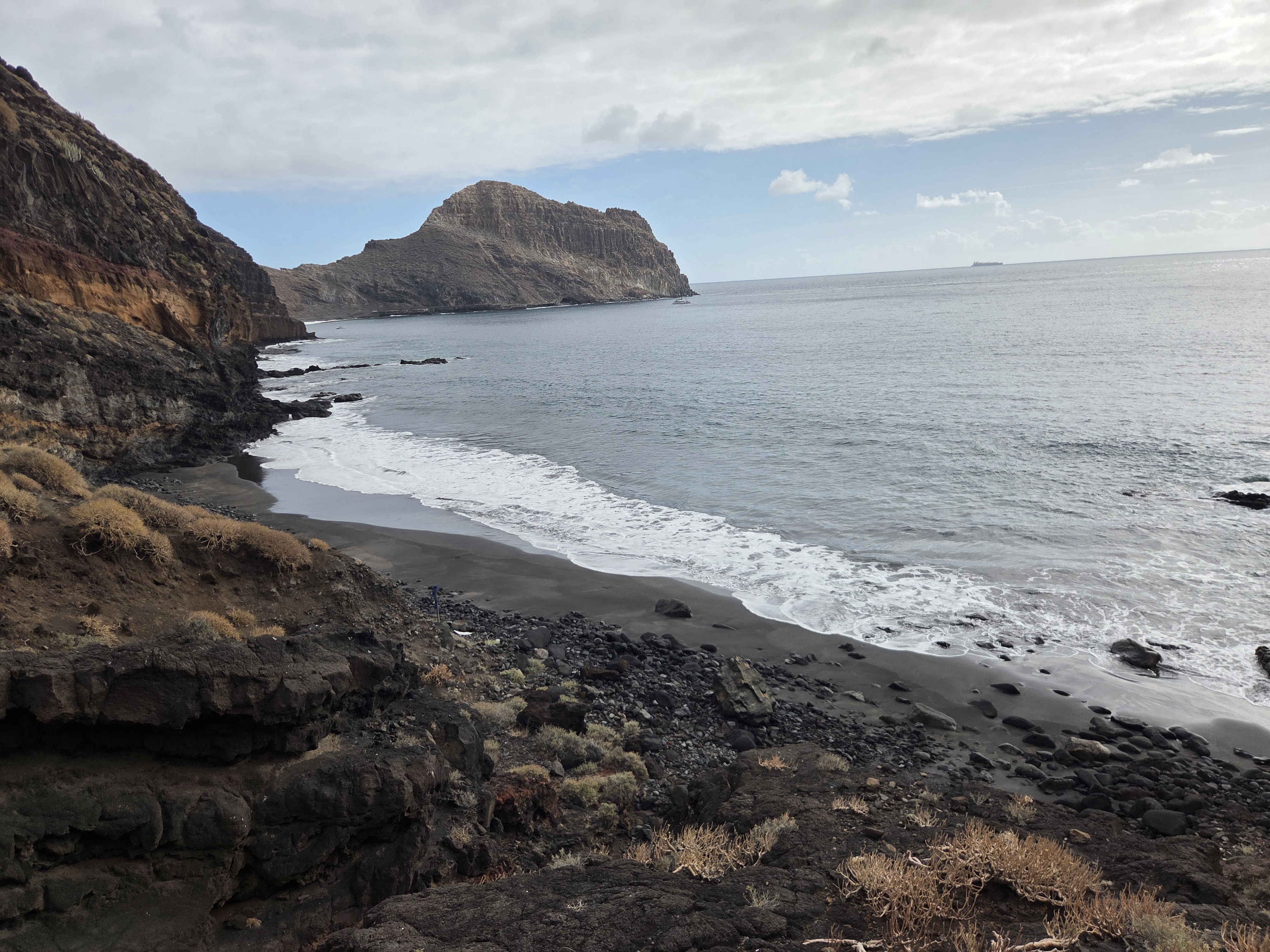
From high above the trail, Playa Itamar Diez appears as a dark ribbon of sand squeezed between the ocean and vertical rock walls. The headland closing the bay gives the impression of a natural amphitheatre open only towards the Atlantic. With no buildings in sight and only a faint path along the slope, it is clear this is a wild beach rather than a serviced urban one.
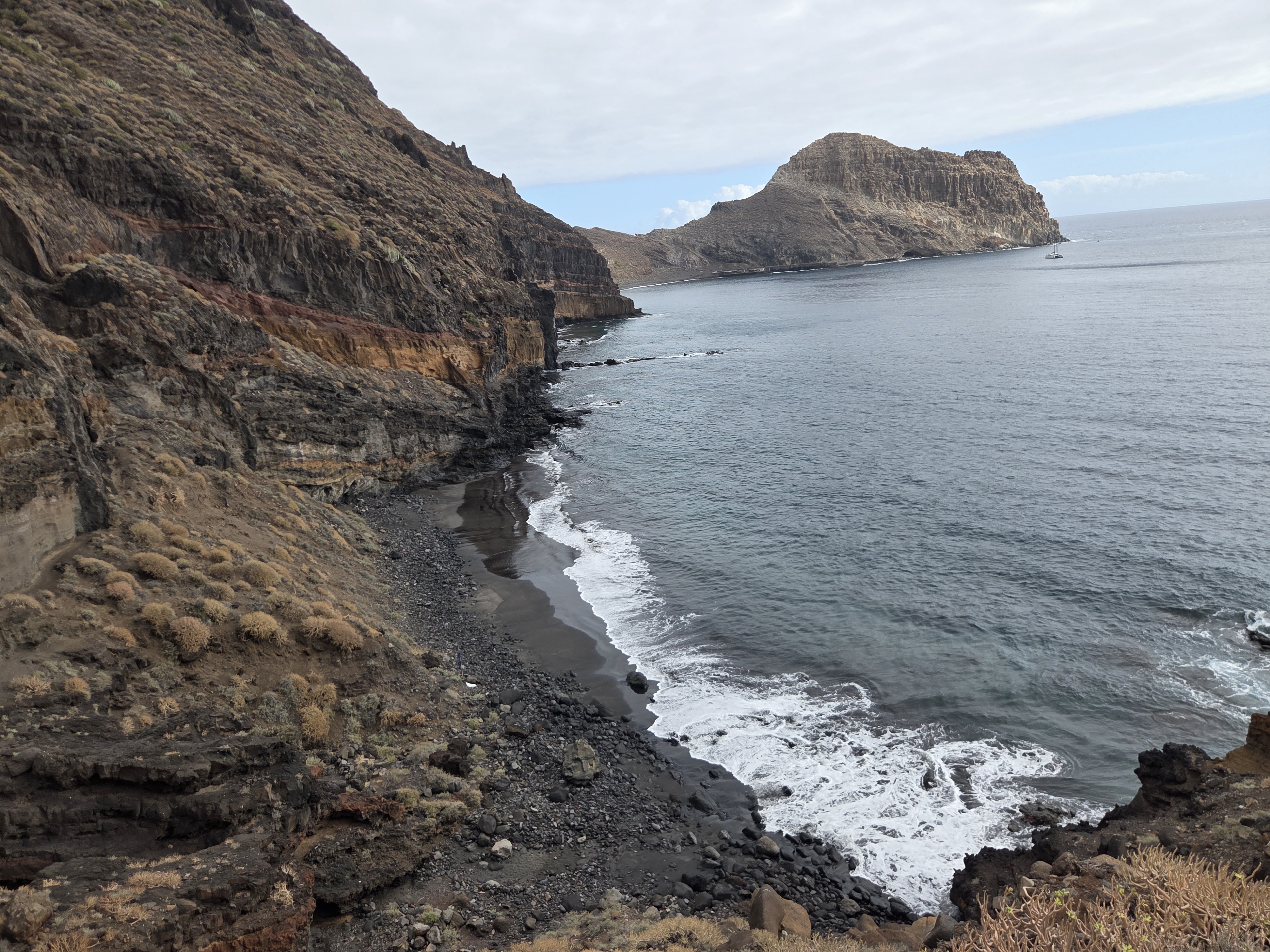
A second vantage point reveals the colourful volcanic strata that make this coastline so striking. Browns, reds and greys form clear bands in the rock face, telling the geological story of Tenerife’s eruptions. On calmer days a few boats anchor near the headland, using the shelter of the bay as a quiet stop on coastal routes from Santa Cruz or San Andrés.
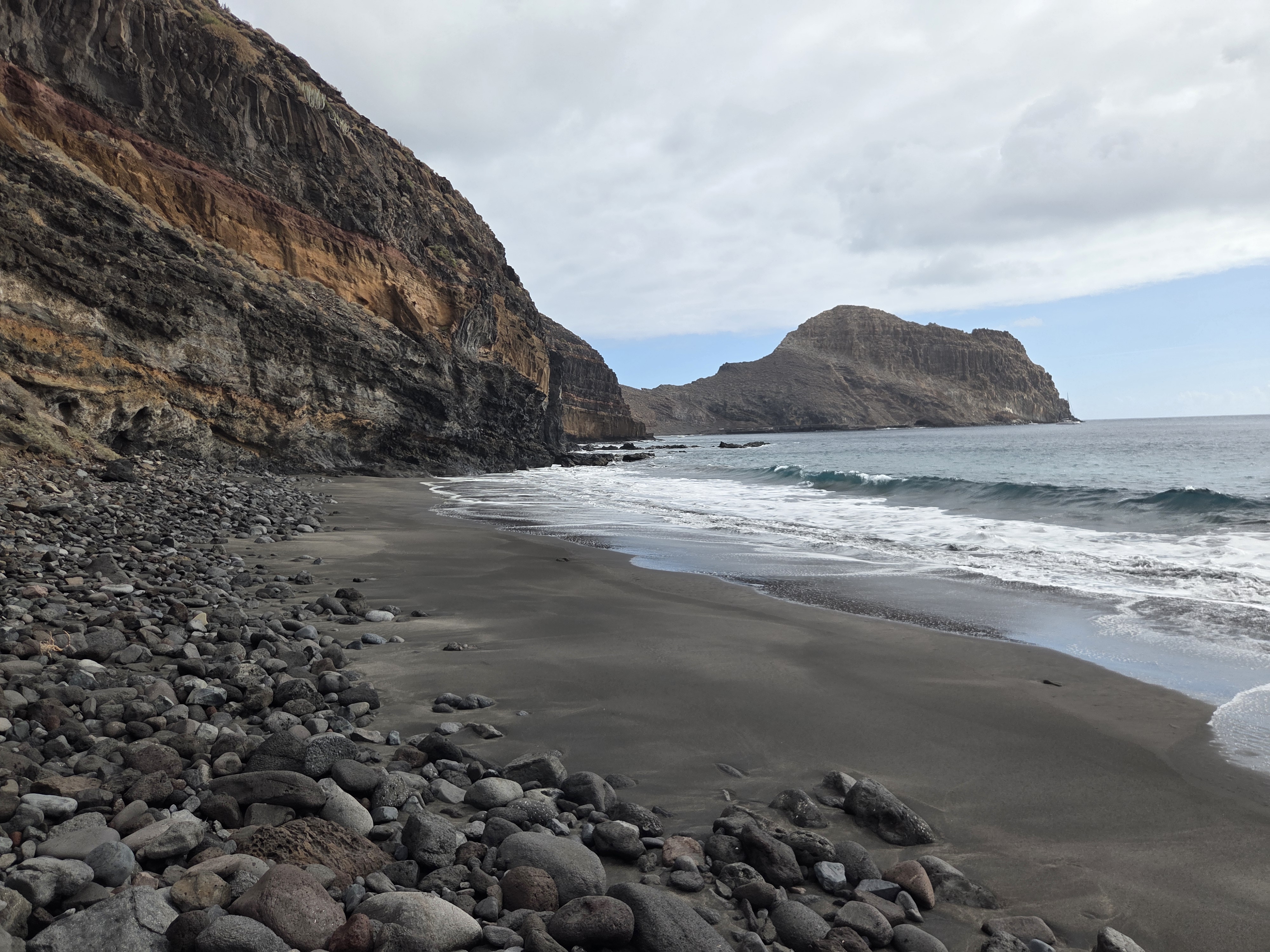
Once you reach sea level, the character of the beach becomes more intimate. The upper edge of the cove is covered with rounded volcanic stones, while lower down the terrain changes into a smooth, fine black sand. The transition from rocks to sand is typical of remote coves on this side of the island and adds to the wild feeling of the place.
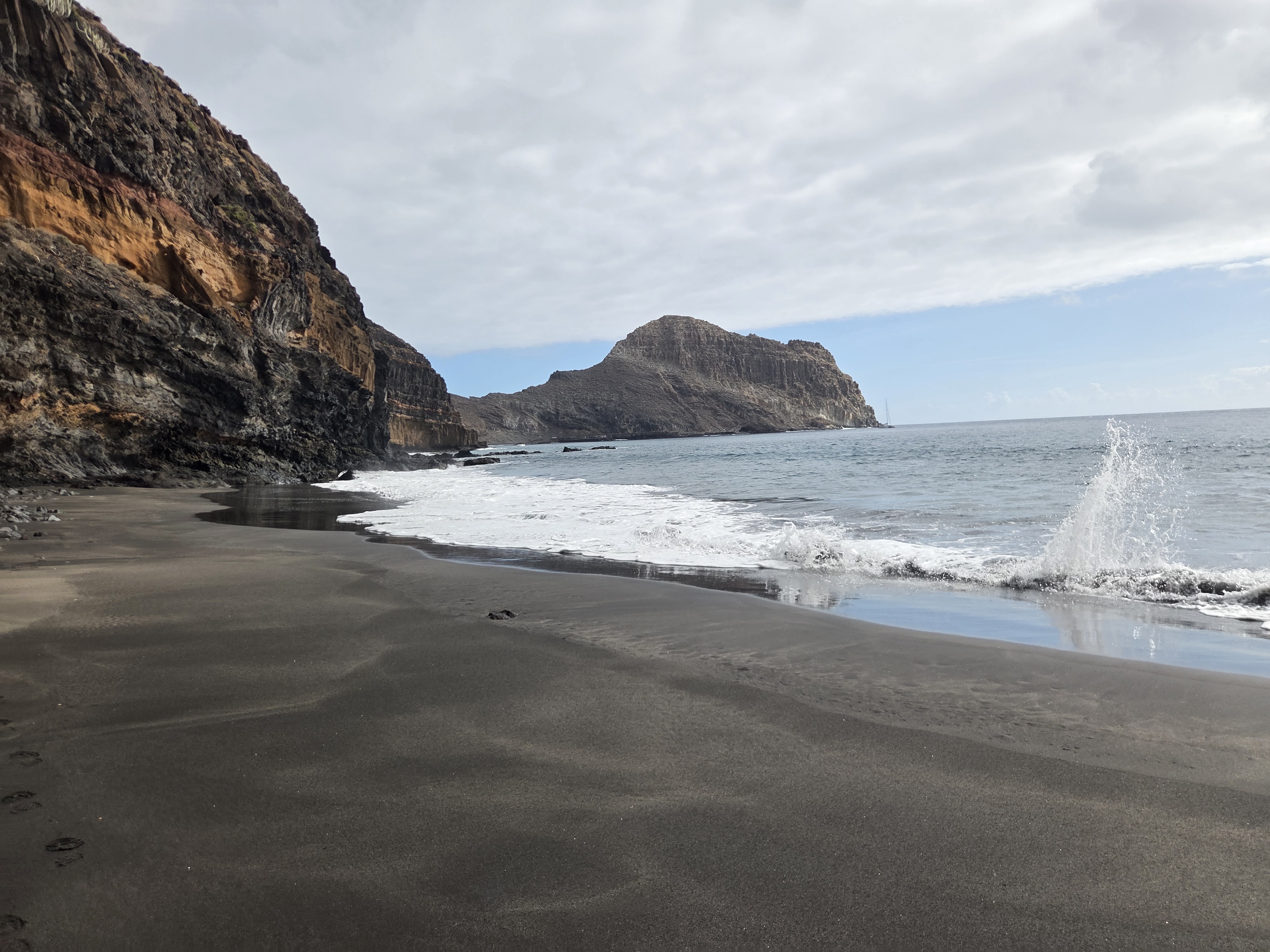
The Atlantic rarely rests here. Wave after wave washes over the dark sand, leaving bright ribbons of foam that highlight every curve of the shoreline. Even when the sky is partly cloudy the reflections on the wet sand make Playa Itamar Diez a great spot for atmospheric seascape photography.

Seen from above, the narrow contact zone between rock slope and water stands out clearly. Large boulders lie at the base of the cliff, giving way to compact, wave-smoothed sand closer to the sea. This steep relief explains why the access path is demanding and why the beach remains so quiet even on good-weather weekends.
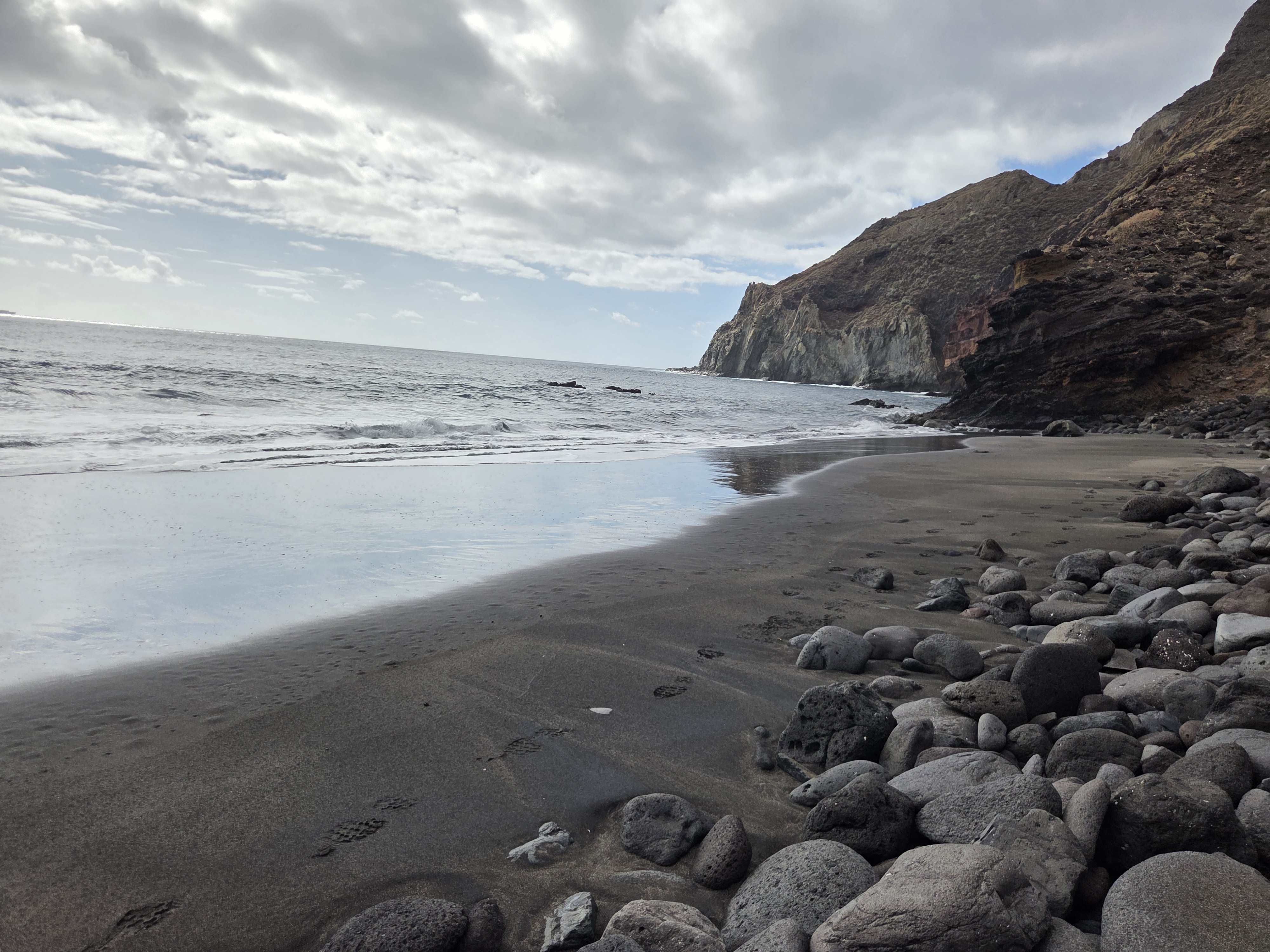
Turning towards the open sea, you feel the contrast between the tight rocky walls behind you and the wide horizon in front. A few offshore rocks break the surface and, depending on the day, you may see a distant cargo ship or ferry crossing the channel. Otherwise the soundtrack is mainly waves, wind and the occasional seabird.
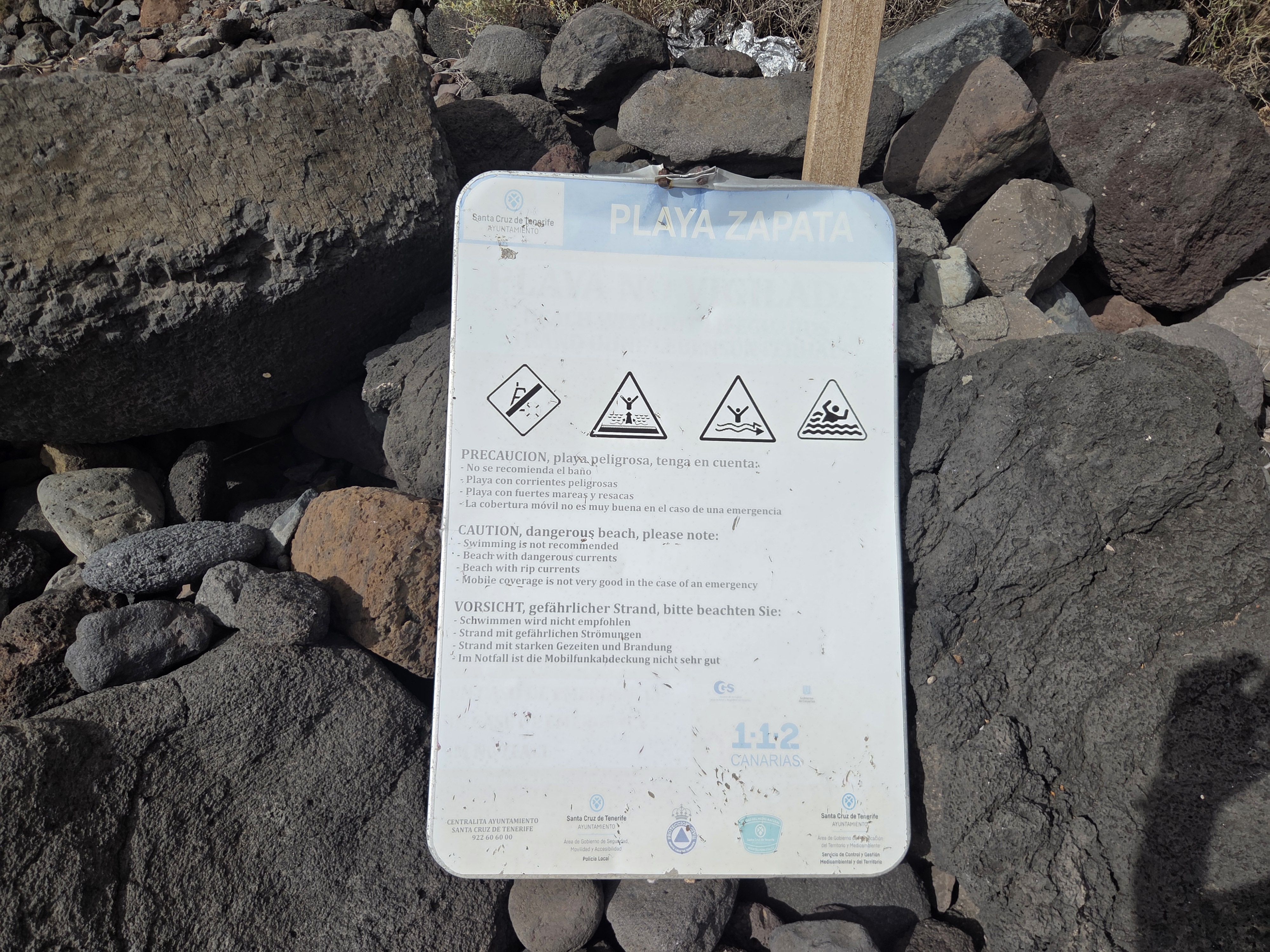
Close to the stones you will find a warning panel that calls the cove Playa Zapata and clearly marks it as a dangerous beach. The sign mentions strong currents, lack of lifeguards and limited mobile coverage, all reasons why swimming is not recommended. This sign explains why some hikers still refer to the cove as Playa Zapata even though online maps list it as Playa Itamar Diez.
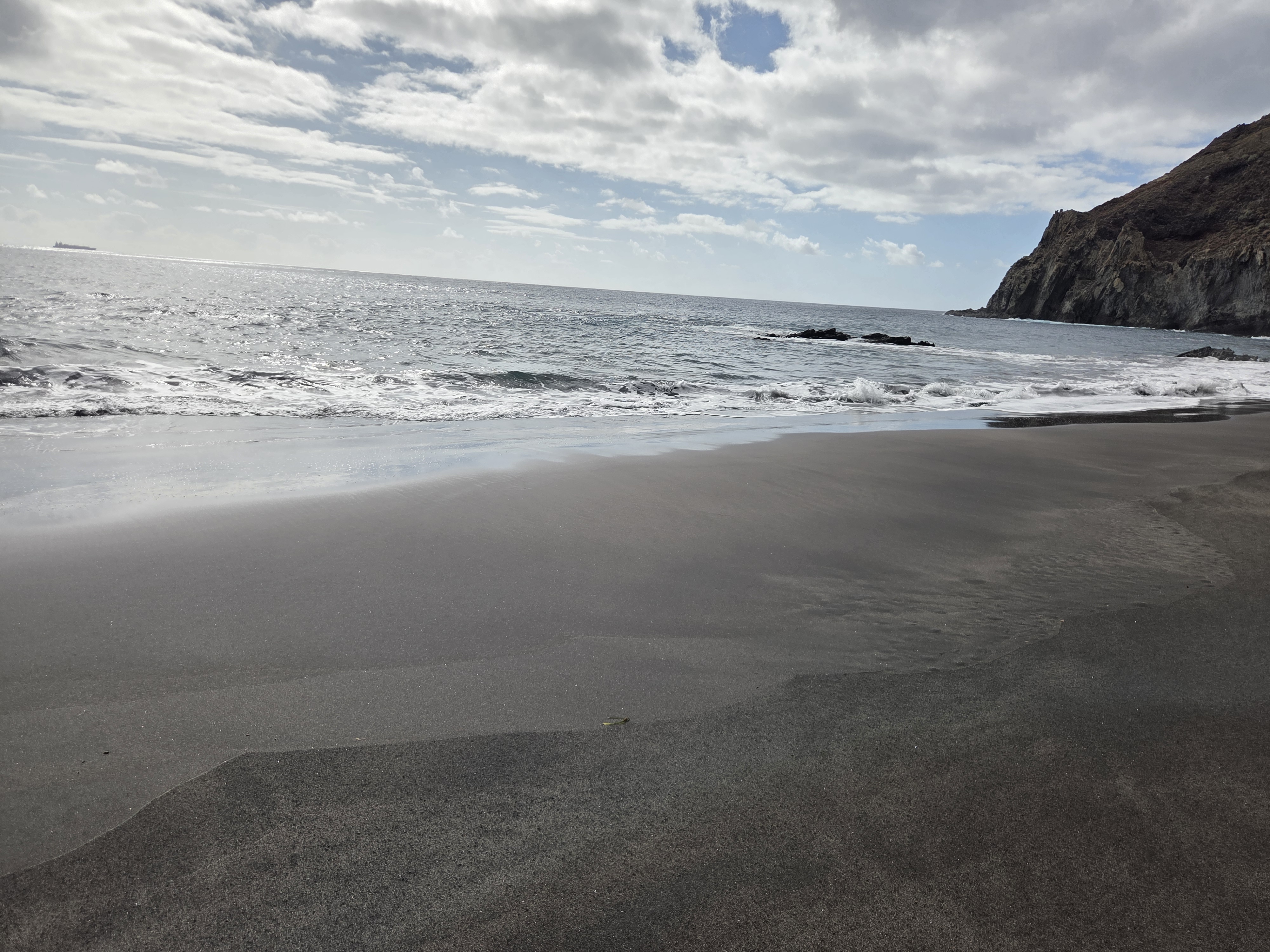
Walking along the shore leaves crisp footprints on the dark sand, quickly erased by the next wave. When the tide is low, the wet surface reflects the clouds and cliffs like a mirror, turning even a short stroll along the waterline into a very photogenic moment.
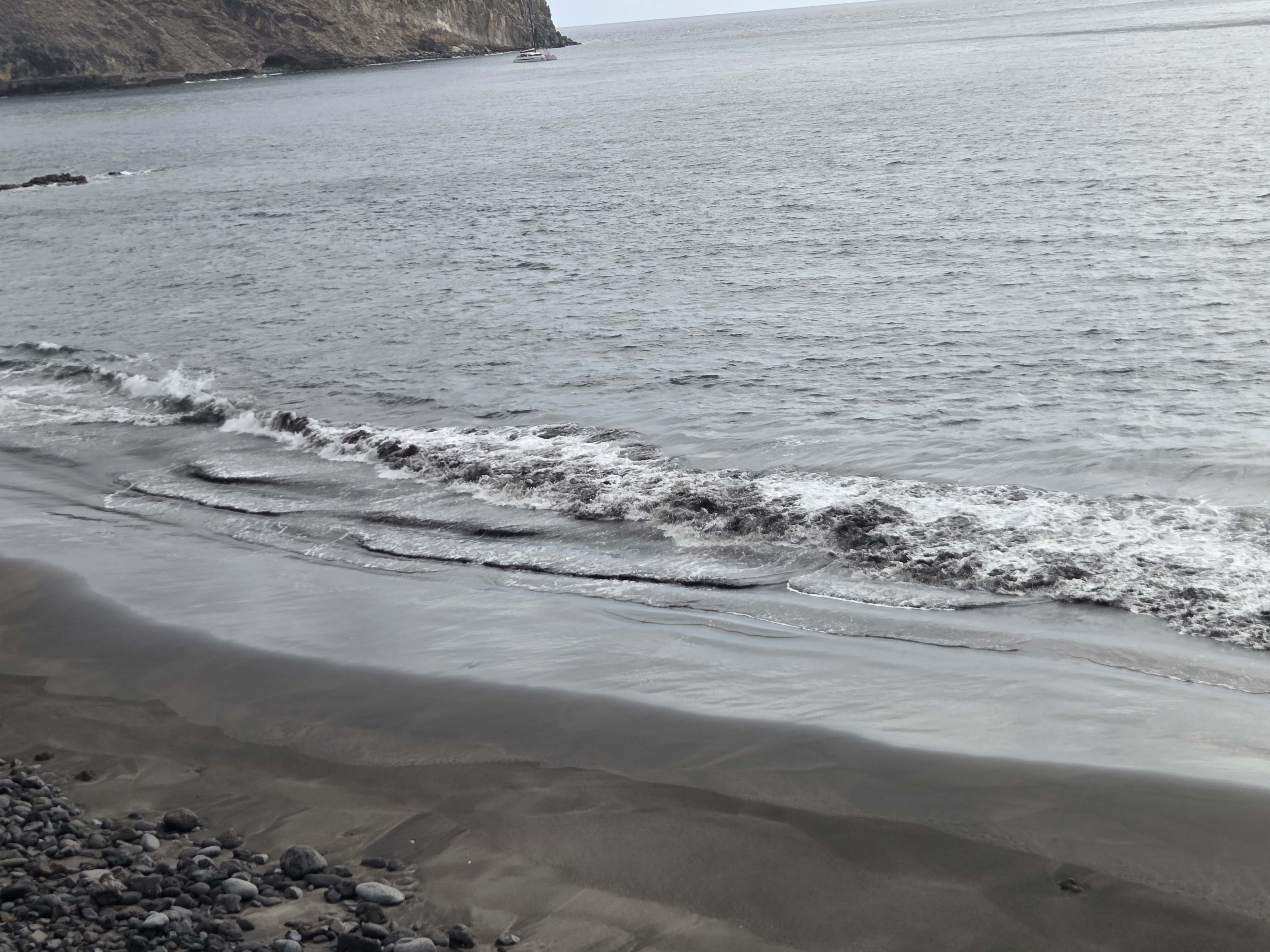
From another high point you can appreciate the wide central area of the beach. There is plenty of space to sit quietly and watch the waves, but there is no shade and no services. Everything you need has to be carried in and out, which helps keep the cove clean and reinforces the feeling of being in a truly natural environment.
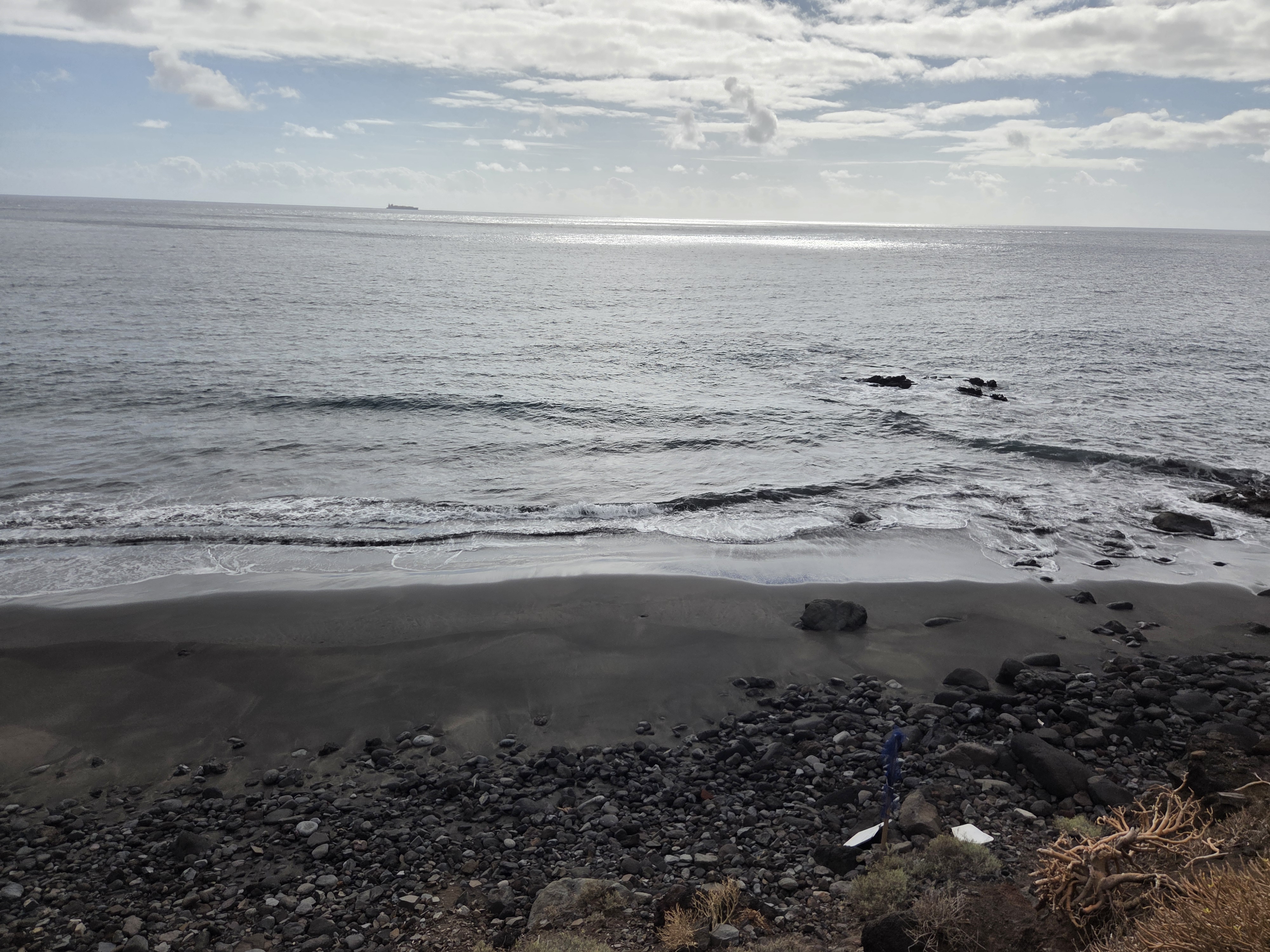
The final close-up focuses on the small waves that constantly polish the fine volcanic grains. The mix of darker and lighter particles creates a subtle sparkle when the sun breaks through the clouds, a distinct visual signature of Tenerife’s black sand beaches.
Is Playa Itamar Diez Worth the Hike?
Playa Itamar Diez is not a simple family beach with easy parking and calm water. It is a remote, rugged cove where access may involve steep paths and loose stones, and where the sea can be rough. For hikers, photographers and travellers who appreciate wild landscapes, this makes it a special place to visit. For casual bathers looking for a safe swim, better options can be found in nearby towns and organised beaches.
If you decide to explore Playa Itamar Diez, come prepared with good footwear, enough water and a realistic respect for the Atlantic. In return you will experience one of the most dramatic and solitary black sand beaches on the northeast coast of Tenerife, with memories that go far beyond what you see from the usual viewpoints along the road.