Dramatic Volcanic Cliffs and Hidden Black Sand Cove at Playa de Zapata, Tenerife
Playa de Zapata is one of those wild corners of Tenerife where the Atlantic Ocean meets raw volcanic rock. Far from busy resorts, this tiny black sand cove hides beneath towering cliffs streaked with red and brown lava layers, offering a spectacular example of the island’s geology and an unforgettable viewpoint for hikers and landscape photographers.
Although reaching this area of the Anaga coastline requires effort and careful planning, the reward is a pristine, untouched landscape: crystal-clear water, rugged cliffs, sea caves and a narrow strip of dark sand that appears and disappears with the tides. Below you will find a visual tour of Playa de Zapata, showing different perspectives of the cove, the cliffs and the surrounding shoreline.
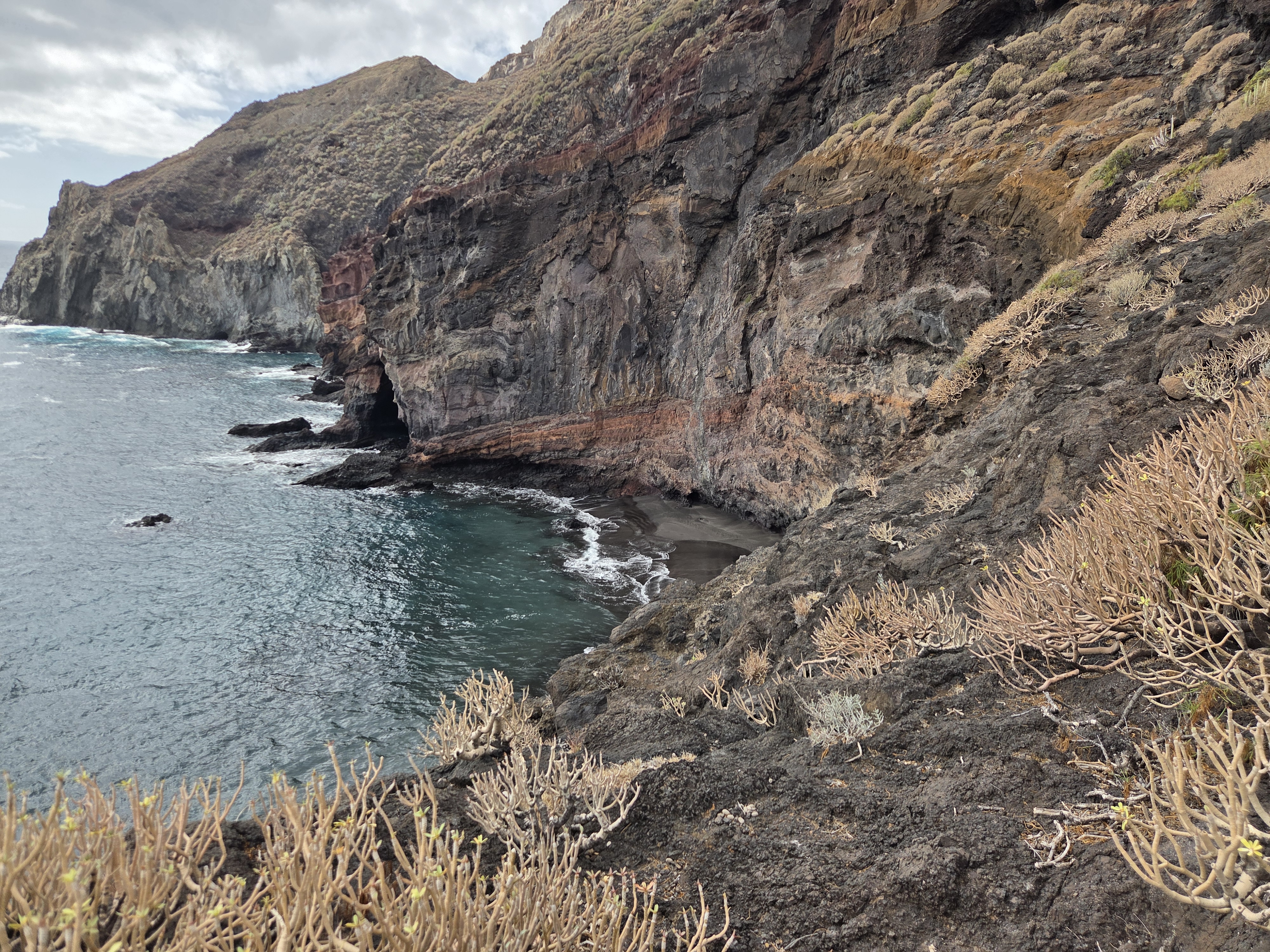
The first panoramic view reveals the overall setting of Playa de Zapata: a sheer volcanic wall dropping directly into the sea, with layers of rock in different colours showing the island’s volcanic history. The Atlantic stretches into the distance while small waves break gently against the rocks, emphasizing how isolated and wild this stretch of coastline remains. From this angle you can clearly see how narrow and steep the access is, which is why this corner of Tenerife feels so untouched.
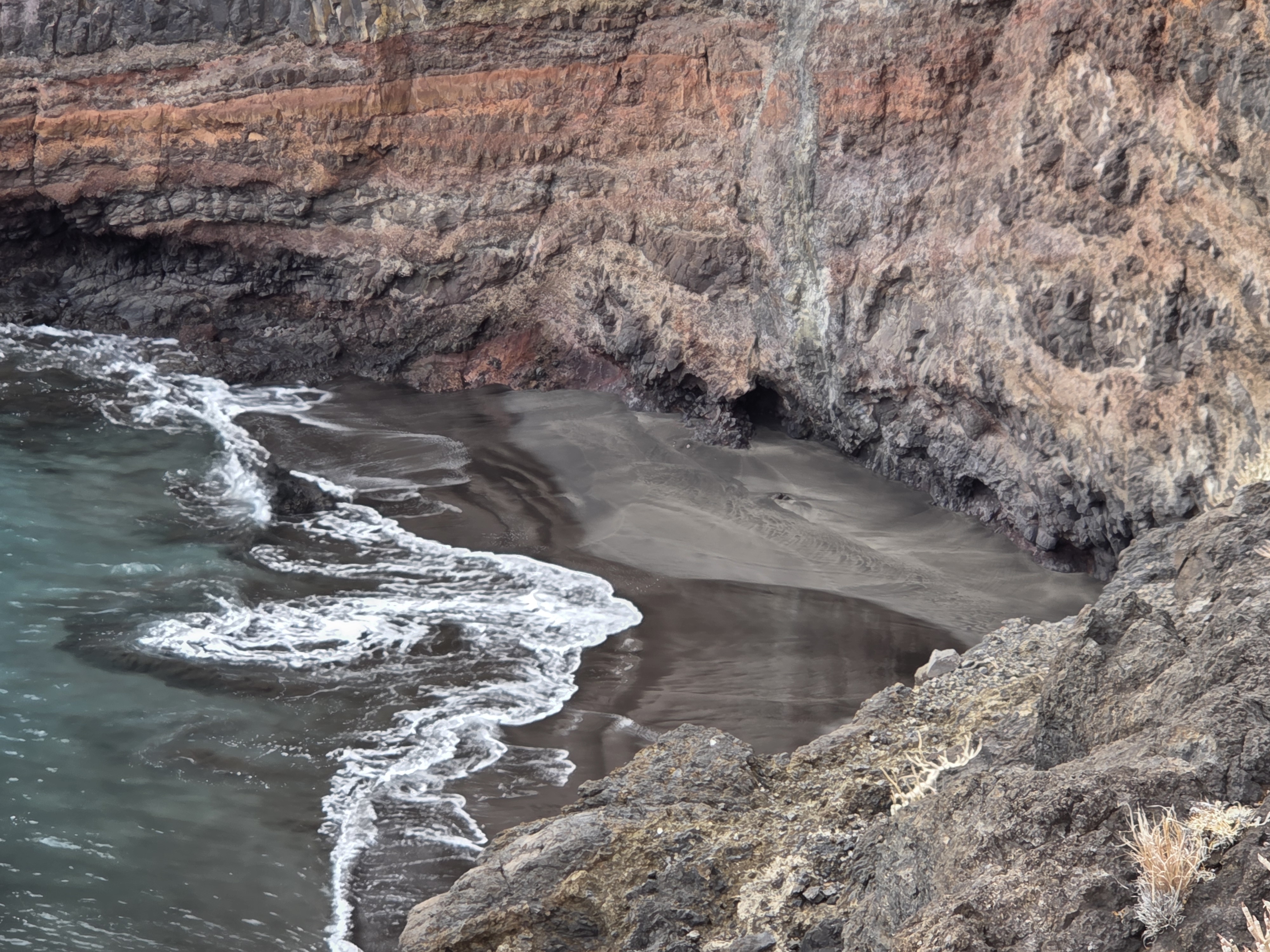
Moving closer, the tiny black sand cove becomes visible at the base of the cliffs. The sand forms smooth, dark patterns created by the retreating waves, while a low sea cave opens in the rock face just above the shoreline. This is the heart of Playa de Zapata: a miniature beach carved by the ocean, protected from the wind and almost invisible from afar, perfect for those who love hidden, off-the-beaten-path spots.
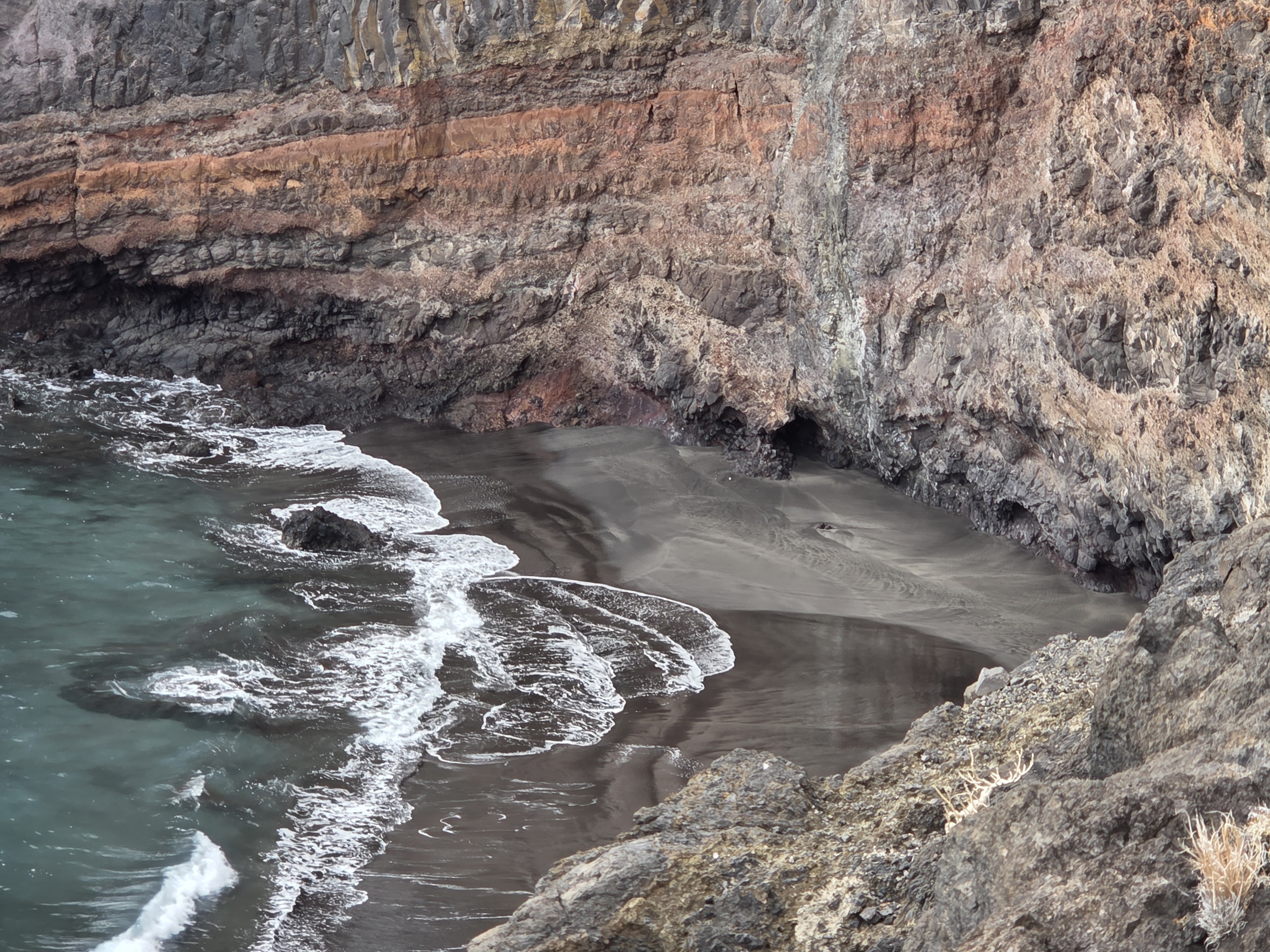
From a slightly different angle, the contrast between the turquoise water and the dark sand becomes even more striking. The cliffs show distinct horizontal bands of colour, ranging from deep brown to rusty red and lighter grey, each one a different volcanic deposit. This natural layering makes Playa de Zapata especially photogenic and interesting for visitors who enjoy geology and raw coastal landscapes rather than classic tourist beaches.
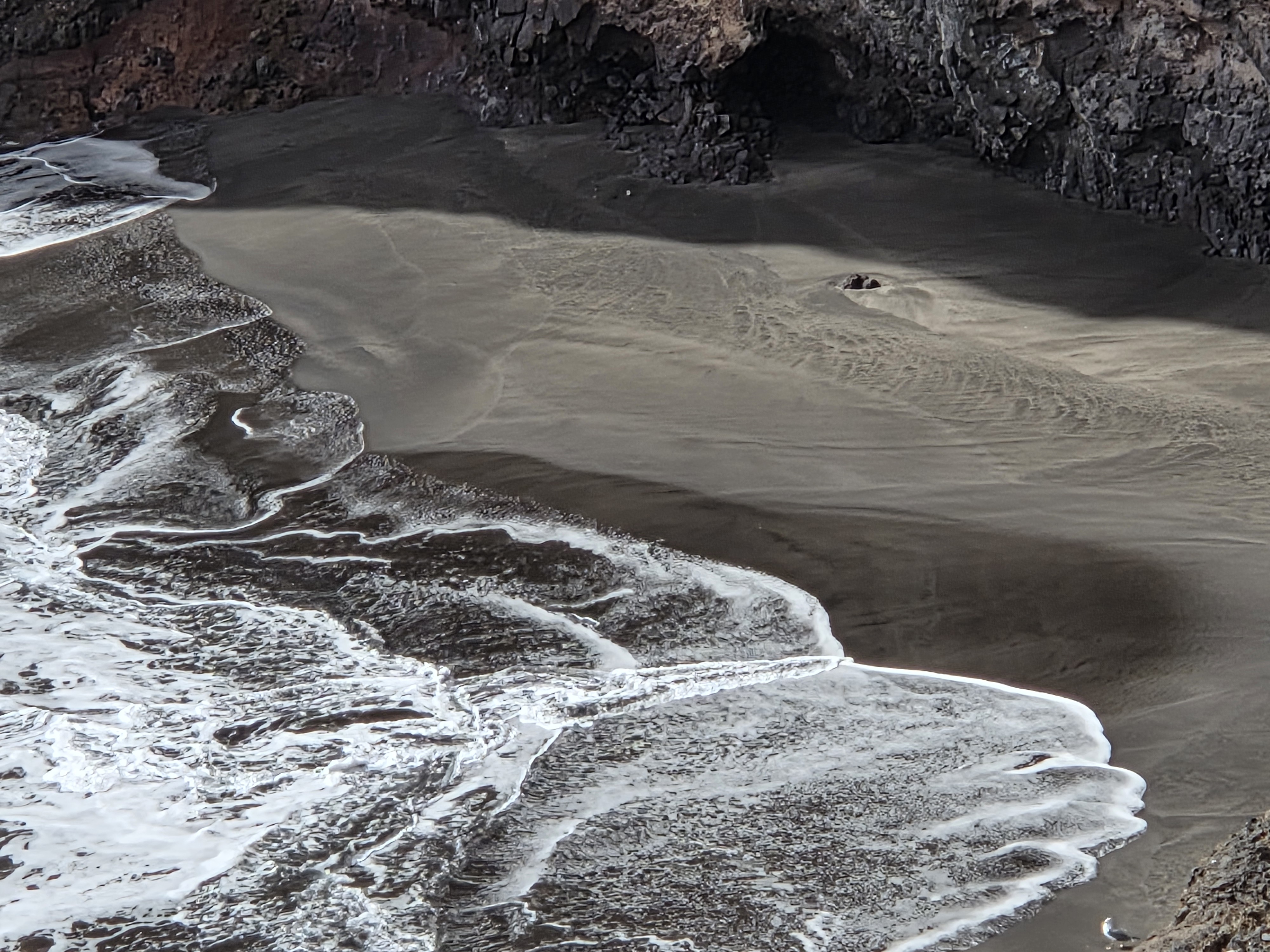
A closer look at the shore highlights the unique texture of the volcanic sand. The waves leave delicate lines of white foam that trace their path across the dark surface, creating natural patterns that change with every tide. This kind of fine, black sand is typical of Tenerife’s volcanic beaches and offers a very different feel underfoot compared to golden or pebbly shores.
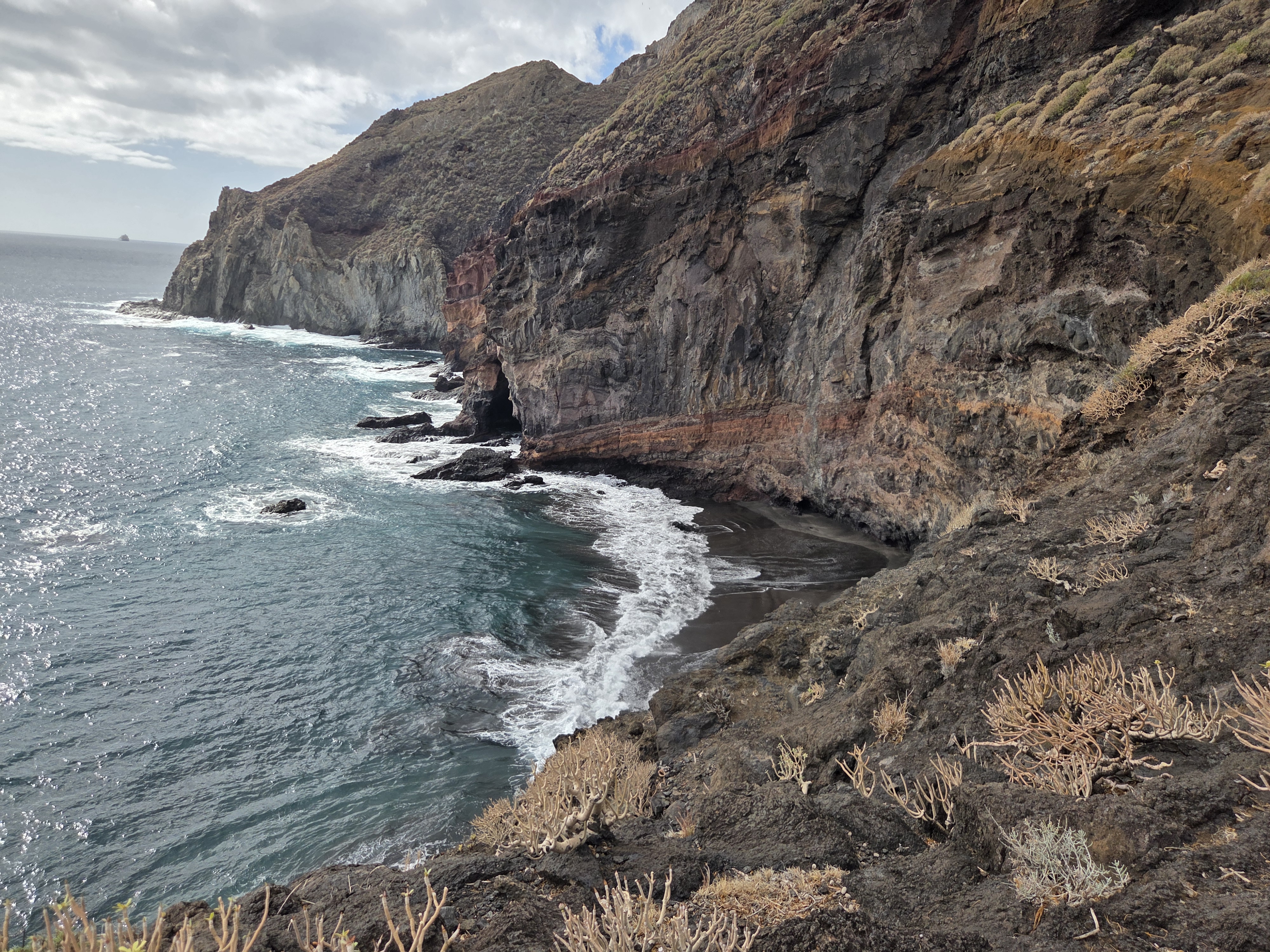
In the final image, the foreground is filled with hardy coastal plants clinging to the rocky slope above the sea. Their dry, branching shapes underline how exposed this area is to wind and salt spray. Beyond them, the cliffs drop straight into the Atlantic, and the hidden cove of Playa de Zapata nestles at their base. This combination of native vegetation, dramatic relief and open ocean makes the spot ideal for hikers exploring the Anaga mountains and for photographers seeking wild, unspoiled scenery.
Visiting Playa de Zapata Responsibly
Playa de Zapata is not a typical tourist beach with services or easy access. Reaching the area usually involves walking along steep coastal paths and paying close attention to weather and sea conditions. Visitors should wear good footwear, carry enough water and avoid approaching the shoreline during strong swell or high tide, when waves can cover the entire strip of sand.
Because this corner of Tenerife remains so pristine, it is important to leave no trace: take all rubbish back, avoid disturbing the fragile coastal plants and never carve into the rocks or cliffs. By exploring responsibly, hikers and photographers help preserve the wild beauty of Playa de Zapata for future visitors.
Whether you are planning a hiking route along the Anaga coastline or simply searching for lesser-known black sand coves in Tenerife, Playa de Zapata offers an unforgettable combination of dramatic cliffs, volcanic sand and crystal-clear Atlantic water. Its isolation and natural character make it a perfect destination for those who prefer quiet, wild landscapes over crowded, urban beaches.